Disclaimer: This article is general information for dog owners, not veterinary advice. Every dog is different, so check with your vet about your own dog.
Cold weather walks can be some of the best of the year. The air is crisp, the parks are quiet, and many dogs love a romp in fresh snow. But snow, ice and the salt spread on sidewalks can be tough on paws. Good winter dog paw care does not need to be complicated. A few small habits before, during and after each walk may help keep those pads comfortable all season.
This guide walks you through a simple routine you can use from the first frost to the spring thaw. You will find a quick paw check, tips for walking on snow and ice, a wipe-down routine for when you get home, and some general pointers on booties and balms. We also cover the signs that mean it is time to stop and call your vet.
Start with a quick paw check
Before winter really sets in, get to know what your dog’s paws look like when they are healthy. That way, you will spot changes sooner. A calm, short check once your dog is relaxed is plenty. If your dog is not used to having their feet handled, go slowly and pair each touch with praise or a small reward. Our guide to building good habits with positive reinforcement has ideas that work for adult dogs too.
During a paw check, look at and gently feel:
- The pads. Notice their usual color and texture. Look for dryness, cracks, flaking or any rough patches.
- Between the toes. Spread the toes gently and check for redness, small cuts, or anything stuck in the fur.
- The fur around the feet. Long fur between the pads can collect snow and ice. Make a note if it seems to clump easily.
- The nails. Long nails can change how a dog stands and walks, which may matter more on slippery ground.
- Your dog’s reaction. Pulling away, licking a paw a lot, or flinching can be a sign that something is sore.
If you are not sure what normal looks like for your dog, ask your vet to show you during your next visit. Our article on why regular vet checkups matter explains how those visits can support everyday care at home.
Walking on snow, ice and de-icing salt
Winter sidewalks hold a mix of hazards. Packed ice can be slippery, sharp crusts of frozen snow can scrape pads, and de-icing products may irritate skin. Some de-icers may also be harmful if a dog licks them off their feet. You cannot control every surface, but you can plan your route and your timing.
Here are some simple ideas for safer winter walks:
- Pick your path. Where you can, walk on grass, untreated snow, or paths you know are not heavily salted.
- Steer clear of slushy puddles. Puddles near roads and driveways may contain melted salt or other chemicals, such as antifreeze.
- Watch for sharp ice. Frozen crusts and jagged ice edges can catch on pads. Go around them when you can.
- Keep walks flexible. On very cold days, several shorter outings may be more comfortable than one long walk. Your vet can help you decide what suits your dog’s age, coat and health.
- Use a secure lead. Snow can hide scents and landmarks, and slippery footing can surprise you both. Our tips on safe dog walking gear cover the basics.
- Stop if your dog stops. If your dog lifts a paw, limps, or refuses to keep going, pause and check their feet.
At home, if you need to clear your own steps and paths, look for a de-icing product labeled as safer for pets, and read the label carefully. Even then, wiping paws after walks is a good habit.
Your after-walk paw wiping routine
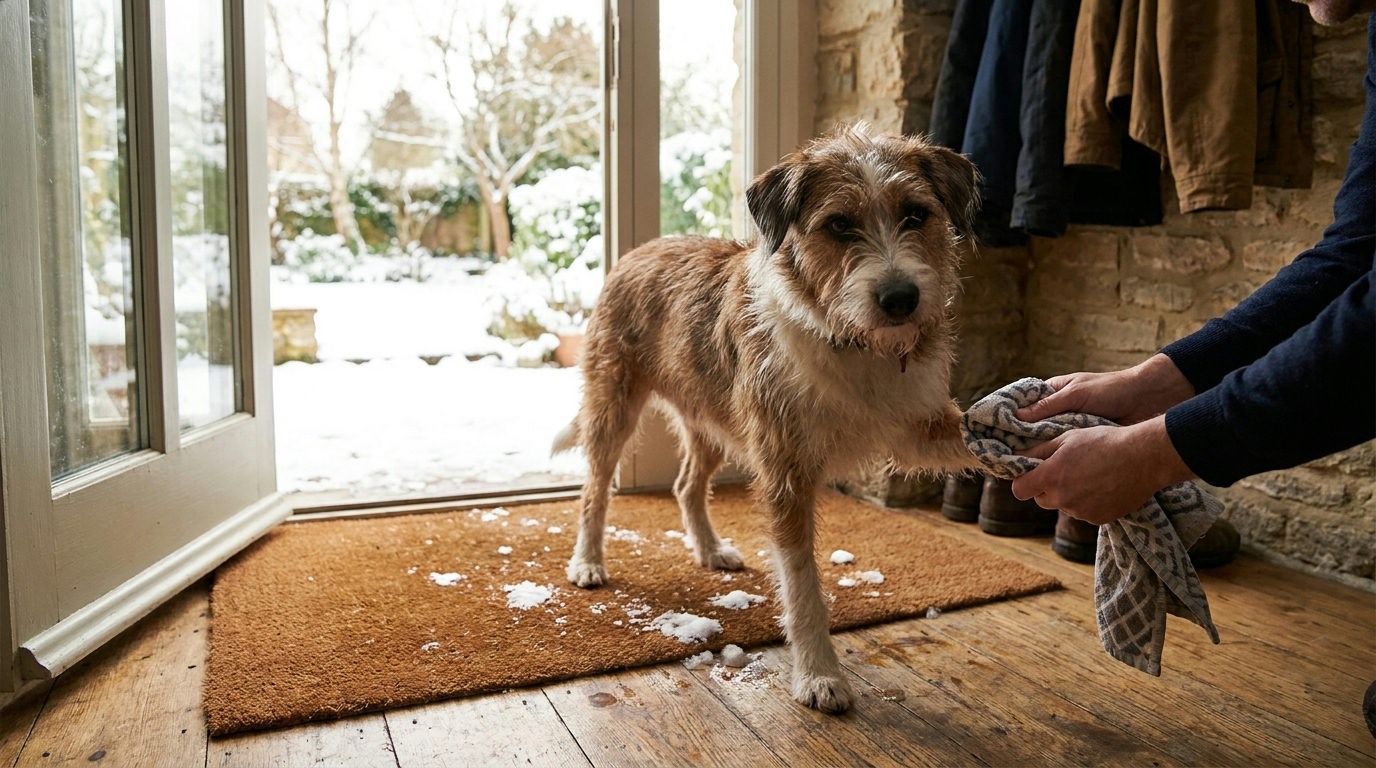
The most useful part of winter dog paw care often happens right inside your front door. Wiping paws after each walk may help remove salt, grit and ice before your dog has a chance to lick it off. Set up a small station by the door so the routine is quick and easy.
What to keep in your paw station:
- A couple of soft, absorbent towels
- A shallow bowl or container of lukewarm water
- A mat to stand on that is easy to wash
- A few small rewards to make the routine pleasant
A simple routine to follow:
- Ask your dog to sit or stand on the mat as soon as you come in.
- Dip each paw in the lukewarm water, or wipe it with a damp cloth.
- Gently work between the toes and pads to loosen salt and ice balls.
- Dry each paw well, including between the toes. Damp fur can stay cold and may lead to irritation.
- Take a quick look for redness, cracks or cuts while you dry.
- Wipe the belly and legs too if your dog has been in deep or slushy snow.
- Reward your dog so they look forward to the next wipe-down.
If your dog has long fur between the pads, you may find that ice balls form quickly. Keeping that fur neat can help. Our guide to grooming tools for home care covers the basics, and a groomer can trim the area for you if you are not comfortable doing it yourself.
Booties and paw balms: what to know
Booties and paw balms are two common tools in a winter dog paw care kit. Neither is a must for every dog, and what works well depends on your dog, your climate and your walking routes. Here is a general overview to help you think it through.
Dog booties
Booties can create a barrier between paws and salt, ice and sharp crusts. Many dogs need time to get used to them, so start indoors for short spells with plenty of praise.
- Fit matters. Booties should stay on without being tight. Check for rubbing or redness after each use.
- Look for grip. A textured sole may help on slick surfaces.
- Go slowly. Expect some funny high-stepping at first. That is normal for many dogs.
- Keep them dry. Let booties dry fully between walks so paws are not sitting in damp fabric.
- Still check paws. Booties can shift or let in snow, so the after-walk check is still useful.
Paw balms and wax
Paw balms and waxes are applied to the pads to add a light protective layer. Some owners use them before walks and some after. If you are thinking about using one:
- Choose a product made for dogs, and read the full ingredient list.
- Ask your vet whether a balm is a good idea for your dog, especially if their skin is sensitive.
- Try a small amount first and watch for any redness or licking.
- Keep an eye on your dog so they do not lick off large amounts.
- Do not use human creams, lotions or home mixtures without checking with your vet first.
If you like to keep supplies in one place, you can add a towel, a spare bootie and a small tub of balm to the gear covered in our dog first aid kit guide.
Keeping winter dog paw care simple
The best routine is one you will actually stick to. Most of this comes down to a few steady habits:
- Check paws once a week in a calm moment, and after any walk where your dog seemed uncomfortable.
- Plan routes that avoid heavy salt and sharp ice where you can.
- Wipe and dry paws after every winter walk.
- Keep the fur between the pads tidy, or ask a groomer to help.
- Think about booties or a balm if your dog’s paws seem sensitive, and talk to your vet first.
- Give your dog a warm, dry place to rest after outings.
When to call your vet
Paw problems can look small but feel sore. Contact your vet if you notice any of the following:
- Cracked pads that bleed, or cuts that do not seem to be healing
- Limping, holding up a paw, or not wanting to walk
- Swelling, heat, or redness that does not settle
- Constant licking or chewing at the feet
- Pale, gray, or unusually colored skin on the paws after time in the cold
- Signs that your dog may have licked or eaten a de-icer or antifreeze, such as drooling, vomiting, or acting unwell
- Any change that worries you, even if it seems minor
If you think your dog has swallowed a chemical, contact your vet or an emergency animal clinic right away.
Questions to ask your vet
- What do healthy paws look like for my dog, and what should I watch for?
- Does my dog’s age, breed, or coat type change how I should plan winter walks?
- Would booties be a good fit for my dog?
- Is a paw balm a good idea, and what ingredients should I avoid?
- How should I handle a small crack or scrape at home, and when should I bring my dog in?
- What should I do if my dog licks de-icing salt off their feet?
Enjoy the season together
Winter does not have to mean fewer adventures. With a quick paw check, a smart route, and a simple wipe-down at the door, many dogs can enjoy the snow in comfort. Keep an eye on how your dog responds, adjust as you go, and lean on your vet for advice that fits your own dog. On the days when it is just too cold, a few indoor games and puzzle toys can help burn off energy at home.