Disclaimer: This article is general information for dog owners, not veterinary advice. Every dog is different, so check with your vet about your own dog’s needs in cold weather.
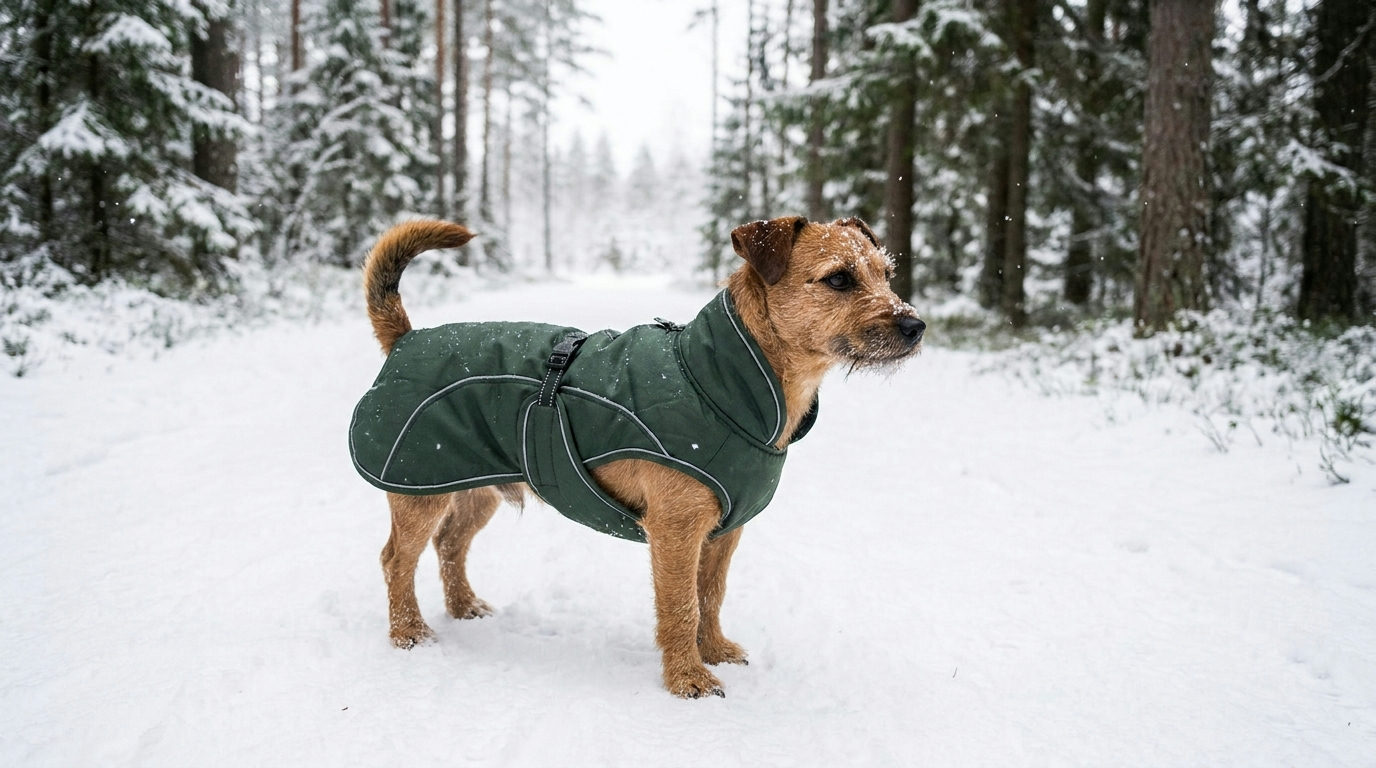
Choosing a dog winter coat can feel confusing. Some dogs seem to thrive in the snow with nothing but their own fur, while others start shivering the moment the door opens. A well-fitted coat may help some dogs stay comfortable on cold walks, but the wrong size or style can rub, slip or simply be ignored in favor of turning straight back home.
This guide walks you through how to decide whether your dog may benefit from a coat, how to measure for a good fit, which features to look for and how to help your dog get used to wearing it.
Does your dog need a winter coat?
Not every dog needs extra layers. Coat type, size, age, body condition and health all affect how well a dog copes with cold. These are some of the dogs that many owners find benefit from a coat, though your vet can give advice for your own dog:
- Short-coated dogs: Breeds with thin, single coats often feel the cold sooner.
- Small and toy dogs: Smaller bodies are closer to cold ground and snow.
- Lean dogs: Dogs with little body fat, such as many sighthounds, may chill quickly.
- Senior dogs: Older dogs may be less able to keep themselves warm.
- Young puppies: Puppies are still developing and may feel the cold more.
- Dogs with health conditions: Ask your vet if your dog has a condition that could affect how they handle cold weather.
Thick, double-coated breeds bred for cold climates often do not need a coat for everyday walks, and some may overheat in one. Watch your dog rather than the thermometer alone. Wind, rain and how long you plan to be outside all change how cold a walk really feels.
Signs your dog is too cold or too warm
Your dog’s behavior is the best guide to whether a coat is helping. Look out for:
- Too cold: Shivering, hunching, tucking the tail, lifting paws, slowing down or trying to turn home early.
- Too warm: Heavy panting, seeking shade or cool ground, or tiring unusually fast with the coat on.
- Just right: Relaxed body language, normal pace and interest in sniffing and exploring.
Our guide to reading dog body language can help you notice these signals early.
Choosing a dog winter coat that fits
Fit matters more than style. A coat that is too tight can rub and restrict movement, while one that is too loose can slip, twist or let cold air in. Measure your dog before you shop.
- Back length: Measure from the base of the neck, where the collar sits, to the base of the tail.
- Chest girth: Measure around the widest part of the chest, just behind the front legs.
- Neck girth: Measure around the neck where a collar would sit.
- Compare with the size chart: Sizes vary between makers, so always check the specific chart rather than relying on a “small” or “medium” label.
- If between sizes: Many owners choose the size that fits the chest best, as long as the length does not cover the tail base.
When the coat arrives, check that your dog can walk, sit, lie down and toilet comfortably. You should be able to slide two fingers under the straps, and the coat should not press into the armpits.
Features worth looking for
Once you know your dog’s size, these features can help you compare options.
- Weather resistance: A water-resistant outer layer helps in rain, sleet and wet snow.
- Warm lining: Fleece or insulated linings add warmth. A lighter layer may suit milder days.
- Belly coverage: Some coats cover more of the underside, which can help dogs with short legs who walk close to snow.
- Easy fastenings: Hook-and-loop straps or buckles that do not require lifting legs make dressing quicker.
- Harness access: A leash opening lets you clip on to a harness underneath. See our guide to choosing a dog leash and collar.
- Visibility: Reflective trim or bright colors help drivers see your dog on dark winter evenings.
- Washable materials: Machine-washable coats are easier to keep clean through muddy months.
For more cold-weather gear ideas, see our article on safe dog walking gear.
Helping your dog get used to a coat
Many dogs freeze or walk strangely the first time they wear a coat. A gradual introduction usually helps.
- Let your dog sniff the coat on the floor, then reward.
- Drape it over their back for a moment indoors, reward, then remove it.
- Fasten one strap, reward and remove. Build up to fastening it fully.
- Let your dog wear it around the house for short periods, with treats or a game.
- Head outside for a short walk in the coat, keeping things upbeat.
If your dog seems very unhappy, go back a step. Reward-based training makes a big difference here, as explained in our guide to positive reinforcement.
Coats, sweaters or both?
Coats and sweaters do slightly different jobs, and some owners keep one of each for different conditions.
- Sweaters are usually soft knits that add a light layer of warmth. They suit dry, cool days and chilly homes, but can soak through in rain or snow.
- Coats tend to have a weather-resistant outer layer and are better for wet, windy or snowy walks.
- Layering a thin sweater under a coat may help on the coldest days, as long as the fit stays comfortable and your dog can move freely.
- Indoor use is generally unnecessary for most dogs, and wearing layers all day can lead to overheating or rubbing.
Common mistakes when choosing a dog winter coat
A few common slip-ups explain why so many coats end up unused at the back of a cupboard.
- Guessing the size instead of measuring.
- Choosing a coat for looks rather than weather, such as a thin fashion jacket for snowy walks.
- Picking fastenings that need you to lift each leg, which some dogs dislike.
- Covering the tail base or restricting the shoulders, so your dog moves awkwardly.
- Skipping the introduction and expecting your dog to accept the coat straight away.
- Forgetting that puppies grow and may need a new size before the season ends. Our budget-friendly dog care tips have ideas for keeping costs down.
Caring for the coat through winter
- Shake off snow and hang the coat to dry after each walk.
- Wash it regularly following the care label, especially after salted or muddy routes.
- Check straps and seams for wear and fraying.
- Recheck the fit if your dog’s weight changes or their coat grows thicker.
- Remove the coat indoors so your dog does not overheat.
- Check your dog’s skin under the straps now and then for rubbing.
When to call your vet
Contact your vet if you notice any of the following during cold weather:
- Shivering that does not stop once your dog is warm and indoors.
- Weakness, confusion or unusual sleepiness after time outside.
- Pale, gray or cold patches of skin on the ears, tail or paws.
- Rubbing, sores or hair loss where the coat sits.
- A sudden change in how well your dog tolerates cold.
Questions to ask your vet
- Is my dog likely to benefit from a coat in cold weather?
- How long should our winter walks be on very cold days?
- Could my dog’s age or any health condition affect how they handle the cold?
- What signs of cold stress should I watch for in my dog?
- Is my dog at a healthy weight for winter?
Warm, comfortable walks all season
Choosing a dog winter coat comes down to your individual dog: their coat, size, age and how they behave in the cold. Measure carefully, pick practical features, introduce the coat slowly and keep watching your dog’s body language. If you are ever unsure whether your dog is coping with the cold, your vet can help you decide what is right. A coat that fits well and goes on easily is one you will actually use, which is what makes the difference on those dark, damp evenings when you both would rather stay on the sofa.
Further reading
- American Kennel Club: Does my dog need a winter coat?
- PDSA: Does my dog need to wear a coat on winter walks?
- VCA Animal Hospitals: What to consider when choosing a dog jacket