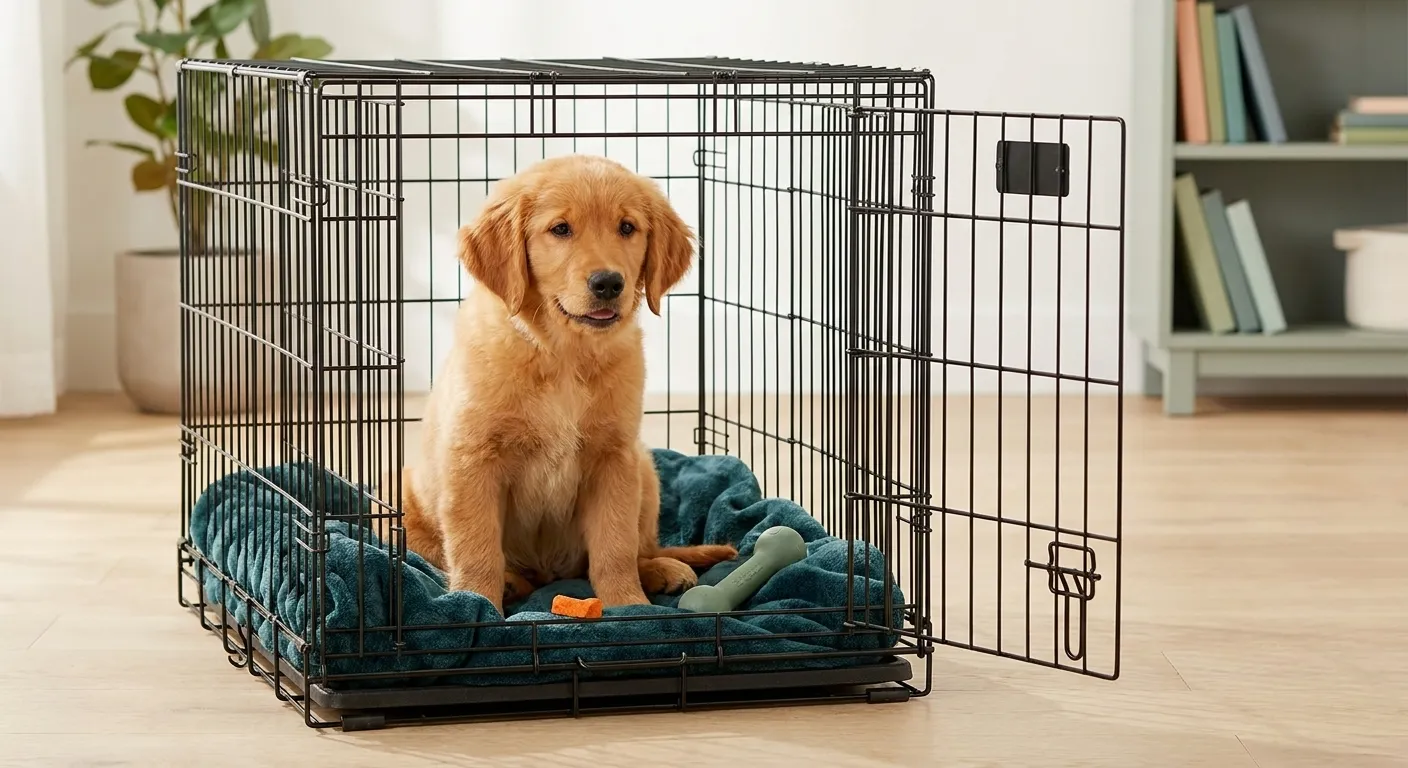
Crate training can be one of the most beneficial tools for raising a well-adjusted puppy, providing them with a safe haven and aiding in house-training. Achieving crate training puppy success means creating a positive association with the crate, making it a comfortable den rather than a punishment zone. Many new dog parents worry about putting their puppy in a crate, but when done correctly, it can reduce anxiety, prevent destructive behaviors, and provide a secure space your puppy will love. In fact, a crate can become your puppy’s personal retreat, offering comfort and security.
Choosing the Right Crate and Location for Your Puppy
First, select a crate that is appropriately sized. Your puppy should be able to stand up, turn around, and lie down comfortably. If you buy a larger crate for their adult size, use a divider to adjust the space. This ensures they have just enough room, preventing accidents. Place the crate in a central, family-oriented area of your home, like the living room or bedroom, so your puppy doesn’t feel isolated. Indeed, being near their human family helps them feel secure. Make it inviting with a soft bed or blanket, and a safe chew toy. Never use the crate for punishment, as this will create negative associations and hinder your progress. Instead, the crate should always be a positive place. For more ideas on comfortable resting spots, consider Finding the Best Dog Beds for Comfort and Durability.
Introducing Your Puppy to the Crate Positively
The key to successful crate acclimation is positive reinforcement. Start by simply leaving the crate door open and letting your puppy explore it at their own pace. You can toss a few tasty treats or a favorite toy inside to encourage them to enter. Praise them gently and enthusiastically when they go in, even if it’s just for a moment. This helps build a positive connection with the crate. Avoid forcing your puppy into the crate, as this can create fear and resistance. Instead, make it an inviting game.
Once your puppy is comfortable entering the crate, begin feeding them meals inside. Keep the door open initially. As they eat, they’ll associate the crate with something pleasant and rewarding. Gradually, you can close the door for very short periods while they’re eating, slowly increasing the time. Open the door as soon as they finish their meal. This step is crucial for building trust and ensuring they see the crate as a safe place, not a trap.
Step-by-Step Crate Training Puppy Success
Consistency and patience are essential for achieving crate training puppy success. Once your puppy is comfortable eating in the crate with the door closed for short periods, you can start extending the time. Begin with just a few minutes, then slowly increase to 10, 20, and eventually 30 minutes or more. Stay nearby at first, perhaps reading a book or watching TV, so your puppy knows you’re still around. If they whine or fuss, wait for a brief pause in the noise before letting them out. This teaches them that barking won’t get them immediate release, but calmness will. However, if the whining escalates into distress, let them out, calm them, and try again later for a shorter duration.
For bedtime, ensure your puppy has had a potty break and is tired from playtime. Place the crate in your bedroom initially, so they don’t feel isolated. This proximity can provide comfort and security during the night. Establish a consistent bedtime routine, which might include a final potty trip, a chew toy in the crate, and a comforting word. Consistency is key; stick to this routine every night. Remember, a well-placed crate helps with Puppy Potty Training Made Easy by limiting accidents.
Gradually Increasing Crate Time
As your puppy becomes more accustomed to the crate, you can gradually increase the time they spend inside while you’re away. Start with short absences, perhaps just stepping out of the room for a few minutes. Always make your departures and arrivals calm and low-key. Avoid making a big fuss, as this can heighten your puppy’s anxiety. Leave them with a safe, durable chew toy to keep them occupied and associate the crate with positive experiences. For excellent toy options, check out Safe Durable Dog Toys: A New Dog Parent’s Guide.
When you return, let your puppy out of the crate calmly and immediately take them outside for a potty break. This reinforces good habits and prevents accidents. Over time, you can extend the periods you leave your puppy in the crate, working up to a few hours. Always ensure they have access to water before and after crating, and that they’ve had plenty of exercise. A good rule of thumb is that a puppy can typically hold their bladder for one hour per month of age, plus one. Therefore, plan your crating times accordingly.
Addressing Whining and Barking in the Crate
It’s normal for puppies to whine or bark a bit when first introduced to the crate. Your response to this behavior is critical for long-term crate training puppy success. If your puppy whines, first try to determine if they need to go outside for a potty break, especially if they haven’t been out recently. If they’ve just been out, and you know they’re not in distress, try to ignore the whining. Giving attention to whining can inadvertently reinforce the behavior. Wait for a brief moment of quiet before letting them out. This teaches them that silence, not noise, is rewarded.
However, if the whining or barking is persistent and sounds like genuine distress or panic, it’s important to address it. Let your puppy out, calm them down, and then try again with a shorter crating period or more positive reinforcement. Never scold or punish your puppy for whining in the crate; this will only create negative associations and make them fear the crate. Patience and understanding are your best tools here. For additional behavior tips, consider resources like the ASPCA’s guidance on crate training.
Benefits of Crate Training for Your Puppy and Your Home
Beyond house-training, a well-trained crate can provide numerous benefits. It offers your puppy a secure den where they can retreat when they feel overwhelmed or just need some quiet time. This can significantly reduce anxiety in new environments or during stressful situations, such as thunderstorms. Furthermore, it helps prevent destructive behaviors, as your puppy is safely contained when you can’t supervise them directly. This protects your furniture and belongings, and keeps your puppy safe from ingesting harmful items.
A crate also simplifies travel and vet visits, as your puppy will be comfortable and calm in their familiar space. It provides a consistent environment, no matter where you go. Moreover, it aids in establishing a routine, which is crucial for a puppy’s development. By having a designated resting place, your puppy learns to settle down and relax, contributing to a more peaceful home environment. Ultimately, a properly introduced crate fosters independence and security for your canine companion, leading to lifelong comfort.
Common Crate Training Challenges and Solutions
Even with the best intentions, you might encounter some challenges during the process of puppy crate training. One common issue is a puppy who resists entering the crate. If this happens, try making the crate even more appealing. Place a favorite blanket, a high-value treat, or a cherished toy inside. Play gentle games around the crate, like hide-and-seek with treats. Gradually, your puppy will associate the crate with fun and rewards. Never force them inside; this can create a lasting negative impression.
Another challenge can be separation anxiety when you leave your puppy in the crate. This manifests as excessive whining, barking, or even destructive behavior within the crate itself. To address this, ensure your puppy gets plenty of exercise and mental stimulation before crating. A tired puppy is a calm puppy. Start with very short absences and gradually increase the time, always returning before your puppy becomes overly distressed. You can also leave a piece of clothing with your scent to provide comfort. If separation anxiety is severe, consulting a professional dog trainer or veterinary behaviorist might be beneficial. The Humane Society offers excellent resources on crate training techniques.
Maintaining Crate Training Success Long-Term
Once your puppy is comfortable and happy in their crate, it’s important to maintain these positive associations throughout their life. Even as an adult dog, the crate can serve as a safe haven and a familiar retreat. Continue to use it for short periods when you leave the house, or when your dog needs a quiet break. Always ensure the crate remains a positive space, never used for punishment. Keep it clean and comfortable, and occasionally offer treats or toys inside, even if your dog doesn’t spend as much time there as they did as a puppy. This ongoing positive reinforcement ensures your dog continues to view their crate as a welcome part of their home. Long-term crate training puppy success translates into a secure and happy adult dog.
Remember that every dog is an individual, and some may take longer to adjust to crate training than others. Be patient, consistent, and always use positive reinforcement. Celebrate small victories, like your puppy voluntarily entering the crate or settling down quickly. With dedication, you’ll provide your furry friend with a valuable tool for comfort, safety, and good behavior. Your puppy will thank you for their cozy den!
FAQ: Your Crate Training Questions Answered
What is the ideal age to start puppy crate training?
You can start training your puppy as soon as you bring them home, typically around 8 weeks old. The younger they are, the easier it often is for them to adapt and form positive associations with their new den.
How long can a puppy stay in a crate?
A general rule of thumb is one hour per month of age, plus one. So, a 3-month-old puppy can typically stay in a crate for about 4 hours. However, this is just a guideline, and individual needs may vary. Always ensure they have regular potty breaks.
What should I put in my puppy’s crate?
Include a soft, comfortable bed or blanket, and a safe, durable chew toy to keep them occupied. Avoid anything they could chew apart and potentially swallow. You can also add a piece of your clothing for comfort.
My puppy whines constantly in the crate. What should I do?
First, rule out the need for a potty break. If they’ve just been out, try to ignore the whining briefly. Wait for a moment of quiet before letting them out. If the whining is due to distress, let them out, calm them, and try a shorter crating period next time. Never punish them for whining.
Can crate training help with house-training?
Absolutely! Dogs naturally avoid soiling their sleeping areas. A properly sized crate encourages your puppy to hold their bladder and bowels until they are let out, which significantly aids in the house-training process. It teaches them bladder control and helps establish a routine.
Is it cruel to use a crate for a puppy?
No, when done correctly, crate training is not cruel. It provides a safe, secure den that puppies often come to love. It prevents destructive behavior, aids in house-training, and reduces anxiety by giving them a personal space. It’s a valuable tool for their well-being.