This article is general information for dog owners, not veterinary advice. If you think your dog has eaten something harmful, contact your vet or an animal poison control line right away.
Halloween is fun for people, but for many dogs it is a night of strange costumes, a doorbell that never stops and bowls of tempting treats at nose height. These Halloween dog safety tips will help you plan ahead so your dog stays comfortable, secure and out of the candy. Most of the work happens in the days before October 31, which means you can enjoy the evening instead of chasing a nervous dog around the house.
Use the checklists below as a starting point, then adjust them for your own dog’s personality. A confident, social dog and a shy rescue need very different plans.
Halloween dog safety tips for the week before
A little preparation goes a long way. Work through this list a few days early so nothing is rushed on the night.
- Check ID: Make sure your dog’s collar fits well and the ID tag shows a current phone number. If your dog is microchipped, confirm your contact details are up to date with the registry.
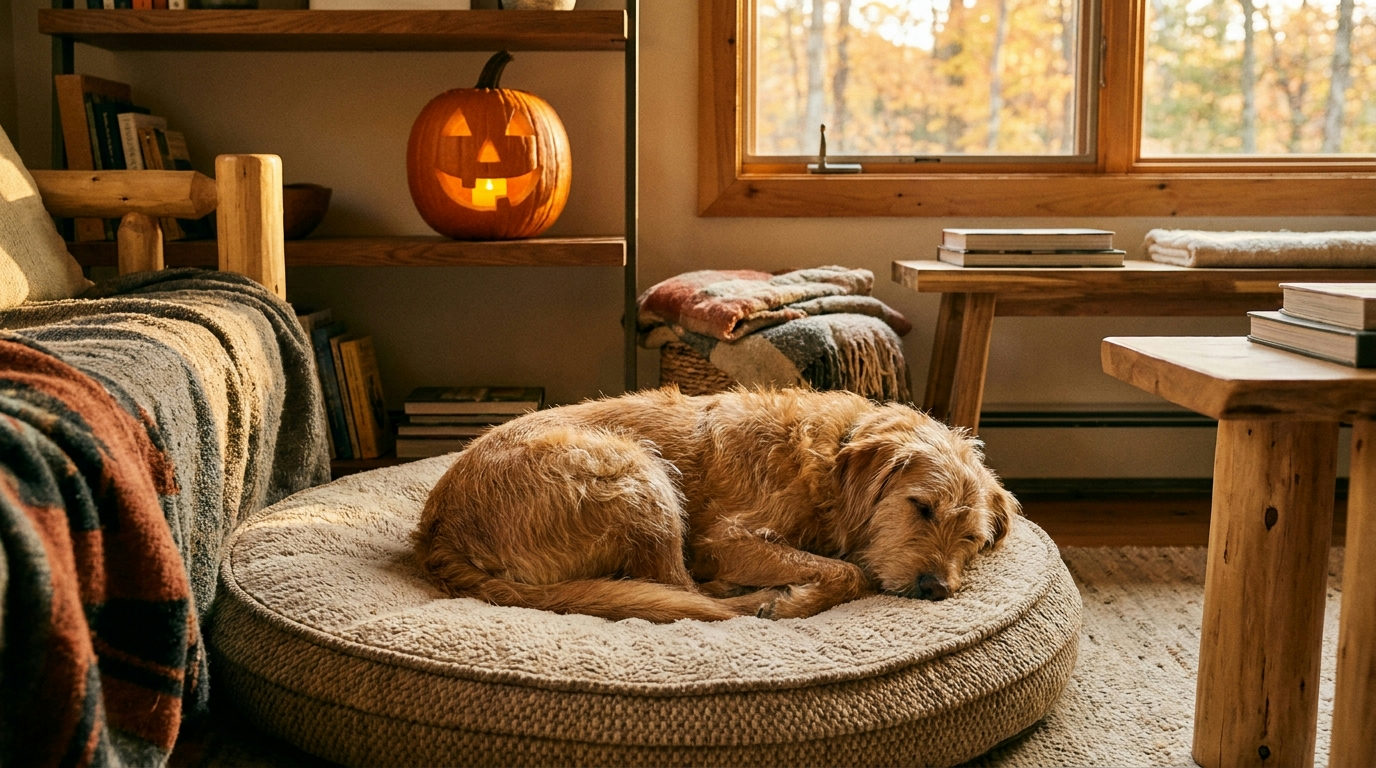
- Choose a quiet room: Pick a room away from the front door where your dog can rest with a bed, water and a favorite chew.
- Practice the doorbell: Ring the bell or knock a few times a day, then calmly reward your dog for settling. Keep sessions short and upbeat.
- Plan the walk: Schedule a longer walk or play session in daylight so your dog is relaxed before trick-or-treaters arrive.
- Stock up on dog-safe rewards: Keep a jar of your dog’s usual treats by the door so you are never tempted to share candy. Our guide to healthy dog treats covers what to look for.
Keep candy and decorations out of reach
Many Halloween foods and decorations are not meant for dogs. Chocolate, sugar-free sweets that may contain xylitol, raisins and wrappers can all cause problems, and dogs are very good at finding them. Rather than relying on a list of what is “safe”, the simplest rule is that people treats stay out of reach entirely.
- Store candy bowls on high shelves or in closed cupboards, not on coffee tables.
- Ask children to keep their haul in a closed bag in a room the dog cannot enter.
- Check floors and the yard the next morning for dropped wrappers and sticks.
- Keep glow sticks, fake cobwebs, small plastic decorations and cords out of chewing range.
- Use battery candles instead of real flames in carved pumpkins, especially near wagging tails.
- Remember that pumpkins and corn decorations can go moldy, so throw them out once they start to soften.
If you are not sure whether something your dog ate could be harmful, call your vet. It is always better to ask early. Keeping a dog first aid kit and your vet’s number handy is a good habit all year round.
Manage the front door
Of all the Halloween dog safety tips here, managing the door may matter most. The front door is where most Halloween problems start. Every time it opens, there is a chance for a nervous dog to slip out or a friendly dog to jump on a small child in a costume.
- Use a baby gate, a closed door or a crate so your dog cannot reach the entrance.
- Consider sitting outside to hand out treats, so the doorbell does not ring at all.
- Put a short note on the door asking visitors to knock gently, or turn off the bell for the evening.
- Keep your dog on a leash or behind a barrier if they want to greet people.
- Play calm background music or white noise to soften street noise.
Crate-trained dogs often find their crate a comfortable retreat on busy nights. If you are still building that habit, our gentle crate training guide can help you get there for next year.
Think carefully about dog costumes
Some dogs tolerate a costume happily. Many do not. If you would like to dress your dog up, keep comfort and safety first.
- Try the costume on for a few seconds at a time in the days before, with treats.
- Check that it does not cover the eyes, ears, nose or mouth, or restrict walking and panting.
- Avoid small parts, elastic bands or anything your dog could chew off and swallow.
- Watch body language. Lip licking, yawning, freezing or trying to back out of the costume all suggest your dog is uncomfortable.
- A festive bandana is a simple alternative that most dogs barely notice.
Learning to read your dog’s body language makes decisions like this much easier.
Walking and trick-or-treating with your dog
If your dog loves people and handles busy streets well, a short trick-or-treat outing can be fun. Keep it brief and well lit.
- Use a secure, non-retractable leash and a well-fitted harness or collar. See our guide to choosing a dog leash and collar.
- Add a light-up collar or reflective gear so drivers can see you both.
- Stay on quieter streets and cross the road to avoid large groups.
- Head home at the first signs of stress, such as pulling away, tail tucking or heavy panting.
- Most dogs are happier staying home, so there is no need to bring them along.
Help a nervous dog through the evening
Some dogs find the whole night unsettling, from the doorbell to fireworks or loud groups passing outside. You cannot remove every noise, but you can make the evening feel more predictable.
- Set your dog up in their quiet room before the first visitors arrive, not after they are already worked up.
- Offer a long-lasting chew or a stuffed food toy. Licking and chewing can help many dogs settle.
- Close curtains so costumes and flashing lights outside are less visible.
- Check in calmly every so often, but avoid fussing, which can make the situation feel more serious.
- Let your dog choose to hide under a table or in a crate if that is where they feel safe.
If your dog regularly struggles with noise or visitors, our article on helping an anxious dog stay calm has more ideas to try throughout the year.
If your dog gets out
Even careful households have the occasional escape. Having a plan helps you act quickly instead of panicking.
- Do not chase your dog, as this can turn into a game or push a scared dog further away. Call their name in a happy voice and move away from them, or crouch down.
- Shake a treat bag or squeak a favorite toy if your dog responds well to those sounds.
- Ask neighbors and trick-or-treating families to keep an eye out, and share a recent photo.
- Contact local shelters and your microchip registry if your dog is not found quickly.
When to call your vet
Call your vet or an emergency clinic promptly if you think your dog may have eaten candy, wrappers, raisins, decorations or anything else unusual, even if they seem fine. Also get help if you notice:
- Vomiting, diarrhea or drooling.
- Restlessness, shaking or unusual excitement.
- Weakness, wobbling or collapse.
- Signs of pain or a swollen belly.
- Panic that does not settle once things are quiet.
Write your vet’s phone number, the nearest after-hours clinic and an animal poison control number on a card by the door before the evening begins.
Questions to ask your vet
- Which Halloween foods and items should I be most careful about for my dog?
- What should I do first if I think my dog has eaten chocolate or a sugar-free sweet?
- Where is the nearest emergency clinic open on Halloween night?
- My dog gets very anxious with noise and visitors. What options could help?
- Is my dog’s microchip registered correctly?
After the party
The next morning, do a quick sweep of the house and yard for wrappers, sticks and fallen decorations. Put leftover candy away properly and give your dog a relaxed walk to reset. If your dog found the night stressful, make a note of what bothered them most, whether it was the doorbell, costumes or street noise, so you can plan better next year.
With a quiet room, a secure door and candy kept well out of reach, these Halloween dog safety tips can help both you and your dog enjoy the season.
Further reading
- ASPCA: Halloween safety tips
- American Kennel Club: Halloween safety tips for dogs
- AVMA: Halloween pet safety