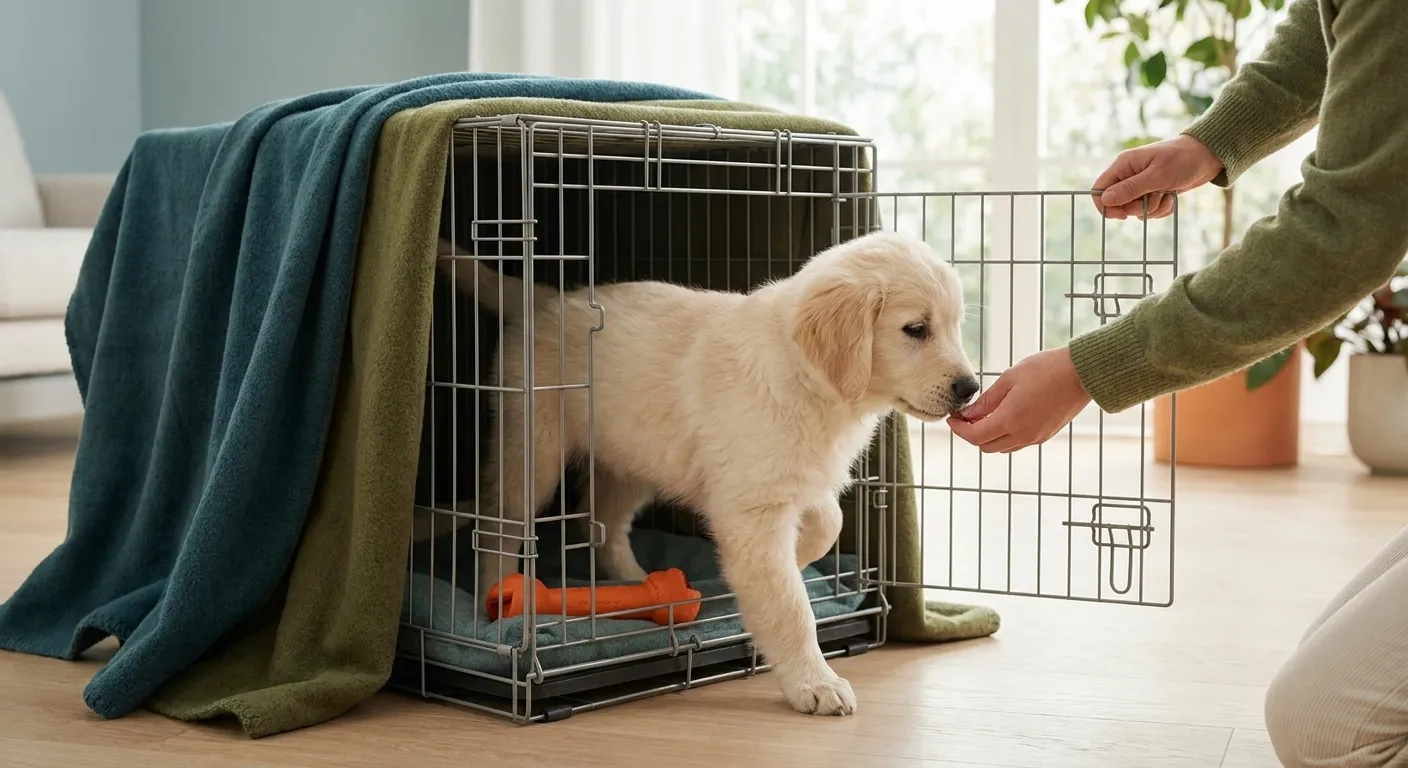
Crate training puppy is the focus of this guide. Crate training your puppy can be one of the most beneficial investments you make in their early development. Indeed, it provides them with a safe den and aids significantly in house-training. Far from being a punishment, a crate can become a secure, comforting space for your puppy. Therefore, this step-by-step guide will walk you through a gentle and effective approach to crate training, ensuring a positive experience for your new furry family member.
Understanding the Benefits of Crate Training for Your Puppy
Before diving into the how-to, it’s helpful to understand why a crate is so valuable. Many dog owners initially worry that crating is unkind, but dogs are naturally den animals. Consequently, a well-introduced crate mimics a safe, private den where they can retreat and feel secure. This natural instinct makes successful crate training puppy much easier than you might think. Moreover, it offers numerous practical advantages for you and your dog.
For instance, a crate can be an invaluable tool for house-training. Puppies are naturally reluctant to soil their sleeping area. Thus, by limiting their space, you encourage them to hold their bladder and bowels, making outdoor potty breaks more effective. Furthermore, it helps prevent destructive chewing when you can’t supervise your puppy directly. This means fewer chewed shoes and furniture, which is a win for everyone. Also, a crate provides a safe way to transport your dog, whether to the vet or on a family trip. It truly offers peace of mind.
Choosing the Right Crate for Your Growing Companion
The first step in successful puppy crate training is selecting the appropriate crate. The size is crucial. A crate should be just large enough for your puppy to stand up, turn around, and lie down comfortably. If the crate is too large, your puppy might use one end as a bathroom area, defeating the purpose of house-training. However, if you plan to purchase one crate that will last into adulthood, consider a model with a divider. This allows you to adjust the internal space as your puppy grows, making it suitable for all stages of their life.
There are generally two main types of crates: wire and plastic. Wire crates offer good ventilation and visibility, often folding for easy storage. Plastic crates, also known as travel crates, provide a more den-like, enclosed feel and are excellent for car travel. Both types are effective, so choose what best fits your home and your puppy’s needs. Furthermore, consider placing the crate in a family area, such as your living room or bedroom. This ensures your puppy doesn’t feel isolated, fostering a sense of belonging even when in their den.
Making the Crate an Inviting Space for Your Puppy
Once you have the right crate, the next step is to make it a welcoming haven, not a place of confinement. Start by placing a soft, comfortable blanket or a specific dog bed inside. A favorite, safe toy can also be a great addition, providing comfort and familiarity. Leave the door open and let your puppy explore the crate at their own pace. Never force them inside, as this can create negative associations that are difficult to overcome. The goal is for them to associate the crate with positive experiences.
For example, you can toss a treat inside the crate and praise your puppy when they go in to retrieve it. Repeat this several times a day. You might also sit near the crate and offer gentle encouragement. This initial phase is about building trust and curiosity. Remember, patience is key during this introduction. Your puppy needs to discover that the crate is a safe and pleasant spot on their own terms.
Positive Association: Meals and Treats in the Crate
Building positive associations is fundamental to effective crate training puppy. One of the best ways to do this is by feeding your puppy meals inside the crate. Initially, place the food bowl just inside the entrance with the door open. As your puppy becomes more comfortable, gradually move the bowl further inside the crate. Eventually, your puppy will be eating their entire meal inside the crate, feeling secure and relaxed.
During mealtime, use encouraging words and praise. For instance, say
Related reading: