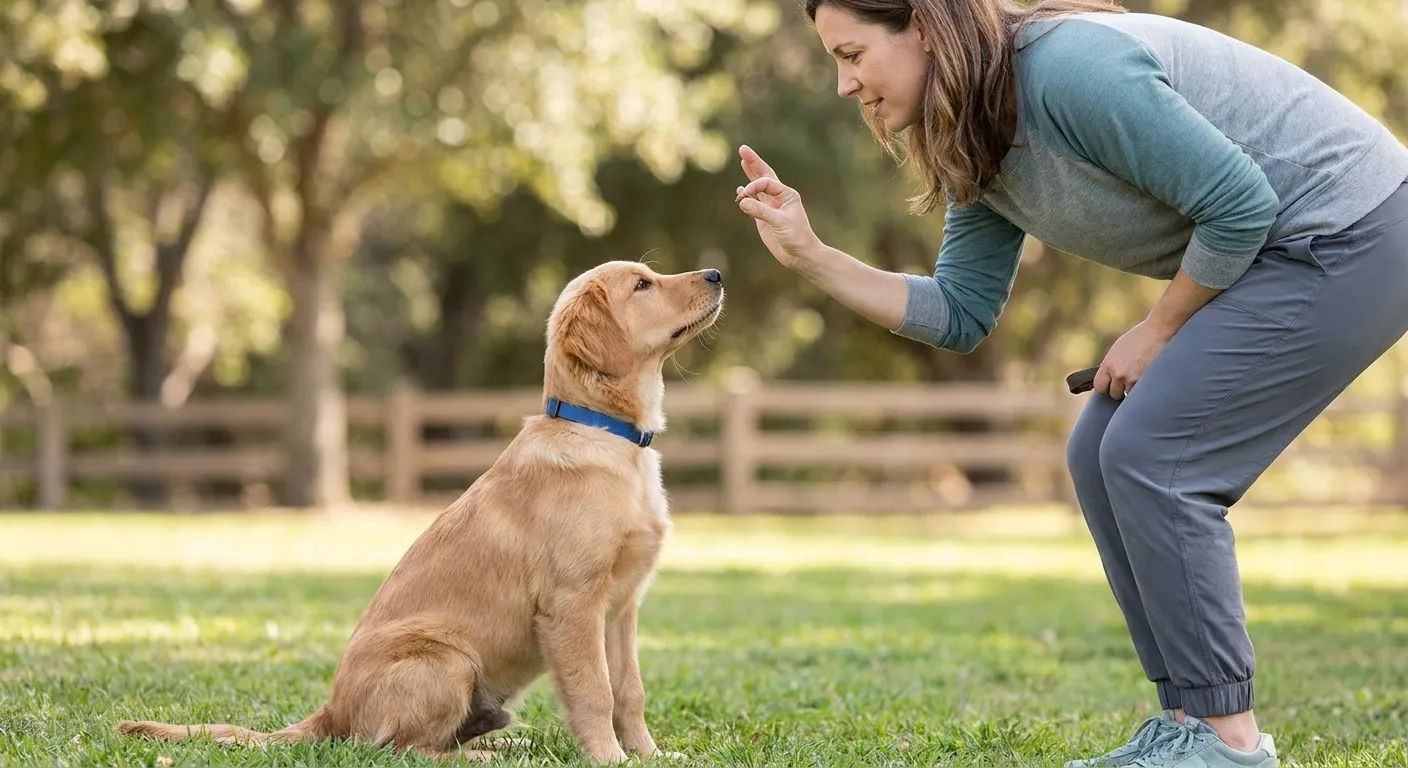
Training your dog isn’t just about good manners; it’s about building a strong bond, ensuring their safety, and enhancing your communication. For new dog parents, starting with a few fundamental commands is key. Mastering basic dog commands like “Sit,” “Stay,” and “Come” forms the foundation for more advanced training and can be vital in everyday situations, from preventing them from running into traffic to simply enjoying a calm walk in the park. Let’s dive into teaching these essential skills using positive reinforcement. Moreover, consistent training builds a confident and happy companion.
Why Basic Dog Commands Are So Important
Understanding and responding to commands is crucial for your dog’s safety. For instance, a reliable “Come” can prevent a dangerous situation if your dog gets off-leash near a busy road. Similarly, a solid “Stay” can keep them safe when guests arrive or when you need a moment to secure their leash. Beyond safety, these fundamental commands strengthen the bond you share. When your dog understands what you’re asking, communication improves, and your relationship deepens. Furthermore, well-trained dogs are generally happier and more confident, as they understand boundaries and expectations.
Many dog owners find that early training, especially for puppies, sets the stage for a lifetime of good behavior. If you’re bringing home a new furry friend, consider exploring our New Puppy Essentials List to ensure you have everything you need for their arrival, including training aids. Ultimately, teaching your dog these foundational skills is an investment in their well-being and your shared future.
Getting Started: Essential Training Principles
Before you begin teaching specific commands, it’s helpful to understand a few core training principles. Firstly, always use positive reinforcement. This means rewarding desired behaviors with treats, praise, or toys. Avoid punishment, as it can create fear and damage your bond. Secondly, keep training sessions short and fun. Dogs have short attention spans, so five to ten-minute sessions, several times a day, are more effective than one long, tedious session. Thirdly, be consistent. Everyone in the household should use the same commands and rewards. In addition, practice in various environments to help your dog generalize their understanding.
Fourthly, manage your expectations. Every dog learns at their own pace. Some may pick up commands quickly, while others might need more time and repetition. Patience is truly a virtue in dog training. Lastly, ensure your dog is comfortable and focused. A tired or overstimulated dog will struggle to learn. Therefore, choose quiet times when your dog is relatively calm but still energetic enough to engage.
Teaching “Sit”: A Foundation Command
“Sit” is often the first command taught and is relatively straightforward. To begin, have a high-value treat ready. Hold the treat near your dog’s nose, then slowly move it up and slightly over their head, towards their tail. As their nose follows the treat, their rear will naturally lower into a sitting position. As soon as their bottom touches the ground, say “Sit!” enthusiastically and immediately give them the treat and praise. This helps them associate the action with the word and the reward. Repeat this multiple times in short, positive sessions. Initially, you might need to guide them gently into position, but soon they will understand the gesture and the verbal cue. Consistency is key here. Once your dog consistently sits on cue, you can gradually phase out the lure by making the hand motion smaller until it’s just a subtle signal.
Introducing “Stay”: Building Self-Control
Once your dog reliably performs “Sit,” you can introduce “Stay.” This command teaches your dog self-control and patience, which is incredibly useful in many situations. Start by having your dog sit. Then, hold up an open palm towards them (this can be your visual cue for “Stay”), and clearly say “Stay.” Take just one small step back, count to one, then immediately return to your dog, praise them warmly, and give them a treat. The crucial part is to always return to them before they break the stay, even if it’s for a very short duration at first. This builds their confidence that you will always come back.
Gradually increase your distance and the duration of the “Stay.” For example, take two steps back, then three. Wait two seconds, then three, and so on. Always return to your dog to release them with a cheerful “Okay!” or “Free!” before they move. If they break the stay, simply lead them back to their original position, say “Sit,” then “Stay,” and try again with a shorter duration or distance. Remember, these basic dog commands are crucial for control and safety, so practice makes perfect. For longer stays, ensure your dog is comfortable, perhaps with a comfy bed or mat, which can also be useful for crate training your puppy.
The Life-Saving “Come” Command (Recall)
The “Come” (or “Recall”) command is arguably the most important for your dog’s safety. A reliable recall can literally save your dog’s life. Start in a quiet, distraction-free environment, such as your home or a fenced yard. Get down to your dog’s level, open your arms wide, and in a happy, inviting voice, say “Come!” As they approach, praise them heavily and reward with a high-value treat. Make coming to you the most rewarding thing in the world. It’s essential to celebrate their arrival with enthusiasm. Never use “Come” to scold your dog or do something they dislike (like giving a bath or leaving the park), as this can create a negative association and make them hesitant to respond in the future. The goal is for them to always associate coming to you with positive experiences.
As your dog gets better, gradually introduce distractions. Practice in different rooms, then in your yard, and eventually in safe, enclosed outdoor spaces. Always make coming to you the most rewarding choice, even if they’re distracted by a toy or another dog. You can use a long training leash initially to ensure they can’t run off and to gently guide them towards you if they get distracted. This command, along with other basic dog commands, truly enhances their safety, especially when you’re out and about. For instance, when choosing durable dog collars and leashes, a strong recall gives you an extra layer of security.
Troubleshooting Common Training Challenges
Even with the best intentions, you might encounter some bumps in the road. One common issue is a dog not responding to commands in distracting environments. The solution? Practice, practice, practice! Start in low-distraction areas and slowly increase the level of distraction. Furthermore, ensure your rewards are high-value enough to compete with the distractions. If your dog is easily distracted by other dogs, for example, practice at a distance where they can still focus on you, then gradually get closer.
Another challenge can be a dog who seems to understand a command at home but not elsewhere. This is known as a lack of generalization. To overcome this, practice your basic dog commands in a variety of locations: your backyard, a friend’s house, a quiet park. Each new environment is a learning opportunity. Moreover, some dogs might get bored with the same treats. Therefore, rotate your rewards to keep them motivated and engaged. Remember, patience and consistency are your most powerful tools. If you’re struggling, consider consulting a professional dog trainer for personalized guidance.
Making Training a Positive Experience for Both of You
The most successful training relationships are built on trust and positive experiences. Always keep training sessions short, fun, and always end on a positive note. Even if a session wasn’t perfect, try to end after a successful execution of a command. This leaves your dog feeling confident and eager for the next session. Celebrate every small victory. A happy voice, enthusiastic praise, and tasty treats go a long way in building a confident and responsive companion.
Consider making training a regular part of your daily routine. For example, ask your dog to “Sit” before you put down their food bowl or to “Stay” while you open the door. Integrating these basic dog commands into everyday life reinforces their importance and makes them second nature for your dog. Furthermore, remember that training is an ongoing process, not a one-time event. Even adult dogs benefit from refresher sessions and learning new tricks. You can find more helpful tips on pet care and products at our Doggy Stuff Shop.
Beyond the Basics: Continuing Your Dog’s Education
Once your dog has mastered “Sit,” “Stay,” and “Come,” you might wonder what’s next. These foundational skills open the door to a world of possibilities. You can teach them more advanced obedience commands like “Down,” “Heel,” or “Leave It.” These build on the control and communication established with the initial basic dog commands. Moreover, consider teaching fun tricks like “Shake a Paw” or “Roll Over.” These activities provide mental stimulation for your dog and further strengthen your bond.
Additionally, participating in dog sports like agility, rally obedience, or even canine freestyle can be a fantastic way to engage your dog physically and mentally. These activities often require a strong grasp of fundamental commands and offer a wonderful outlet for your dog’s energy and intelligence. Remember, a well-exercised and mentally stimulated dog is generally a well-behaved dog. Ultimately, continuing your dog’s education keeps them engaged, happy, and well-adjusted members of your family.
For further reading on positive reinforcement training methods, you might find resources from organizations like the Association of Professional Dog Trainers or the ASPCA helpful and informative. These reputable sources offer valuable insights into ethical and effective training practices.
Conclusion
Teaching your dog basic dog commands is an investment in their safety, your peace of mind, and the wonderful relationship you share. By focusing on positive reinforcement, consistency, and patience, you can effectively teach your dog essential skills like “Sit,” “Stay,” and “Come.” These commands not only make your dog a safer and more polite companion but also deepen the bond between you. Remember, every successful command, every wag of the tail, and every shared moment of understanding builds a stronger, happier connection. Keep training sessions short, fun, and always end on a positive note to build a confident and responsive companion.
FAQ Section
What are the most important commands to teach a dog?
The most crucial commands for a dog’s safety and good behavior are “Sit,” “Stay,” and “Come” (recall). These foundational skills provide control and improve communication, making everyday life safer and more enjoyable for both of you.
How long does it take to teach a dog fundamental commands?
The time it takes varies greatly depending on the individual dog, their age, previous training, and your consistency. Generally, with short, consistent daily sessions (5-10 minutes, several times a day), most dogs can begin to understand and respond to core commands within a few weeks. Mastery, especially in distracting environments, takes longer.
Can you teach an old dog new tricks and commands?
Absolutely! You can definitely teach an old dog new commands. While puppies might pick things up quickly, older dogs are often more focused and eager to please. The key is to use patience, positive reinforcement, and adapt your training methods to their physical capabilities. It’s never too late to enhance your dog’s skills.
What is positive reinforcement in dog training?
Positive reinforcement is a training method that involves adding something desirable (like a treat, praise, or toy) to increase the likelihood of a desired behavior occurring again. For example, if your dog sits when asked, you immediately give them a treat. This creates a positive association with the action, making them more likely to repeat it.
How often should I practice dog obedience training?
For best results, practice obedience training in short, frequent sessions throughout the day. Aim for 3-5 sessions, each lasting about 5-10 minutes. This keeps your dog engaged and prevents boredom. Consistent, short bursts of training are far more effective than one long, infrequent session.