Disclaimer: This article is general information for dog owners, not veterinary or behavioral advice. Every dog is different, so check with your vet or a qualified trainer about your own dog.
A dog who comes back when called is safer, freer and easier to enjoy outings with. Dog recall training takes time, but it does not need to be complicated. The secret is making “come” the best thing that ever happens to your dog, then building up slowly from easy situations to harder ones. Rushing to off-leash freedom is the most common reason recall breaks down.
This guide covers choosing a cue, picking rewards, a step-by-step progression from indoors to open spaces, games that make practice fun, common mistakes and when to bring in extra help.
Why a reliable recall matters
A strong recall is one of the most useful things you can teach. It can help:
- Call your dog away from roads, wildlife or other hazards.
- Bring your dog back before they reach another dog or person who does not want company.
- Give your dog more freedom in safe, appropriate spaces.
- Make everyday moments easier, from coming inside to getting in the car.
Even with good training, always follow local leash rules and use judgment about where off-leash time is appropriate.
Choose your cue and rewards
Before you start, decide on a few basics so everyone in the household is consistent.
- Pick a clear cue: “Come”, “here” or a whistle all work. If you have used “come” a lot without success, start fresh with a new word.
- Use a happy tone: Your cue should always sound like an invitation, never a warning.
- Find high-value rewards: Recall is competing with exciting smells and sights, so use treats your dog finds irresistible. Our guide to healthy dog treats can help you choose.
- Add play: For toy-motivated dogs, a quick game of tug or a thrown ball can be a great reward.
- Keep a long line handy: A long training leash lets you practice at a distance safely, before your dog is reliable.
Dog recall training step by step
Move through each stage only when your dog is responding quickly and happily most of the time. If they struggle, go back a step.
- Charge the cue indoors: In a quiet room, say your cue once and immediately give a treat, even though your dog is right next to you. Repeat a few times a day. This teaches that the word predicts something great.
- Add a little distance: Wait until your dog is a few steps away, say the cue, and reward generously when they reach you. Gently touch their collar as you reward, so being held briefly is also part of the routine.
- Practice around the house: Call from different rooms. Have a family member hold your dog gently, then release as you call.
- Move to the yard: Practice in a secure outdoor space with mild distractions.
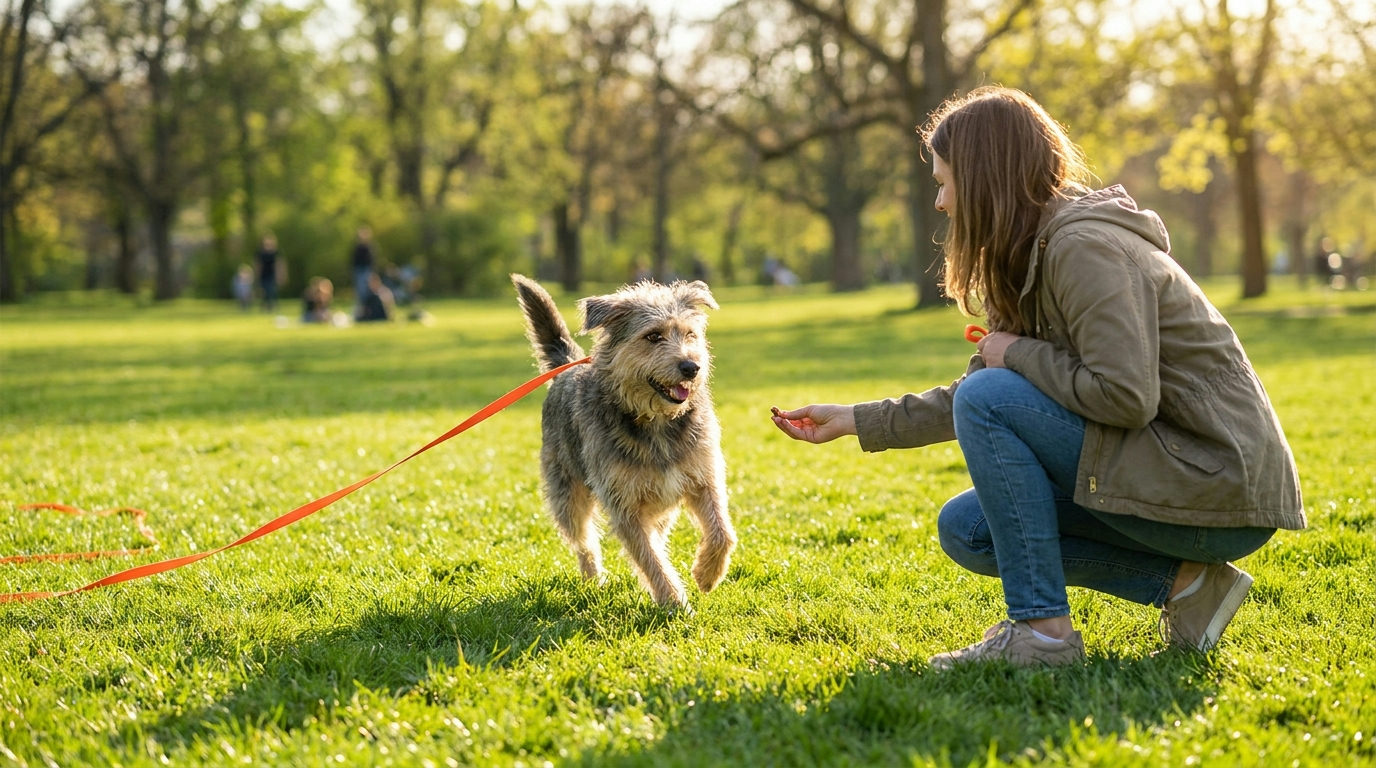
- Use a long line in new places: In parks or open spaces, attach a long line to a harness. Call when your dog is not too distracted, and reward big when they come.
- Add distractions gradually: Practice near interesting smells, then at a distance from other dogs, then a little closer as your dog succeeds.
- Proof it over time: Keep practicing in many places, at different times, with different family members.
Our guide to basic dog commands covers how “come” fits with sit and stay.
Recall games that make practice fun
Games keep training upbeat and help your dog practice without feeling drilled.
- Ping-pong recall: Two people stand apart and take turns calling the dog, rewarding each time.
- Hide and seek: Hide behind a door or tree, call once and celebrate when your dog finds you.
- Run away: Call your dog and then jog a few steps away. Many dogs love to chase, which builds a fast recall.
- Collar grab game: Touch the collar, then treat. This helps your dog feel comfortable being held when they arrive.
- Check-in rewards: On walks, reward your dog whenever they choose to look back or return to you without being called.
For more ways to keep your dog busy and engaged, see our ideas for fun dog activities beyond the walk.
Common dog recall training mistakes
A few habits can quietly undo good training. Watch out for these:
- Calling only to end the fun: If “come” always means leash on and home, your dog may learn to avoid it. Call, reward, then let them go play again often.
- Repeating the cue: Saying “come, come, come” teaches your dog that the first call does not count. Say it once, then help them succeed by moving away or using a long line.
- Punishing on arrival: Never scold your dog when they come back, however long it took. Arriving must always be good news.
- Going off-leash too soon: Every time your dog ignores the cue and gets rewarded by the environment, recall weakens.
- Using boring rewards: A dry biscuit may not compete with a squirrel. Save the best treats for recall.
- Chasing your dog: Running after a dog often turns into a game of keep-away.
Reward-based training is the foundation for all of this. Our guide to positive reinforcement explains why it works.
Adapting recall for different dogs
The same steps work for most dogs, but a few tweaks can help depending on age and history.
- Puppies: Young puppies often follow you naturally, which makes it a great time to start. Keep sessions very short and fun. Our new puppy essentials checklist covers the gear to have ready.
- Adolescent dogs: Many dogs seem to “forget” their recall as they mature. Go back to the long line and easier settings for a while. This stage usually passes with patience.
- Rescue dogs: Some rescues may be unsure about approaching people at first. Build trust with lots of low-pressure rewards before expecting a fast recall.
- Senior dogs: Older dogs may move more slowly or hear less well. A hand signal or a brief flash of a flashlight can be added alongside your verbal cue.
Consider an emergency recall
Some owners teach a second, special recall cue reserved only for urgent situations. It works the same way as your everyday cue, but is always paired with an exceptional reward, such as a handful of the best treats your dog ever gets. Because it is used rarely and always pays extremely well, it can stay strong for times when you really need it. Practice it occasionally in easy settings so it never loses its value.
When to get extra help
Some dogs find recall harder than others, for example dogs with strong chase or scent instincts. Consider a qualified, reward-based trainer if:
- Your dog runs off and does not return for long periods.
- Your dog chases wildlife, livestock, cars or bikes.
- Your dog seems fearful about coming close to people.
- Progress has stalled despite regular practice.
When to call your vet
Recall is a training topic, but some changes are worth discussing with your vet:
- Your dog suddenly stops responding when they used to come reliably.
- Your dog seems slower, stiffer or reluctant to run.
- Your dog does not seem to hear you, or startles easily when approached.
- Your dog seems confused or disoriented in familiar places.
- Your dog shows signs of fear or anxiety that are new.
Questions to ask your vet
- Could a change in hearing or eyesight be affecting my dog’s recall?
- Is my dog fit for off-leash running and play at their age?
- Are there any health reasons my dog might be slow to come back?
- Can you recommend a reward-based trainer in our area?
- Is my dog’s microchip registered with my current details?
Keep practicing for life
Dog recall training is not a one-time lesson. It is a habit you keep topping up with short, fun practice sessions and generous rewards. Start easy, build slowly, never punish a returning dog and use a long line until you are confident. Over time, many dogs learn to turn on a dime when they hear their recall cue, giving you both more freedom and peace of mind on every outing. If you ever lose your dog, call calmly, move away rather than chasing, and contact local shelters and your microchip registry quickly.
Further reading
- American Kennel Club: Teaching your dog to always come when called
- American Kennel Club: Want your dog to come when called? Play a game
- PDSA: How to train your puppy basic commands