Disclaimer: This article is general information for dog owners, not veterinary advice. Every dog is different, so check with your vet about your own dog.
Choosing a dog winter coat can feel simple until you are standing in front of a wall of puffers, fleeces and raincoats in every size. Some dogs seem happy in a chilly wind, while others start shivering before you reach the end of the block. A coat is not a must for every dog, but for some it may help make cold walks more comfortable.
This guide walks you through the questions to ask first, how to measure your dog, which materials to look for and how to help your dog get used to wearing something new. We also cover the signs that your dog may be too cold or too warm, so you can adjust as the weather changes. If you are unsure whether your dog needs a coat at all, your vet is the best person to ask.
Before choosing a dog winter coat: questions to start with
Dogs handle cold in very different ways. Coat type, body size, age and health all play a part. Before you shop, it may help to think through a few questions and then talk them over with your vet.
- Coat type: Many dogs with short, thin or single-layer coats feel the cold more than dogs with thick double coats.
- Body size: Small and toy breeds often lose body heat faster, partly because they sit closer to cold ground and snow.
- Body shape: Lean, deep-chested dogs with little body fat may appreciate an extra layer on breezy days.
- Age: Young puppies and senior dogs may find it harder to stay warm.
- Health: Some health conditions can affect how a dog handles cold. Your vet can tell you whether this applies to your dog.
- Recent grooming: A dog with a fresh close clip may feel the chill more than usual for a few weeks.
On the other hand, many thick-coated breeds are built for the cold and may overheat in a heavy jacket. A coat should solve a real comfort problem, not just look cute in photos. If you have any doubt, mention it at your next routine vet checkup.
Measuring checklist for a dog winter coat that fits
A poor fit is often why a coat ends up in the back of a drawer. A coat that is too tight can rub and restrict movement. On the other hand, a coat that is too loose can twist, slip or let cold air in. Grab a soft tape measure and a few treats, and follow these steps.
- Measure the back length. Start at the base of the neck, where a collar sits, and measure to the base of the tail. Most brands size by this number.
- Measure the chest girth. Wrap the tape around the widest part of the rib cage, just behind the front legs. This is often the most important measurement for comfort.
- Measure the neck. Wrap the tape around the neck where the collar normally sits.
- Compare with the brand’s chart. Sizes vary a lot between makers. A “medium” in one brand may be a “large” in another.
- Check for deep chests or long bodies. If your dog has an unusual shape, look for coats with adjustable straps or styles made for that body type.
Once the coat arrives, do a quick fit check indoors:
- You can slide two fingers under the neck and chest straps.
- Your dog can walk, sit, lie down and trot without the coat pulling or bunching.
- The front legs move freely without rubbing at the armpits.
- The coat does not cover the genitals, which matters for male dogs especially.
- There is a clear opening for the leash to clip onto the harness or collar.
If your dog wears a harness, try the coat on together with it. Some coats go over a harness, while others have a slot for the leash clip. Our guide to safe dog walking gear explains how harnesses, leashes and outerwear can work together.
Materials to compare when choosing a dog winter coat
The right material depends on your climate and your dog’s daily routine. Think about what your walks actually look like: short trips in dry cold, long hikes in snow, or quick outings in sleet and rain.
- Water-resistant outer shell: Helps keep rain and wet snow off your dog’s back. A damp coat may feel colder than no coat.
- Fleece lining: Soft, light and warm, and it usually dries quickly after a wash.
- Insulated or quilted coats: A good choice for colder areas, though they can be too warm for mild days or very active dogs.
- Knit sweaters: Cozy for indoors or dry days. However, they can soak up water and snow clumps.
- Belly coverage: Low-to-the-ground dogs may benefit from coats that cover more of the underside, since snow and slush splash up.
- Fastenings: Hook-and-loop straps are quick to use. Buckles may hold better on active dogs. Look for fastenings you can manage with cold fingers.
- Washability: Check the label. A coat you can throw in the washing machine is easier to keep fresh after muddy walks.
Visibility on dark winter walks
Winter often means walking before sunrise or after sunset. A coat can do double duty by helping drivers and cyclists see your dog.
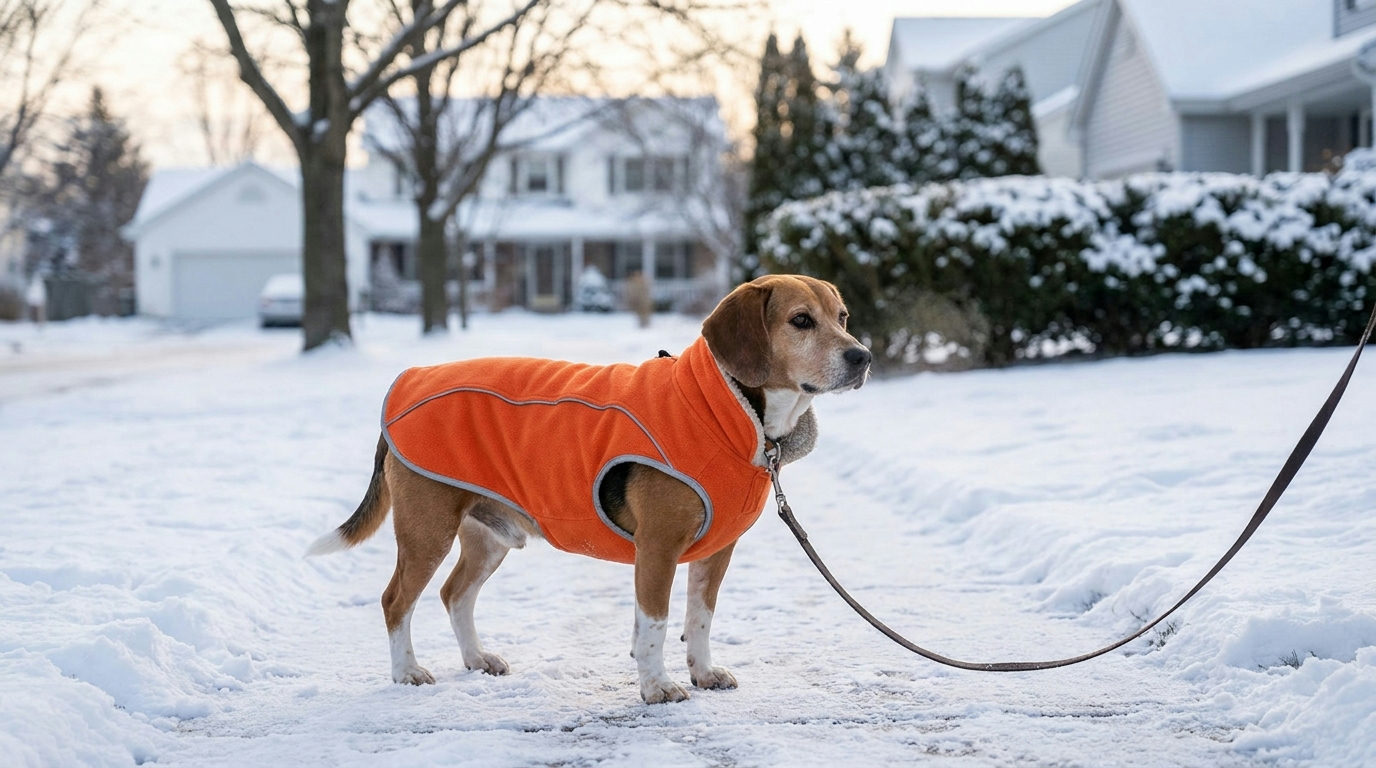
- Choose bright colors such as orange, yellow or lime green rather than black or navy.
- Look for reflective strips or piping along the back and sides.
- Add a clip-on light to the harness or collar for extra visibility.
- Wear something reflective yourself, too, since your dog is only as visible as the person holding the leash.
- Make sure lights and reflective tags do not dangle where your dog can chew them.
Helping your dog get used to wearing a coat
Some dogs accept a coat right away. Others freeze, walk strangely or try to back out of it. A slow, positive introduction usually goes better than forcing it on just before a walk.
- Let your dog sniff it first. Leave the coat on the floor and reward your dog for calm interest.
- Drape it, then reward. Lay the coat over your dog’s back for a moment, give a treat, then take it off.
- Fasten one strap at a time. Keep sessions short and stop while your dog is still relaxed.
- Practice indoors. Let your dog wear the coat for a few minutes around the house while you play or hand out treats.
- Pair it with good things. Put the coat on right before something your dog loves, such as a walk or a game.
- Watch body language. Lip licking, freezing, a tucked tail or yawning may mean your dog needs a slower pace.
Our guide to positive reinforcement for good habits has more ideas for building happy associations. If you are not sure what your dog is telling you, our article on reading dog body language may help.
Signs your dog may be too cold or too warm
Even with a good coat, it is worth keeping an eye on your dog during winter walks. Every dog is different, so learn what is normal for yours.
Signs your dog may be too cold
- Shivering or trembling
- Lifting paws off the ground or limping
- Hunching up with a tucked tail
- Slowing down, stopping or trying to turn for home
- Looking for shelter or pressing against your legs
Signs your dog may be too warm
- Heavy panting, especially on a cool day
- Seeming restless or uncomfortable
- Damp fur under the coat
Take the coat off once you are back inside, since indoor heating can quickly make it too warm. Also check that the coat is dry before the next walk. Remember to look at paws as well, because snow, ice and road salt can irritate the pads.
When to call your vet
A coat is a comfort item, not a medical fix. Call your vet promptly if you notice any of the following:
- Shivering that does not settle once your dog is warm and dry
- Pale, gray or very cold skin on the ears, tail tip or paws
- Weakness, confusion, unusual sleepiness or trouble walking
- Red, raw or broken skin where coat straps rub
- Cracked, bleeding or very sore paw pads
- Any sudden change in how your dog handles cold compared with past winters
If something seems wrong and you cannot reach your regular vet, contact an emergency vet clinic. Keeping a dog first aid kit at home can also help you handle small issues while you get advice.
Questions to ask your vet
Bring these questions to your next appointment. Your vet knows your dog’s history and can give advice that fits.
- Does my dog’s coat type, size or age mean a winter coat may help?
- Does my dog have any health conditions that affect how they handle cold?
- Are there signs of cold stress I should watch for in my dog specifically?
- How should I adjust walks on very cold or icy days?
- Is paw protection, such as booties or a paw balm, a good idea for my dog?
- Should anything change as my dog gets older?
Making winter walks more comfortable
Choosing a dog winter coat comes down to a few practical steps. First, check with your vet whether your dog may benefit. Next, measure carefully and pick materials that suit your weather. Then add some visibility and give your dog time to get used to it. Above all, keep watching how your dog responds, and adjust as the season goes on.
A well-fitting coat may help some dogs enjoy winter walks a little more. However, the most important thing is paying attention to your own dog.