Disclaimer: This article is general information for dog owners, not veterinary advice. If you think your dog has swallowed, licked or been exposed to a cleaning product, contact your vet or an animal poison control line right away.
Dogs explore the world nose first, and that includes freshly mopped floors, damp bath mats and the cupboard under the sink. Looking for pet safe cleaning products is a good start, but labels can be confusing and no product is risk-free in every situation. How you store, use and rinse cleaners often matters just as much as which ones you buy.
This guide walks through how to read labels in general terms, set up safer storage, build cleaning routines that keep your dog out of harm’s way and recognize when to call your vet.
Why cleaning products need extra care with dogs
Dogs interact with cleaned surfaces differently from people. Understanding how exposure happens helps you plan around it.
- Paws: Dogs walk on freshly cleaned floors, then lick their feet.
- Noses: Strong fumes and sprays may irritate a dog’s eyes, nose or airways.
- Mouths: Curious dogs may chew bottles, sponges, wipes or dishwasher pods.
- Bowls and toys: Residue can remain if items are not rinsed well.
- Bedding: Strong detergents or fragrances may bother some dogs with sensitive skin.
Reading labels for pet safe cleaning products
Marketing terms on packaging are not always regulated in the same way, so it helps to look past the front label. These general checks can guide your choices.
- Read the full directions and warnings: Look for instructions about ventilation, rinsing, dilution and keeping pets away until surfaces are dry.
- Be cautious with vague claims: Words such as “natural”, “green” or “gentle” do not automatically mean a product is suitable around dogs.
- Check for pet-specific guidance: Some products include directions for homes with pets. Follow them closely.
- Consider fragrance-free options: Some owners prefer unscented products, especially for dog bedding and areas where the dog rests.
- Look up the safety data: Many manufacturers publish safety information online. Your vet can help you interpret it if you are unsure.
- Ask your vet: If your dog has skin, breathing or other health concerns, ask which types of products they would suggest.
Safer storage habits
Most accidental exposures happen when dogs get into products that were not put away. Good storage is one of the simplest protections. Check these habits every few months, especially after moving furniture or bringing new products home.
- Keep all cleaning products in high cupboards or behind childproof latches.
- Never leave buckets, spray bottles or open containers on the floor, even for a minute.
- Store laundry and dishwasher pods in closed containers, well out of reach.
- Keep products in their original containers so labels and instructions stay with them.
- Dispose of used wipes, sponges and paper towels in a lidded trash can.
- Store garage products, like antifreeze and de-icers, separately and securely.
Our dog-proofing your home guide covers other everyday hazards worth checking room by room.
A dog-friendly cleaning routine
Small changes to how you clean can reduce your dog’s exposure without making chores harder.
- Move your dog first: Put your dog in another room, crate or the yard before you start.
- Ventilate: Open windows or run a fan, especially when using sprays.
- Follow dilution directions: Using more product than recommended does not clean better and may leave more residue.
- Rinse where advised: Rinse floors and surfaces with clean water if the label suggests it.
- Let it dry: Keep your dog away until floors and surfaces are completely dry and any smell has faded.
- Put everything away: Return products to storage before your dog comes back in.
A long-lasting chew or puzzle toy can keep your dog busy in another room while you clean. Our guide to safe, durable dog toys has some ideas.
Cleaning bowls, toys and bedding
The items your dog uses every day deserve a little extra attention.
- Bowls: Wash food and water bowls regularly with hot water and a mild dish soap, then rinse very thoroughly. See our guide to choosing dog food bowls for materials that are easy to clean.
- Toys: Rinse hard toys after washing. Check soft toys for loose stuffing after laundering.
- Bedding: Use a mild detergent, consider an extra rinse cycle and make sure bedding is fully dry before your dog uses it.
- Crates and mats: Wipe down, rinse and dry before putting bedding back in.
Handling accidents and odors
Puppies and dogs have accidents. Cleaning them up properly helps prevent repeat visits to the same spot.
- Blot up as much as possible with paper towels first.
- Use a cleaner designed for pet stains and odors, following the label directions.
- Keep your dog away until the area is dry.
- Avoid mixing different cleaning products, as some combinations can create harmful fumes.
If accidents are happening often, our puppy potty training guide can help you get back on track.
Using pet safe cleaning products room by room
Each room has its own cleaning jobs and its own risks. A quick room-by-room check helps you spot gaps.
- Kitchen: Wipe up spills promptly, keep the dishwasher closed and store pods and tablets high up. Keep your dog out while floors dry.
- Bathroom: Keep toilet lids down, especially if you use in-bowl cleaners, and store bathroom sprays in a closed cabinet.
- Laundry room: Close the door, keep detergents and softeners off the floor and check that your dog has not followed you in before shutting the washer.
- Living areas: Choose cleaners suited to carpets and upholstery, follow drying times and vacuum regularly to reduce hair and dust.
- Garage and yard: Store car, pool and garden products securely, and keep your dog away from treated lawns and driveways until they are dry.
Puppies and curious chewers
Puppies and dogs who love to chew need an extra layer of caution. They may grab a sponge from the sink, pull a bottle from a low shelf or chew through a soft plastic container.
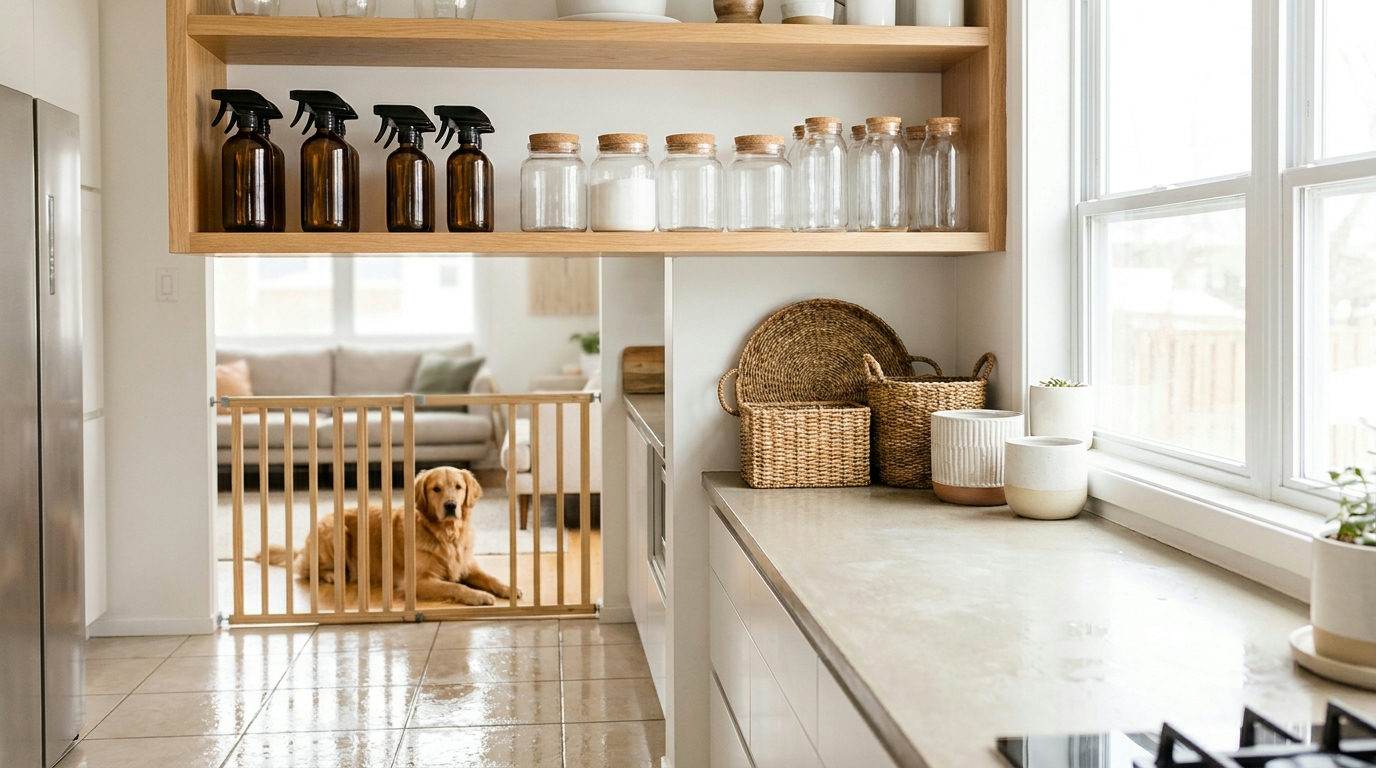
- Use baby gates to keep young dogs out of the kitchen, bathroom and laundry while you clean.
- Get down to your dog’s eye level and look for anything reachable.
- Offer plenty of suitable chews so household items are less tempting.
- Supervise closely, and use a crate or pen when you cannot watch.
Our new puppy essentials checklist covers the gates, pens and chews that help.
Simple options for everyday cleaning
For light, everyday jobs, many owners keep things simple, using warm water and a mild soap for wiping surfaces, and microfiber cloths that pick up dirt and hair with less product. A dry microfiber mop is also a handy way to pick up hair between deeper cleans. Some people also make their own cleaners at home. If you do, store them in clearly labeled containers, keep them out of reach like any other product, and remember that homemade does not automatically mean harmless. When in doubt, check with your vet.
When to call your vet
Contact your vet or an animal poison control line promptly if your dog has licked, chewed, swallowed or been splashed with a cleaning product, even if they seem fine. Bring or photograph the product label if you can. Also seek help if you notice:
- Drooling, pawing at the mouth or vomiting.
- Red, irritated skin or paws.
- Watery, red or squinting eyes.
- Coughing, sneezing or breathing changes after cleaning.
- Weakness, wobbling or unusual tiredness.
Questions to ask your vet
- Which types of cleaning products would you suggest for a home with my dog?
- Are there ingredients I should avoid because of my dog’s skin or health?
- What should I do first if my dog licks a freshly cleaned floor or chews a bottle?
- Which animal poison control number should I keep on hand?
- How should I clean my dog’s bowls, bedding and toys?
A cleaner home, with your dog in mind
Choosing pet safe cleaning products is only part of the picture. Storing everything securely, ventilating, rinsing and keeping your dog away until surfaces are dry all help reduce risk. Build these habits into your routine and keep your vet’s number handy, and you can keep your home clean while looking after your dog’s wellbeing. Start with one room this week, check what your dog can reach and move anything risky up high. Those small steps add up quickly.
Further reading
- ASPCA: Poisonous household products
- AVMA: Household hazards
- American Kennel Club: Household hazards for dogs