Disclaimer: This article is general information for dog owners, not veterinary advice. Every dog is different, so check with your vet or groomer about your own dog’s skin and coat.
Regular brushing is one of the easiest ways to keep your dog’s coat tidy, reduce loose hair around the house and spot changes in skin early. Knowing how to brush your dog properly, with the right tool for their coat and a gentle routine, makes it quicker for you and more pleasant for them. For many dogs, brushing can even become a calm, enjoyable bit of one-to-one time.
This guide covers coat types in general terms, which brushes to consider, a step-by-step routine, dealing with tangles and mats, making brushing positive and the skin changes worth mentioning to your vet.
Know your dog’s coat type
Coats vary a lot between breeds and individual dogs. Identifying the general type helps you choose tools and decide how often to brush. Your groomer or vet can confirm what your dog has.
- Short and smooth: Close-lying coats that shed but rarely tangle.
- Double coat: A soft, dense undercoat beneath longer guard hairs. These coats often shed heavily at certain times of year.
- Long and silky: Flowing coats that can tangle easily, especially behind the ears and under the legs.
- Curly or wavy: Coats that can trap loose hair and form mats if not brushed regularly.
- Wiry: Coarse, harsh-textured coats that may need specialist grooming.
Our overview of the benefits of dog grooming explains why regular care matters for every coat type.
Choosing the right brush
The right tool makes brushing easier and more comfortable. Many owners end up using two or three tools together.
- Bristle brush: Good for short, smooth coats. It removes loose hair and adds shine.
- Rubber curry brush or mitt: Helpful for short-coated dogs, loosening dead hair and dirt with a massaging action.
- Slicker brush: Fine wire pins that help with tangles in medium, long and curly coats. Use a light touch to avoid scratching the skin.
- Pin brush: Looks like a human hairbrush and suits long, silky coats.
- Undercoat rake: Designed to remove loose undercoat in double-coated dogs.
- Metal comb: Useful for checking you have brushed right down to the skin and for finishing touches.
See our guide to essential grooming tools for more on building a home kit.
How to brush your dog step by step
Keep early sessions short, especially if your dog is new to brushing. A few minutes of calm brushing is better than a long struggle.
- Pick a calm moment: Brush after a walk or play session when your dog is relaxed.
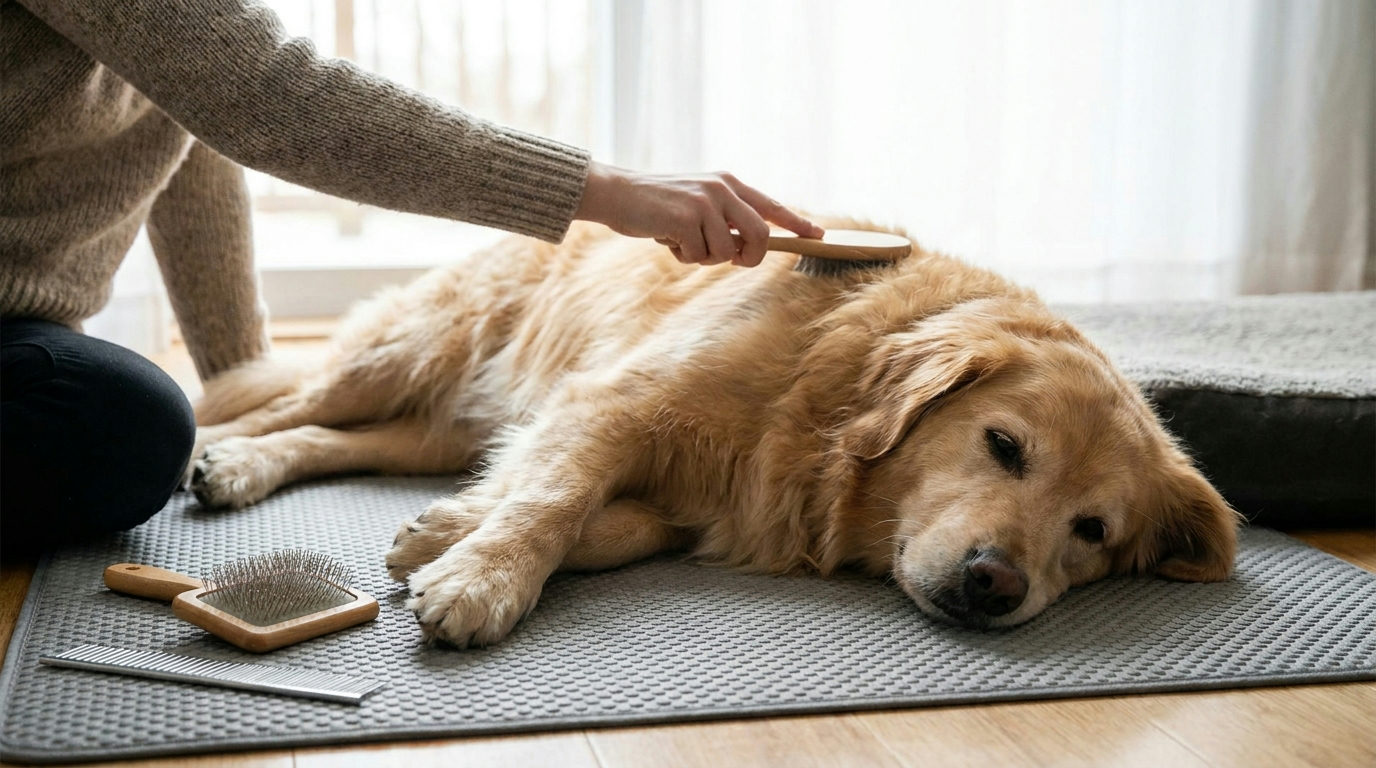
- Set up comfortably: Use a non-slip mat on the floor or a stable table for small dogs.
- Start with a quick check: Run your hands over your dog to feel for tangles, lumps or sore spots.
- Brush in the direction of hair growth: Work in small sections, starting at the neck and moving toward the tail.
- Go down to the skin gently: For thicker coats, lift sections of hair and brush from the skin outward, a technique often called line brushing.
- Pay attention to tricky areas: Behind the ears, armpits, belly, tail and the backs of the legs are common tangle spots.
- Finish with a comb: If the comb glides through easily, you have done a thorough job.
- Reward: Offer praise and a treat at the end, and during breaks if needed.
How often to brush
There is no single schedule for every dog, so use these as general starting points and ask your groomer for advice.
- Short, smooth coats often need only occasional brushing.
- Double coats usually benefit from regular brushing, with extra sessions during heavy shedding seasons.
- Long, silky and curly coats often need frequent brushing to prevent tangles.
- Any dog may need more brushing after muddy walks or swimming.
Dealing with tangles and mats
Mats can pull on the skin and become uncomfortable. Dealing with them early is much easier than waiting.
- Hold the hair close to the skin to avoid pulling while you work on the tangle.
- Gently tease small tangles apart with your fingers or the end of a comb.
- Work from the outer edge of the tangle inward.
- Avoid cutting mats with scissors, as it is easy to nick the skin. A groomer can safely remove tight mats.
- Brush before bathing, as water can tighten mats.
Make brushing a positive experience
Many dogs need help to learn that brushing is pleasant. Building good associations takes a little patience.
- Let your dog sniff the brush first, then reward.
- Start with a few gentle strokes on an easy area, such as the back, then stop and reward.
- Gradually build up to more areas and longer sessions.
- Use a soft, calm voice and plenty of small treats.
- Stop before your dog becomes restless, and try again later.
- Watch for signs of stress, such as lip licking, turning away or trying to leave.
Our guide to positive reinforcement explains how rewards help build habits like this.
Shedding season tips
Many dogs shed more heavily at certain times of year, often as the seasons change. During these periods, short, more frequent brushing sessions can help manage loose hair. An undercoat rake or deshedding tool may help double-coated dogs, but use it gently and follow the manufacturer’s directions. Vacuuming bedding and washing blankets regularly also helps keep hair under control at home.
How to brush your dog at different life stages
Age can change both your dog’s coat and how comfortable they are with grooming.
- Puppies: Start early with very short, gentle sessions using a soft brush. The goal is to get your puppy used to being handled, not to finish a full groom. Our new puppy essentials checklist includes grooming basics.
- Adult dogs: Settle into a regular routine that suits their coat, and adjust during shedding seasons.
- Senior dogs: Older dogs may have thinner skin or stiff joints. Use softer brushes, let them lie down and keep sessions brief.
A quick health check while you brush
Each brushing session is a chance to give your dog a gentle once-over. Make these checks part of the routine:
- Look inside the ears for redness, discharge or a strong smell.
- Check the eyes for discharge or cloudiness.
- Lift the lips to look at teeth and gums. See our guide to dog dental health for more.
- Look at the paws, pads and nails.
- Feel along the body for lumps, bumps or tender spots.
Keeping brief notes, or taking a photo of anything new, can help you track changes to discuss with your vet.
Keep your brushes clean
Dirty brushes can spread old hair and dirt back into a clean coat. Remove hair after each session, and wash brushes and combs regularly in warm, soapy water. Rinse well and let them dry fully before storing. Replace any brush with bent or broken pins, as these can scratch the skin.
When to call your vet
Brushing is a great chance to check your dog’s skin and coat. Contact your vet if you notice:
- Red, flaky, scabby or broken skin.
- Bald patches or thinning hair.
- New lumps, bumps or swellings.
- Fleas, ticks or flea dirt.
- Constant scratching, licking or chewing.
- A strong or unusual smell from the skin or ears.
- Pain or sensitivity when you touch a particular area.
Questions to ask your vet
- What coat type does my dog have, and which brushes suit it?
- How often should I brush my dog?
- Is my dog’s shedding normal for their coat and the time of year?
- Are there skin changes I should watch for in my dog’s breed?
- Would professional grooming be a good idea for my dog?
A few minutes that make a difference
Learning how to brush your dog well comes down to the right tools, a gentle step-by-step routine and plenty of rewards. Keep sessions short and regular, deal with tangles early and use brushing time to keep an eye on your dog’s skin. If anything looks unusual, your vet or groomer can help. Over time, many dogs start to look forward to brushing as a calm, quiet moment together, and you will both enjoy a cleaner, more comfortable home.
Further reading
- American Kennel Club: How to choose the right dog brush
- VCA Animal Hospitals: Choose the best brush for your pet
- American Kennel Club: How to groom a double-coated dog