Disclaimer: This article is general information for dog owners, not veterinary advice. Every dog is different, so check with your vet about your own dog.
Fall can be one of the best seasons for walks: cooler air, crunchy leaves and plenty of new smells. It also brings shorter days, wet ground, busier evening roads and a few seasonal hazards that are easy to miss. These fall dog walking safety tips will help you adjust your routine so walks stay comfortable and enjoyable as the season changes.
Use the checklists below to review your gear, your route and what your dog might find along the way, plus the signs that mean it is time to call your vet.
Be seen on darker walks
As the days shorten, many morning and evening walks happen in low light. Visibility is one of the simplest and most important fall dog walking safety steps.
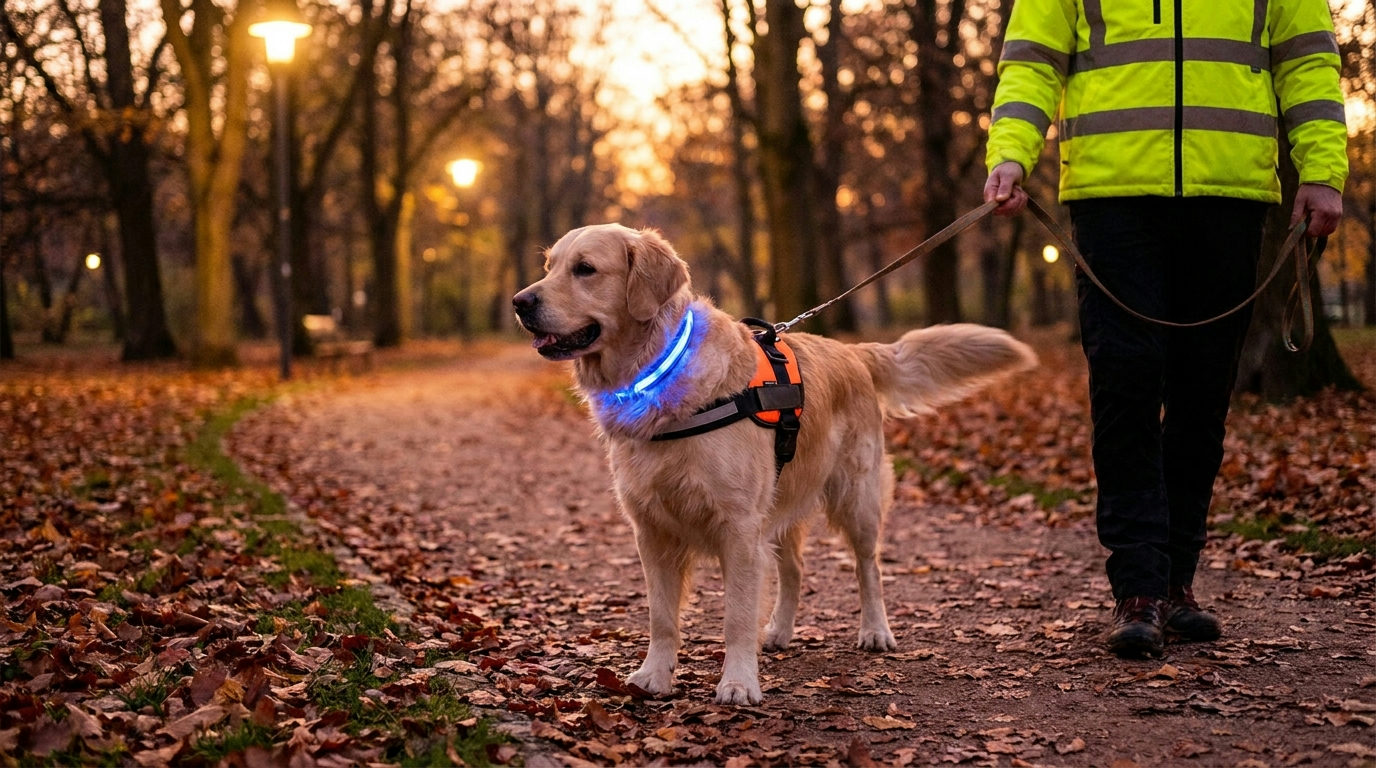
- Light up your dog: A light-up collar, clip-on light or reflective harness helps drivers and cyclists spot your dog.
- Light up yourself: Wear a reflective vest, jacket or armband, and carry a flashlight or headlamp.
- Choose a fixed-length leash: A standard leash keeps your dog close and predictable near roads. Our guide to durable dog collars and leashes covers what to look for.
- Stick to lit routes: Familiar streets with pavements and street lights are usually safer than unlit lanes after dark.
- Check ID tags: Make sure your dog’s tag has a current phone number, and that microchip details are up to date.
Watch what your dog sniffs and eats
Fall brings a lot of new things on the ground, and curious dogs often want to taste them. The safest approach is to keep your dog from eating anything they find on walks, rather than trying to judge what is harmless.
- Mushrooms: Wild mushrooms pop up after rain. Some may be harmful, and they are hard to tell apart, so steer your dog away from all of them.
- Acorns, conkers and nuts: These can upset some dogs’ stomachs or cause a blockage if swallowed.
- Fallen fruit: Rotting fruit under trees can ferment or grow mold.
- Leaf piles: They can hide sharp sticks, litter and other hazards.
- Garden and garage products: Fall is when many people use lawn treatments, rodent bait and antifreeze. Keep your dog off treated lawns and away from puddles near driveways.
Teaching a solid “leave it” makes a big difference here. Our guide to basic dog commands is a good place to start.
Dress for the weather
Fall weather can change quickly from mild afternoons to cold, wet mornings. Plan gear for both of you.
- Check the forecast before longer walks and adjust timing or distance if needed.
- Consider a light, water-resistant coat for short-coated, small or senior dogs who feel the chill.
- Keep a towel by the door to dry your dog after wet walks, paying attention to paws, belly and ears.
- Check that harnesses and collars still fit well, as straps can stretch when wet.
- Bring water on longer walks. Dogs still need to drink in cooler weather.
For a full kit list, see our article on safe dog walking gear.
Wildlife and outdoor season awareness
Fall is a busy season for wildlife and, in many areas, for hunting. A few precautions help keep your dog safe in parks, trails and woodland.
- Keep your dog on a leash in areas with deer, wildlife or livestock.
- Learn whether hunting takes place near your walking routes and when. Wear bright colors in those areas and keep your dog close.
- Check your dog for ticks after walks in long grass or woodland, as ticks may still be active in milder fall weather. Ask your vet about parasite prevention.
- Avoid ponds or still water with surface scum or an unusual color.
- Stay on marked paths so your dog does not disturb wildlife or wander into unseen hazards.
Fall dog walking safety on wet and slippery ground
Wet leaves, mud and early frost can make pavements and trails slippery for both of you.
- Slow down on leafy pavements and slopes, especially with older dogs.
- Keep nails at a comfortable length so your dog can grip.
- Wipe paws after walks to remove mud, grit and any lawn or road treatments.
- Check between toes for burrs, seeds and small stones.
- Pick flatter, well-maintained routes on frosty mornings.
A quick after-walk check
A two-minute check at the door helps you catch small problems early and keeps mud out of the house. Make it part of every fall walk.
- Wipe or rinse paws and legs to remove mud, leaves and any lawn or road treatments.
- Look between the toes and pads for burrs, seeds, thorns or small cuts.
- Run your hands over your dog’s body, ears and neck to feel for ticks, burrs or scratches.
- Dry your dog thoroughly, especially the belly, armpits and ears.
- Check collars, harnesses and lights for damage or flat batteries.
- Offer fresh water and a cozy place to rest.
Many dogs need a little practice before they enjoy being handled this way. Pair each step with a small treat, and see our guide to positive reinforcement for more on building good habits.
Plan your fall walking routine
Changing light and weather can throw a routine off. A little planning keeps walks consistent, which many dogs find reassuring.
- Shift the main walk to the brightest part of the day when you can.
- Have a shorter, well-lit backup route for dark or stormy evenings.
- Keep gear in one place by the door: leash, lights, towel, waste bags and a small water bottle.
- Set a reminder to check light batteries and reflective gear each week.
- Let a family member or friend know your route if you walk alone on remote trails.
Adjusting walks for your dog
Every dog handles the season differently. Puppies may be overexcited by leaves and new smells, while senior dogs may feel the cold and damp in their joints. Shorter, more frequent walks often suit both. On stormy days, swap part of a walk for indoor games. Our list of fun dog activities beyond the walk has plenty of ideas.
Dogs who are nervous of noise may also find fall evenings unsettling, with fireworks, parties and more traffic in some neighborhoods. If your dog startles easily, walk earlier in the day, choose quieter streets and keep a secure, well-fitted harness on. Our article on signs of anxiety in dogs can help you spot when your dog is uncomfortable.
Watch your dog’s body language as you go. Pulling toward home, lagging behind, shivering or limping are all signals that it is time to adjust the plan.
When to call your vet
Contact your vet promptly if you think your dog has eaten a mushroom, nuts, fallen fruit, bait, antifreeze or anything else unusual on a walk, even if they seem well. Also call if you notice:
- Vomiting, diarrhea or drooling after a walk.
- Wobbling, weakness, shaking or unusual sleepiness.
- Limping, a cut pad or a paw your dog keeps licking.
- A tick you cannot remove, or a lump or redness where a tick was attached.
- Coughing, sneezing or eye irritation after time in leaves or long grass.
Save your vet’s number and the nearest after-hours clinic in your phone before the season starts.
Questions to ask your vet
- Which fall hazards should I watch out for most in our area?
- Is my dog’s parasite prevention suitable for the cooler months?
- What should I do first if I think my dog ate a mushroom or something unknown?
- Would my dog benefit from a coat on cold or wet walks?
- How should I adjust walks for my puppy or senior dog this season?
Enjoy the season together
A few small changes, like lights for darker evenings, a quick “leave it” and a towel by the door, can make fall dog walking safety part of your routine without taking the fun out of it. Pay attention to the ground, the light and your dog, and you can both enjoy everything the season has to offer. If anything seems off after a walk, a quick call to your vet is the best next step. Keep your lights charged and your towel handy, and the darker months can still bring some of your favorite walks of the year.
Further reading
- VCA Animal Hospitals: Fall safety tips for pets
- ASPCA: Fall safety tips for your pet
- AVMA: Walking or running with your dog