Disclaimer: This article is general information for dog owners, not veterinary advice. How much water a dog needs varies with size, age, diet, activity and health, so check with your vet about your own dog.
Fresh water is one of the simplest things you can give your dog, but it is easy to overlook, especially once the hot summer months are behind us. These dog hydration tips cover how to keep clean water available at home, on walks and while traveling, how to encourage a reluctant drinker in general terms and which changes in drinking are worth mentioning to your vet.
Rather than focusing on exact amounts, which your vet is best placed to advise on, this guide focuses on practical habits that make good hydration part of your dog’s everyday routine.
Why water matters all year round
Many owners think about water mainly in summer, but dogs need steady access to fresh water in every season. In cooler months, dry indoor heating, long winter walks and changes in diet can all affect how much a dog drinks. Making water easy to reach, appealing and clean helps your dog drink when they need to.
Dog hydration tips for the home
Your home setup has the biggest influence on daily drinking habits. Work through this checklist.
- Keep water available: Make sure your dog can reach fresh water throughout the day, unless your vet has advised otherwise.
- Refresh it often: Empty, rinse and refill bowls at least daily, and more often if they get dusty, slobbery or full of food bits.
- Wash bowls regularly: Bowls can develop a slimy film. Wash them with hot water and mild dish soap, then rinse well.
- Choose easy-to-clean bowls: Stainless steel and ceramic bowls are popular because they are durable and simple to clean. See our guide to choosing dog food bowls.
- Add extra stations: In larger homes or homes with stairs, a second water bowl in another room can help, especially for older dogs.
- Keep bowls stable: A non-slip mat stops bowls sliding or tipping.
- Mind the location: Place bowls away from busy walkways, food bowls if your dog prefers, and direct heat sources.
Water on walks and outings
Dogs can get thirsty on longer walks, hikes and play sessions, even when the weather is cool.
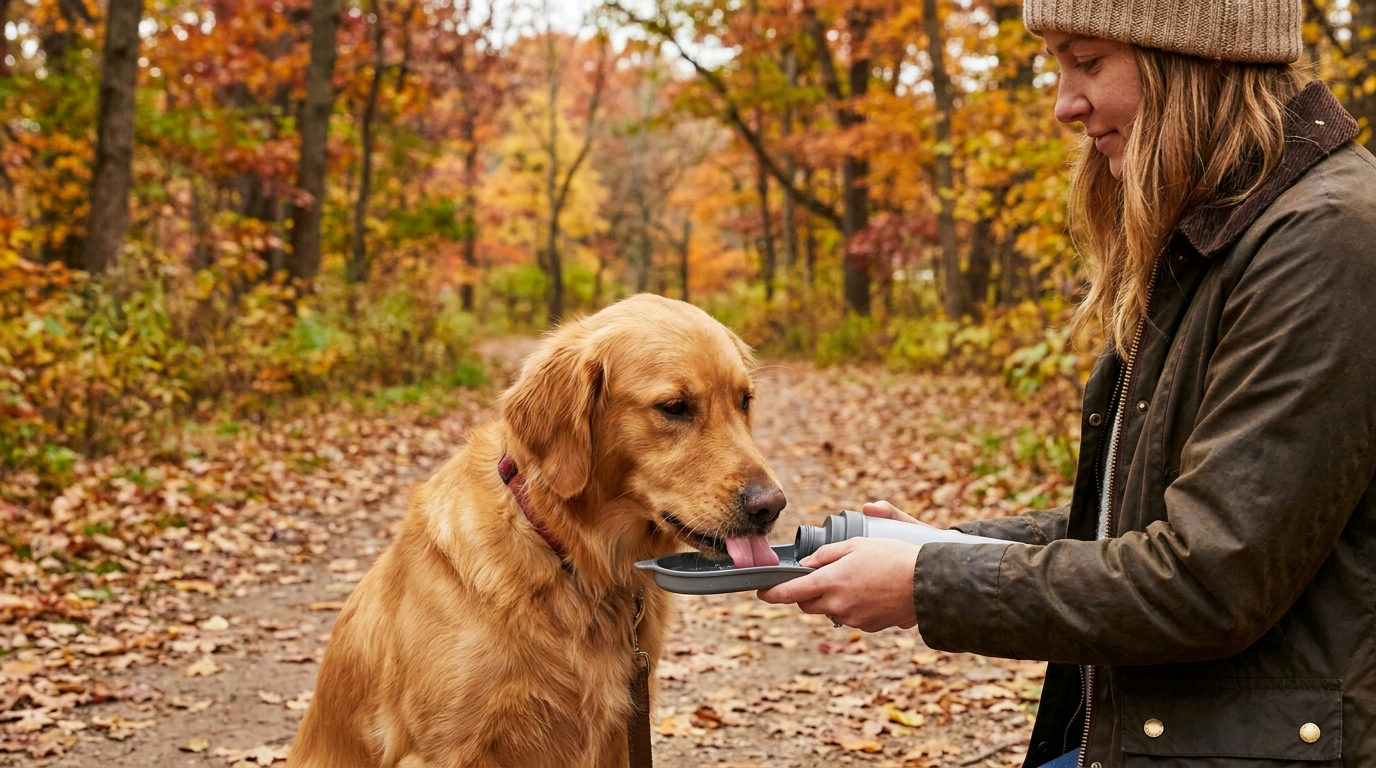
- Carry a travel water bottle with an attached drinking tray, or a collapsible bowl.
- Offer water during breaks on longer outings, not only at the end.
- Bring extra water for hikes, beach trips or visits to dog parks.
- Discourage your dog from drinking from puddles, ponds or streams, which may contain bacteria, chemicals or algae.
- Rest in the shade or indoors and offer water after energetic play.
Our guide to safe dog walking gear includes other useful items for your walking kit.
Hydration during travel
Car trips, flights and stays away from home can disrupt normal drinking habits. Plan ahead so water is always on hand.
- Pack water from home as well as your dog’s usual bowl or bottle. Some dogs are reluctant to drink unfamiliar water at first.
- Offer water during rest stops on long drives.
- Never leave your dog alone in a parked car, whatever the weather.
- Set up a familiar water bowl as soon as you arrive somewhere new.
- Ask your vet for advice before long trips if your dog has a health condition.
For more on safe car travel, see our article on dog car safety gear.
Encouraging a reluctant drinker
Some dogs simply do not seem interested in their water bowl. If your vet has confirmed there is no underlying problem, these general ideas may help.
- Try a different bowl material or shape. Some dogs dislike metal bowls that clank against tags.
- Keep water fresh and cool, as stale water may be less appealing.
- Try a pet water fountain. Some dogs prefer moving water.
- Place bowls where your dog spends the most time.
- Ask your vet whether adding a little water to meals, or including wet food, would suit your dog.
- Praise your dog calmly when they drink.
If your dog’s food or treats change, check with your vet about how that might affect drinking. Our guide to healthy dog treats covers choosing treats sensibly.
Choosing a travel water bottle
A good travel bottle makes it much easier to offer water on the go. Look for one that is leak-proof, light enough to carry, simple to clean and easy to use with one hand. Bottles with a built-in tray or fold-out bowl are popular, as they let your dog drink without spilling much. Rinse the bottle after each trip and let it dry fully.
Puppies, seniors and active dogs
Different life stages and lifestyles can affect water needs.
- Puppies: Young dogs are busy and may forget to drink while playing. Offer water regularly and keep bowls within easy reach. Our new puppy essentials checklist includes bowls and other basics.
- Senior dogs: Older dogs may find it harder to get to their bowl. Extra water stations and raised bowls, if your vet agrees, can help.
- Active and working dogs: Dogs who run, hike or work for long periods may need more frequent water breaks. Ask your vet for guidance.
- Dogs with health conditions: Some conditions and medications can affect thirst. Follow your vet’s advice closely.
Dog hydration tips for cooler months
Fall and winter bring their own challenges. Dogs may drink less when it is cold, while heated homes can feel dry.
- Check outdoor water bowls regularly, as they can freeze or collect leaves and debris.
- Keep indoor bowls away from radiators and heaters, which can warm water and make it less appealing.
- Offer water after winter walks, even if your dog does not seem thirsty.
- Discourage your dog from eating snow near roads, which may contain salt or chemical residue.
- Keep antifreeze and de-icing products stored securely, and wipe up any spills right away.
Common water mistakes to avoid
A few everyday habits can make water less appealing or less safe. Watch out for these:
- Topping up the same water for days instead of emptying and refilling.
- Forgetting to wash bowls, so a slimy film builds up.
- Using bowls that are too small for your dog, or too deep for a flat-faced breed.
- Leaving only one bowl in a large or multi-level home.
- Forgetting water when heading out for longer walks or trips.
- Letting dogs drink from standing water, ponds or puddles.
Building small checks into your routine, such as refreshing water each morning and evening, helps avoid most of these.
Signs your dog may not be drinking enough
Watch for changes such as:
- Dry or sticky gums.
- Low energy or unusual tiredness.
- Reduced appetite.
- Sunken-looking eyes.
- Darker or less frequent urine.
These signs can have many causes, so contact your vet rather than trying to judge it yourself. Your vet can check your dog and advise on next steps, including whether any changes to food, routine or water access would help.
When to call your vet
Changes in drinking habits are worth discussing with your vet, whether your dog is drinking much less or much more than usual. Contact your vet promptly if you notice:
- Your dog refuses water or drinks very little for more than a short time.
- Your dog suddenly drinks a lot more than usual or needs to urinate more often.
- Vomiting or diarrhea, especially if your dog is also not drinking.
- Lethargy, weakness or collapse.
- Heavy panting, drooling or signs of overheating.
Questions to ask your vet
- Is my dog drinking a healthy amount for their size, age and diet?
- Would wet food or adding water to meals suit my dog?
- How should I manage water during long walks, hikes or travel?
- Could any of my dog’s medications affect their thirst?
- What signs of dehydration should I watch for in my dog?
Make water part of the routine
Good hydration comes down to simple habits: clean bowls, fresh water, a bottle on walks and a plan for travel. Use these dog hydration tips to make water easy to find and appealing all year round, and keep an eye on any change in how much your dog drinks. When in doubt, your vet is the best person to ask. A quick glance at the water bowl each time you pass it is one of the easiest care habits you can build, and it often helps you notice changes early.
Further reading
- American Kennel Club: Dehydration in dogs
- American Kennel Club: Is your puppy drinking enough water?
- PDSA: Why is my dog drinking more than usual?