Disclaimer: This article is general information for dog owners, not veterinary or behavioral advice. Every dog is different, so check with your vet or a qualified trainer about your own dog.
A dog who pulls on every walk can turn a daily outing into a tug-of-war. The good news is that walking nicely on a leash is a skill, and skills can be taught. These loose leash walking tips break the process into small, achievable steps using rewards rather than force, so your dog learns that staying close is the quickest way to get where they want to go.
Below you will find a gear check, a simple reward system, step-by-step methods to practice, a training plan and the signs that it may be time to involve a trainer or your vet.
Why dogs pull on the leash
Pulling is not stubbornness. For most dogs, it is simply what works. Understanding why helps you choose the right approach.
- We walk slowly: Most dogs naturally move faster than people.
- Pulling gets results: If pulling has ever led to the next smell, tree or friend, your dog has learned that it works.
- Excitement: New sights, sounds and smells can be hard to resist, especially for young dogs.
- Worry: Some dogs pull to get away from things that make them nervous, or to get home quickly.
- Discomfort: Occasionally, a change in walking behavior can be linked to pain, which is why sudden changes are worth mentioning to your vet.
Check your gear first
The right equipment will not teach your dog on its own, but it can make training more comfortable and easier to manage.
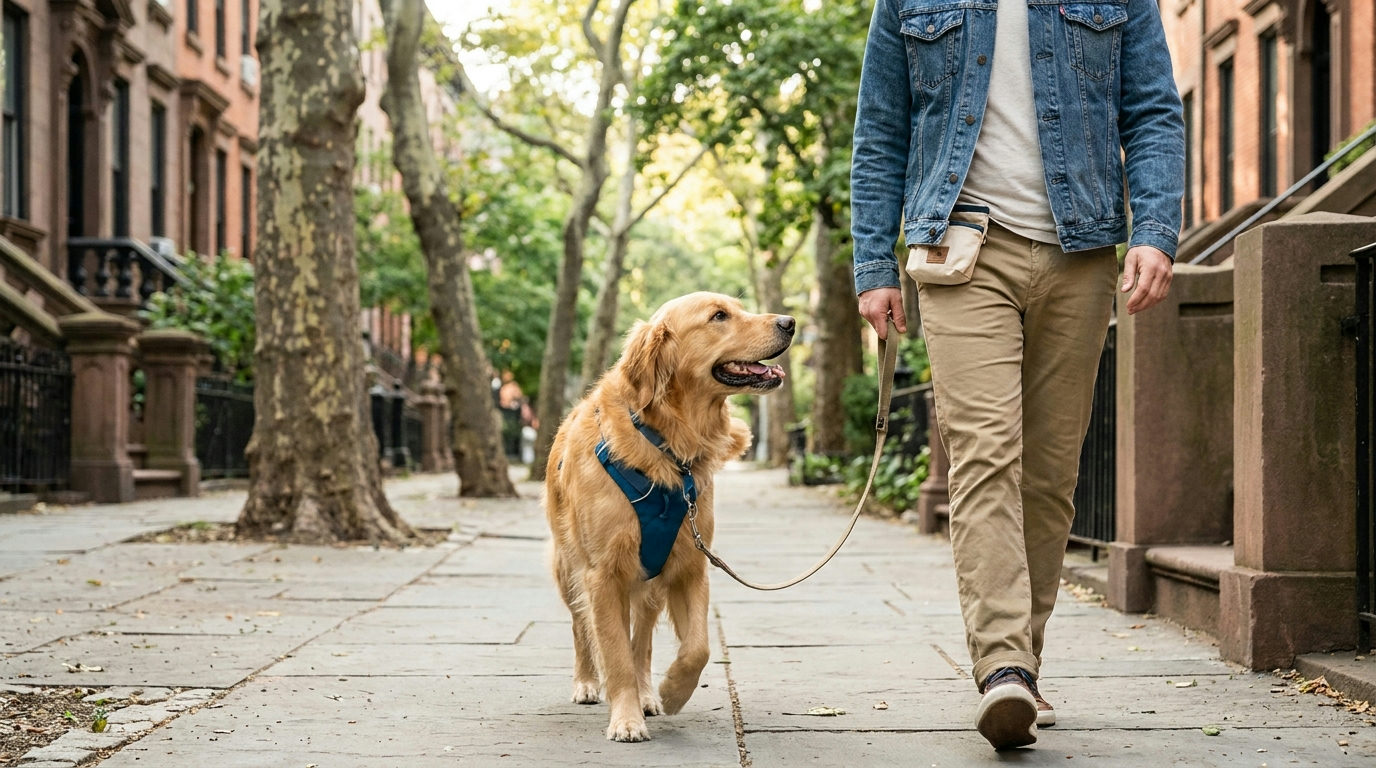
- A well-fitted harness: Many owners find a front-clip or dual-clip harness helps reduce pulling while you train. Check that it does not rub behind the front legs.
- A standard leash: A fixed-length leash gives clear, consistent feedback. Retractable leashes can teach dogs that pulling extends their range.
- A treat pouch: Keeping rewards at your hip makes it easy to reward quickly.
- Small, soft treats: Pick something your dog loves that can be eaten quickly. See our guide to healthy dog treats.
Our article on choosing a dog leash and collar explains the options in more detail. Avoid tools designed to cause pain or discomfort, as these can damage trust and may make some dogs more reactive.
Loose leash walking tips: build a reward zone
Your dog needs to learn where the “right” place to walk is. Many trainers call this the reward zone, usually beside your leg.
- Choose a side. Hold the leash in the opposite hand and keep treats on the same side as your dog.
- Indoors, with no distractions, reward your dog for standing next to your leg.
- Take one step. If your dog stays beside you, reward at your leg, not in front of you.
- Build up to two, three, then five steps between rewards.
- Add a cheerful marker word such as “yes” the moment your dog is in position, followed by a treat.
Delivering every treat right next to your leg is important. Over time, your dog learns that this spot pays well, and they will choose to hang around it.
Methods to practice on walks
Once your dog understands the reward zone indoors, try these techniques in quiet places such as your yard or a calm street.
- Stop and wait: When the leash goes tight, stop and stand still. The moment the leash loosens, mark and reward, then carry on. Your dog learns that pulling stops progress.
- Change direction: If your dog surges ahead, cheerfully turn and walk the other way. Reward when they catch up beside you.
- Frequent rewards early on: At first, reward every few steps. As your dog improves, gradually space rewards out.
- Sniff breaks as rewards: Let your dog sniff a favorite spot as a reward for walking nicely, using a release word such as “go sniff”.
- Keep sessions short: A few minutes of focused practice is better than a long, frustrating walk.
Reward-based training is at the heart of all of this. Our guide to positive reinforcement explains the basics.
A four-week practice plan
Every dog learns at a different pace, so treat this as a loose outline.
- Week one: Reward zone practice indoors and in the yard, a few short sessions a day.
- Week two: Short sessions on quiet streets using stop-and-wait and direction changes.
- Week three: Slightly busier routes, with more space from distractions. Reward generously.
- Week four: Longer walks, spacing rewards out, while keeping sniff breaks as a regular treat.
If your dog struggles at any stage, go back to the previous one for a few days. Progress is rarely a straight line.
Get the whole household on the same page
Consistency matters more than any single technique. If one person lets the dog pull and another stops every time, progress slows down. A few shared rules help.
- Agree on which side your dog walks and which marker word you use.
- Decide together whether you stop or change direction when the leash goes tight.
- Keep a treat pouch and spare treats by the door so everyone is ready.
- Let children practice only in calm, safe places with an adult nearby.
- Share small wins so everyone stays motivated.
Make walks satisfying for your dog
A dog who gets enough mental and physical activity is often easier to walk. Sniffing, exploring and playing are all part of a good walk, not just distance covered.
- Plan regular sniff breaks so your dog does not feel they must pull to explore.
- Add short games before the walk, such as find-the-treat in the yard.
- Try a long line in a safe, open space to give your dog more freedom while you practice.
- Mix up routes now and then to keep walks interesting.
For more ideas, see our list of fun dog activities beyond the walk.
Troubleshooting common problems
- Pulling toward other dogs or people: Increase distance, reward your dog for looking at you, and move on. Our article on reading dog body language can help you spot early signs of excitement or worry.
- Good at home, pulls outside: The environment is harder. Go back to quieter places and higher-value rewards.
- Zig-zagging: Keep the leash a little shorter during training and reward your dog for staying on one side.
- Too excited at the start of the walk: Wait at the door until your dog is calm before stepping out, and consider a short play session first.
- No time to train on every walk: Use a front-clip harness for everyday walks and schedule shorter training sessions separately.
When to get extra help
Pulling is a training issue for most dogs, but some situations call for professional support.
- Your dog lunges, barks or growls at other dogs or people.
- You cannot safely hold your dog on walks.
- Progress has stalled despite consistent practice.
- Your dog seems fearful or stressed on walks.
A qualified, reward-based trainer or behavior professional can tailor a plan to your dog.
When to call your vet
Contact your vet if:
- Pulling starts suddenly in a dog who used to walk well.
- Your dog seems stiff, limps or reluctant to walk.
- You notice coughing, gagging or breathing changes during or after walks.
- There are sores, hair loss or redness where the harness or collar sits.
- Your dog seems unusually anxious or restless outside.
Questions to ask your vet
- Could pain or discomfort be affecting how my dog walks?
- Is my dog’s harness or collar a good fit for their body shape?
- How much exercise does my dog need at their age and size?
- Can you recommend a qualified trainer or behavior professional nearby?
- My dog is anxious outside. What options could help?
Small steps, better walks
These loose leash walking tips work best with patience, consistent rewards and short, positive sessions. Celebrate small improvements, like a few extra steps on a slack leash or a calm start to the walk. With time, many dogs learn that walking beside you is the best place to be, and walks become something you both look forward to again. Keep your expectations realistic, especially in busy places, and remember that even experienced dogs have off days.
Further reading
- American Kennel Club: How to stop your dog from pulling on the leash
- PDSA: How to train your dog not to pull on the lead
- American Kennel Club: Ways to improve your dog’s walk