Disclaimer: This article is general information for dog owners, not veterinary advice. Every dog is different, so check with your vet about your own dog.
Cold weather brings snow, ice, slush and sidewalk salt, and your dog’s paws meet all of it first. Winter dog paw care does not need to be complicated. A few habits before, during and after each walk can help keep pads comfortable and make it easier to spot small problems early, before they turn into something that needs a vet visit.
This guide walks through a practical routine you can follow all season, plus the gear many owners find useful, the warning signs to watch for and the questions worth asking your vet.
Why paws need extra attention in winter
Paw pads are tough, but winter conditions test them in several ways at once. Knowing what your dog is walking on helps you decide how much protection they need.
- Ice and packed snow: Sharp edges and frozen crusts can scrape pads or catch between toes.
- Snowballs between toes: Dogs with fluffy feet often collect clumps of ice in the fur between their pads, which can be uncomfortable.
- De-icing salt and chemicals: Sidewalk treatments can irritate skin and may upset your dog’s stomach if licked off later.
- Dry indoor air: Moving between cold outdoors and heated homes can leave pads feeling dry.
- Hidden hazards: Snow can cover broken glass, sharp sticks and other debris.
Winter dog paw care before you head out
A quick check before each walk only takes a minute and sets your dog up for a more comfortable outing.
- Look over each paw for cuts, cracks or redness. If something looks sore, keep the walk short and check with your vet.
- Keep the fur between the pads neatly trimmed if your dog has hairy feet. A groomer can do this if you are not comfortable with scissors near paws.
- Keep nails at a sensible length. Long nails can change how your dog places their feet on slippery ground. Our guide to home grooming tools covers the basics.
- Consider a paw balm or wax made for dogs. Many owners apply a thin layer before walks to create a light barrier against snow and salt. Ask your vet if you are unsure which type suits your dog.
- Decide on booties if your route is heavily salted or icy, or if your dog has shown discomfort on past winter walks.
Choosing and introducing dog booties
Booties can be helpful, but only if they fit well and your dog is comfortable wearing them. Rushing this step usually leads to a dog who refuses to walk.
- Measure first: Have your dog stand on a piece of paper, mark the front and back of the paw and the widest point, then compare with the sizing chart.
- Check the grip: Look for a flexible, textured sole that still lets your dog feel the ground.
- Look for secure straps: The bootie should stay on without being tight enough to leave marks.
- Introduce slowly: Put one bootie on indoors for a few seconds, reward, then remove it. Build up over several days until your dog walks normally in all four.
- Check after each use: Look for rubbing or redness where the strap sits.
Some dogs never settle in booties. That is fine. A good balm, short routes and a careful wipe-down afterwards can still go a long way. For other cold-weather gear, see our guide to safe dog walking gear.
During the walk
Small choices on the walk itself can make a difference to how your dog’s paws feel when you get home.
- Stick to cleared paths or fresh snow where possible, and avoid heavily salted stretches.
- Watch for limping, lifting a paw or stopping suddenly. These often mean snow has packed between the toes or something is irritating the pad.
- Carry a small towel or cloth to brush off ice clumps along the way.
- Keep walks shorter on very cold or windy days, and add indoor games instead. Our list of budget-friendly indoor dog activities has plenty of ideas.
- Keep your dog from licking or eating snow near roads and sidewalks, as it may contain salt or chemical residue.
The after-walk paw routine
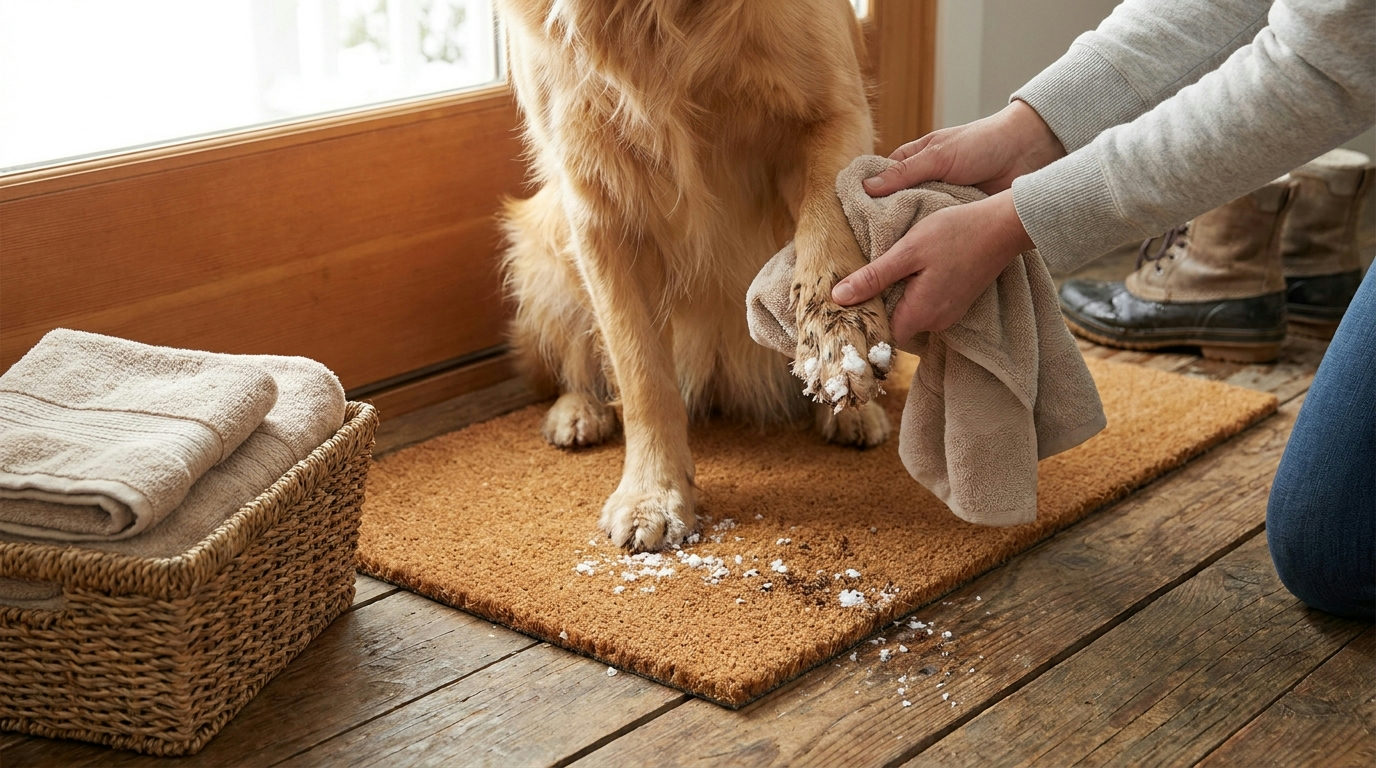
This is the most important part of winter dog paw care. Make it a habit at the door every time, and your dog will soon expect it.
- Keep a towel and a shallow bowl of lukewarm water by the door.
- Dip or wipe each paw to remove salt, grit and ice. Pay attention to the spaces between the toes.
- Dry each paw thoroughly, including between the pads.
- Take a quick look for cuts, cracks, redness or swelling.
- If your vet has suggested a moisturizing balm, apply a thin layer once paws are dry.
- Reward your dog with praise or a treat so the routine stays positive.
Many dogs are not keen on having their feet handled at first. Practice touching paws gently at calm moments, pairing each touch with a small treat. Our article on positive reinforcement explains how to build this kind of comfort step by step.
Indoor habits that help winter paws
What happens at home also matters, especially when the heating is on for months.
- Place a washable mat at the door to catch snowmelt and salt.
- Offer a cozy, raised bed away from drafts. See our guide to durable dog beds.
- Keep fresh water available, as indoor heating can be drying.
- Put rugs or runners on slippery floors so wet paws do not skid.
- Store de-icing products, antifreeze and other winter chemicals well out of reach.
Adjusting the routine for your dog
Not every dog needs the same level of protection. A thick-coated dog who loves snow and a small, short-haired dog who shivers at the door will have very different winters. Use these points to tailor your plan.
- Puppies: Young dogs are still learning about the world, so keep winter outings short and make paw handling part of everyday training. Our new puppy essentials checklist can help you prepare.
- Senior dogs: Older dogs may be less steady on ice. Shorter, slower walks on cleared ground and a non-slip surface at home can help them feel more confident.
- Small and short-coated dogs: These dogs often feel the cold sooner. A warm coat and a shorter route may make walks more comfortable.
- Dogs with hairy feet: Regular trimming between the pads can reduce ice clumping. Ask a groomer if you need help.
- Dogs with past paw problems: If your dog has had cracked pads, allergies or injuries before, ask your vet for a plan before the cold sets in.
Whatever your dog’s type, watch how they respond on each walk. Lifting paws, slowing down or turning for home are useful signals that it is time to adjust.
When to call your vet
Most winter paw issues are minor, but some signs are worth a prompt call to your vet:
- Bleeding, deep cracks or a cut that does not close.
- Limping that continues after you have cleaned and checked the paw.
- Swelling, heat or a bad smell from a paw.
- Constant licking or chewing at the feet.
- Pale, gray or unusually cold patches of skin on the paws, ears or tail after time outside.
- Vomiting, drooling or other changes after your dog may have licked salt or chemicals.
Questions to ask your vet
- Is my dog’s breed, age or coat type likely to need extra protection in cold weather?
- Would booties or a paw balm be a good idea for my dog?
- Which paw balm ingredients should I look for or avoid?
- How short should winter walks be for my dog on very cold days?
- What should I do if I think my dog has licked de-icing salt?
Make it part of the season
Winter walks can still be some of the best walks of the year. With a quick check before you leave, sensible gear and a wipe-and-dry routine at the door, winter dog paw care becomes second nature for both of you. If anything looks or feels off, a call to your vet is always the right next step. Keep your towel, balm and booties together in one basket by the door, and the routine will take only a minute or two after every walk, all winter long.
Further reading
- ASPCA: Cold weather safety tips
- AVMA: Cold weather animal safety
- VCA Animal Hospitals: Keeping your dog’s paws safe in winter