Disclaimer: This article is general information for dog owners, not veterinary advice. Every dog is different, so check with your vet about your own dog.
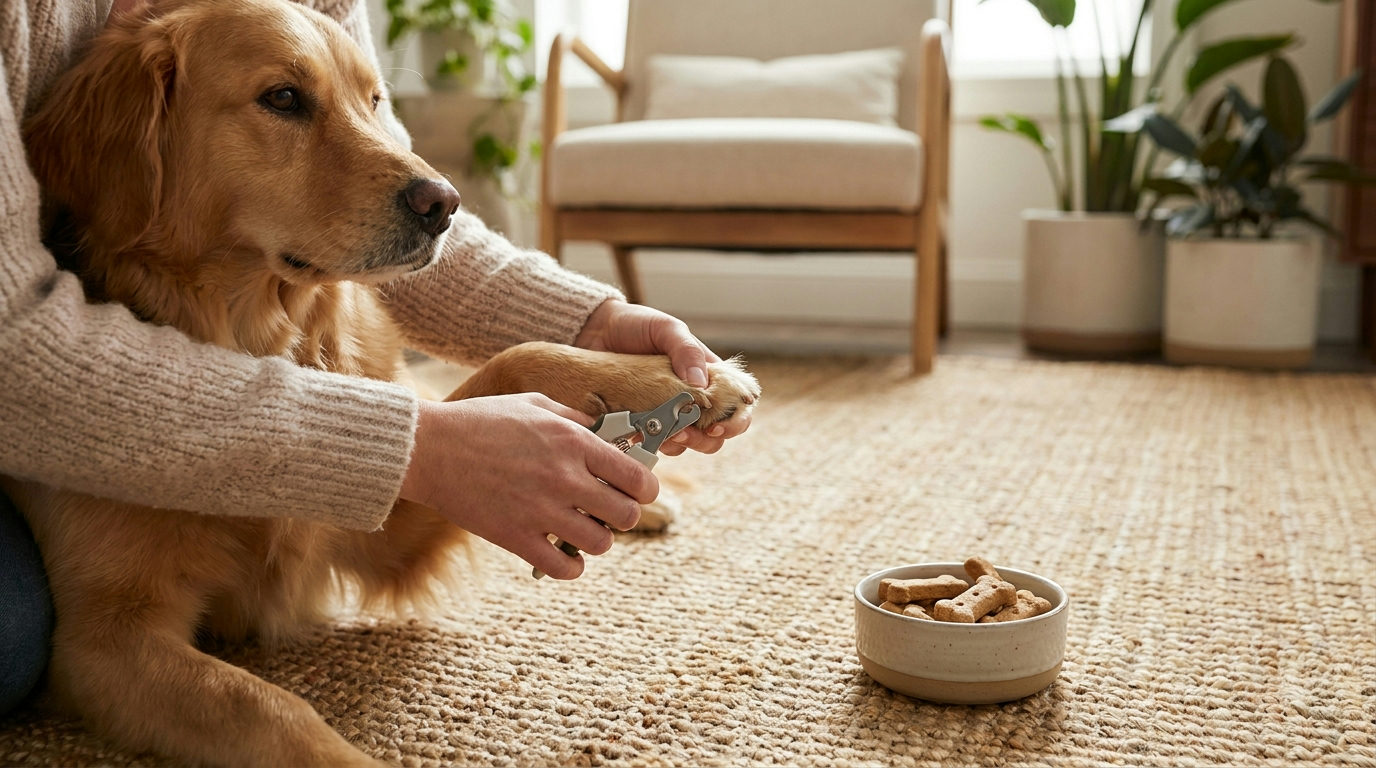
Few grooming jobs make dog owners as nervous as nail trims. Many dogs pull their paws away, and many owners worry about cutting too short. The good news is that trimming dog nails at home can become a calm, routine part of care with the right tools, a bit of patience, and plenty of rewards. It is a skill that tends to get easier for both of you with practice.
This guide covers the tools you may need, how to help your dog feel comfortable having their paws handled, a simple step-by-step routine, and how to stay clear of the quick. We also explain when it makes more sense to hand the job to a groomer or your vet, and the questions worth asking at your next visit.
Signs your dog’s nails need attention
Nails that grow too long can press against the ground with every step. That may change the way a dog stands and walks, and long nails can also catch on carpets or snap. Many dogs who walk on hard ground wear their nails down a little, but most still need some help. Your vet or groomer can tell you what a good length looks like for your dog and how often to check.
Signs that nails may be due for a trim:
- You hear clicking on hard floors when your dog walks
- The nails touch the ground when your dog is standing still
- Nails look curved, or seem to be pushing the toes sideways
- Dewclaws (the nails higher up on the inside of the leg) look long or curled
- Your dog slips more than usual on smooth floors
Regular nail care is one part of a wider grooming routine. Our article on the benefits of dog grooming explains how small, regular sessions support everyday comfort.
Tools you will need for nail trims
You do not need a large kit. A few basics, kept together in one spot, make each session quicker and calmer.
- Nail clippers made for dogs. Common styles include scissor-type and guillotine-type clippers. Choose a size that suits your dog, and keep the blades sharp so they cut cleanly instead of crushing the nail.
- A nail grinder (optional). Some dogs prefer a grinder, which files the nail down a little at a time. Others dislike the noise and vibration. It can help to introduce it slowly.
- Styptic powder or a similar product. Keep something on hand in case a nail bleeds. Ask your vet which product they suggest.
- Good lighting. A bright lamp or a small flashlight helps you see the nail clearly.
- Small, tasty rewards. These are the most important tool of all.
- A towel or non-slip mat. A steady surface helps your dog feel secure.
For a wider look at what to keep in your grooming kit, see our beginner’s guide to dog grooming tools.
Getting your dog comfortable with paw handling
Many dogs are sensitive about their feet. Rushing straight to the clippers can make that worse. A slow, gentle build-up may help your dog learn that paw handling leads to good things. This works for puppies and adult dogs alike, though older dogs with past bad experiences may need more time.
Try building comfort in small stages, moving on only when your dog is relaxed at each one:
- Touch your dog’s shoulder or leg, then reward.
- Touch a paw briefly, then reward.
- Hold a paw for a moment, then let go and reward.
- Gently press a toe pad so the nail extends slightly, then reward.
- Let your dog sniff the clippers or grinder, then reward.
- Touch the clippers to a nail without cutting, then reward.
- Switch the grinder on nearby so your dog hears it, then reward.
Keep these sessions short and end on a good note. Watch your dog’s body language closely. Lip licking, yawning, turning away, or a tense body can mean your dog needs a break. Our guide to reading dog body language covers these signals in more detail. If nail trims are part of a bigger worry for your dog, our article on helping an anxious dog feel calm has more ideas to talk through with your vet.
A step-by-step routine for trimming dog nails at home
Once your dog is comfortable with handling and tools, you can start trimming. It is fine to do just one paw, or even one nail, per session. Slow progress is still progress.
- Pick a calm moment. Many owners find that after a walk or play session, when their dog is relaxed, works well.
- Set up your space. Lay out your tools, rewards and a towel in a quiet, well-lit area.
- Get comfortable. Sit on the floor with your dog, or ask a helper to offer rewards and gentle support.
- Hold the paw gently but securely. Press lightly on the toe pad to extend the nail.
- Look at the nail first. Identify where the quick may be before you cut (see below).
- Trim a small amount from the tip. Take only a little at a time, cutting at a slight angle that follows the natural curve of the nail.
- Reward after each nail. This keeps the experience positive.
- Check the dewclaws. If your dog has them, they do not touch the ground and may need trimming too.
- Smooth rough edges if needed. A grinder or nail file can tidy sharp tips.
- Stop before your dog gets stressed. You can always finish another day.
How to stay clear of the quick
Inside each nail is the quick, a living part with blood vessels and nerves. Cutting into it can hurt and may cause bleeding. The safest approach is to take off small amounts and look closely before each cut.
- Light-colored nails. You may be able to see the pinkish quick through the nail. Stay well clear of it.
- Dark nails. The quick is harder to see. Trim tiny slivers and look at the cut surface each time. Many owners find the center starts to look different, often darker or moist, as they get closer to the quick. That is a good time to stop.
- Long nails. When nails have grown long, the quick may have grown along with them. Ask your vet or groomer how to shorten them gradually.
- If a nail bleeds. Stay calm, apply styptic powder or the product your vet suggested with gentle pressure, and give your dog a break. If bleeding does not stop, contact your vet.
It is a good idea to keep basic supplies close by during any grooming session. Our dog first aid kit checklist lists what many owners like to have ready.
When to let a groomer or vet do it
Trimming dog nails at home is not the right choice for every dog or every owner, and that is completely fine. Consider asking a professional if:
- Your dog becomes very fearful, panicked, or tries to bite during nail care
- Your dog’s nails are very long, curled, or growing into the pad
- Your dog has dark nails and you feel unsure about finding the quick
- Your dog has a health condition, sore joints, or is recovering from an injury
- You simply do not feel confident yet
A groomer or vet team can trim the nails and may be happy to show you how they do it. Many owners alternate, with professional trims plus small at-home touch-ups in between.
When to call your vet
Contact your vet if you notice any of the following:
- A nail that keeps bleeding after you have applied pressure
- A broken, split, or torn nail
- Swelling, redness, discharge, or a bad smell around a nail or toe
- Limping, or licking and chewing at one paw
- A nail that has grown into the paw pad
- Changes in nail color, shape, or texture that you have not seen before
- Strong fear or distress around nail care that is not getting better
Questions to ask your vet
- What is a healthy nail length for my dog, and how often should I check?
- Can you show me where the quick is on my dog’s nails?
- Would clippers or a grinder suit my dog better?
- Which product do you suggest keeping on hand in case a nail bleeds?
- How can I shorten long nails safely over time?
- My dog is very anxious about paw handling. What can help?
Take it slow and keep it positive
There is no prize for finishing all four paws in one go. Short, positive sessions often work better than one long struggle. Focus on building trust, trim a little at a time, and do not hesitate to bring in a groomer or your vet when you need support. Over time, many dogs learn to settle for nail care, and many owners find it becomes a quick, routine part of the week.
With the right tools, a patient build-up, and a vet you can ask for help, trimming dog nails at home can become one more small way you look after your dog.