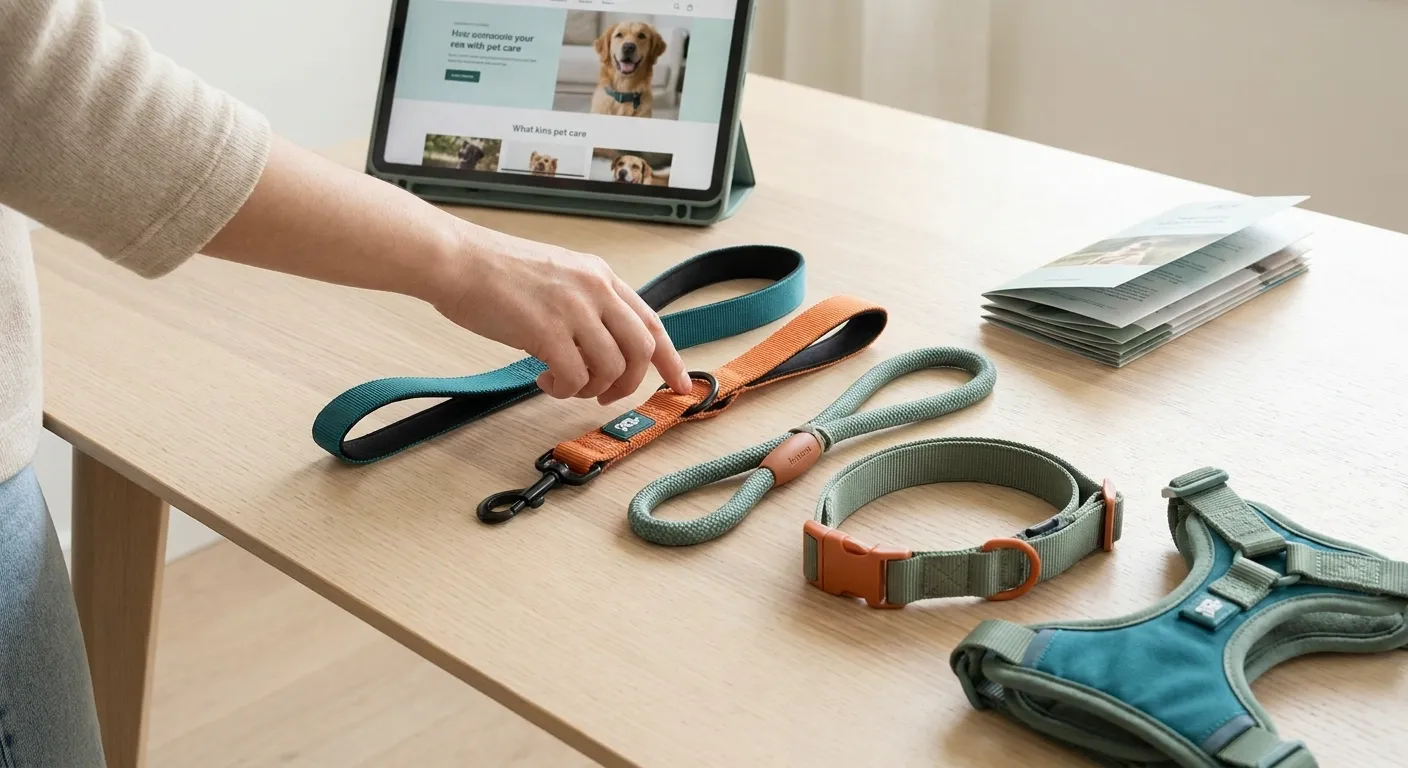
Walking your dog is a daily ritual, a chance for exercise, exploration, and bonding. To make these walks safe and enjoyable, however, choosing the right equipment is paramount. Navigating the world of dog leashes and collars can be confusing with so many options available. This guide will help you understand the differences and make an informed decision when choosing dog leash collar combinations that suit your dog’s needs and your lifestyle. Safety, comfort, and control are always the top priorities.
Furthermore, the right gear can significantly impact your dog’s behavior and your overall experience during walks. A well-fitted collar and an appropriate leash provide the necessary control for training and safety. Conversely, ill-fitting or unsuitable equipment can lead to discomfort, escape risks, or even injuries. Therefore, understanding the various types and their proper uses is essential for every responsible dog owner. We’ll explore the best options for different situations, ensuring you feel confident in your choices.
Types of Collars and Their Uses
There’s a collar for almost every purpose, which can feel overwhelming at first. A standard flat buckle collar is the most common and ideal for everyday wear, holding ID tags and basic leash attachment. Importantly, ensure it fits snugly enough that you can slip two fingers comfortably under it, but not so loose that it can slip over your dog’s head. This proper fit prevents both discomfort and escape. For puppies, a lightweight flat collar is often the best starting point, allowing them to get used to wearing something around their neck.
Martingale collars are great for dogs with narrow heads or those who tend to slip out of standard collars. They tighten slightly when pulled, preventing escape without choking your dog. Many greyhound and sighthound owners, for example, find these collars indispensable. Head halters and front-clip harnesses offer more control for dogs who pull, redirecting their attention and making walks more manageable. These tools work by gently guiding your dog’s head or chest, discouraging pulling without causing pain. It’s worth noting that harnesses can be a fantastic alternative for dogs with sensitive necks or respiratory issues, as they distribute pressure across the chest.
It is crucial to avoid choke chains and prong collars, which can cause pain and injury, especially for new dog owners. Instead, focus on positive reinforcement methods and humane equipment that promotes a healthy relationship with your pet. Similarly, consider your dog’s coat type when selecting a collar material. For instance, long-haired breeds might benefit from rolled leather collars to prevent matting, whereas short-haired dogs might be comfortable with nylon. The goal is always comfort and safety.
Selecting the Perfect Leash
Just like collars, leashes come in various styles, each with its own benefits. A standard 4-6 foot leash made of nylon or leather is a versatile choice for most dogs, providing a good balance of freedom and control. Nylon leashes are durable and easy to clean, making them a practical everyday option. Leather leashes, on the other hand, are comfortable to hold and become softer over time, often lasting for many years with proper care. Many owners appreciate the classic feel and strength of a good leather leash.
Retractable leashes can seem appealing because they offer extended freedom, but they often provide less control, can lead to injuries, and unfortunately, teach dogs to pull. For these reasons, many trainers and veterinarians advise against their use for general walking. For training purposes, however, a longer training leash (10-30 feet) can be useful for practicing recall in a safe, open area. This allows your dog more room to explore while you maintain a connection, which is vital for building reliable recall skills. When choosing dog leash collar pairings, always consider your dog’s size, temperament, and training level, prioritizing their safety and comfort during every outing.
Furthermore, the material of the leash is just as important as its length. For example, a heavy-duty leash might be necessary for a large, strong dog, while a lighter leash could be more suitable for a small breed or puppy. Reflective leashes are also an excellent choice for nighttime walks, significantly increasing visibility and safety. Remember, the right leash should feel comfortable in your hand and provide reliable control over your dog.
Considering Your Dog’s Unique Needs
Every dog is an individual, and what works for one might not work for another. Therefore, understanding your dog’s specific needs is paramount when selecting their walking gear. For instance, a high-energy puppy might benefit from a front-clip harness to help manage their exuberance during walks, teaching them polite leash manners early on. You can find more practical picks for your new arrival by checking out our New Puppy Essentials List. Similarly, a senior dog with joint issues might be more comfortable with a harness that distributes pressure evenly across their chest rather than around their neck.
If your dog is a known escape artist, a Martingale collar or a well-fitted harness could be life-savers. Dogs with short snouts, like pugs or bulldogs, often breathe better with a harness instead of a collar that might put pressure on their windpipe. Conversely, some dogs with thick fur might experience matting with certain harness styles, making a well-fitting flat collar a better choice. Always observe your dog’s comfort and behavior with new equipment. Adjustments might be necessary, and sometimes, trying a few different options is the best way to find the perfect fit. Your dog’s comfort should always be your guide.
The Importance of Proper Fit and Safety
Proper fit is arguably the most critical aspect of any dog collar or leash. An ill-fitting collar can easily slip off, leading to a lost dog, or it can be too tight, causing discomfort, chafing, or even breathing difficulties. As mentioned, the