Walking your dog is one of the joys of pet ownership, offering exercise, mental stimulation, and valuable bonding time. To ensure these adventures are always positive and secure, having the right safe dog walking gear is paramount. From preventing escapes to managing pulling, the correct equipment makes a significant difference for both you and your furry companion. Moreover, understanding how each piece of equipment functions can greatly enhance your walking experience.
As dog owners, we all want our pets to be safe and comfortable during their daily strolls. Therefore, choosing the appropriate equipment is a crucial first step. This guide will walk you through the essential components of reliable dog walking equipment, helping you make informed decisions for your beloved pet. We’ll cover everything from leashes and collars to harnesses and important accessories.
Safe Dog Walking Gear: Essential Components
Selecting the right equipment begins with understanding your dog’s specific needs and behaviors. For example, a strong puller will require different tools than a small, calm companion. Let’s explore the key items that form the foundation of effective and safe dog walking gear.
1. The Right Leash for Control and Safety
A leash is your primary connection to your dog during a walk. Consequently, its length, material, and type are all important considerations. A standard 4-6 foot leash made from durable nylon or leather is ideal for most walks. This length provides enough freedom for your dog to explore while still allowing you to maintain control.
It is generally recommended to avoid retractable leashes. While they seem to offer more freedom, they actually provide less control, potentially leading to injuries for both you and your dog. Furthermore, they can teach dogs to pull, as the tension is inconsistent. For training purposes, a longer leash (10-15 ft) can be useful in open, safe areas like a park, but always revert to a standard length for everyday walks in populated areas. Always check the leash for signs of wear and tear before each walk, as a worn leash can snap unexpectedly.
2. A Secure Collar or Harness: Choosing the Best Fit
The choice between a collar and a harness, or even specific types of each, depends heavily on your dog’s breed, size, and walking habits. Each option serves a different purpose and offers distinct benefits for your pet’s safety and comfort.
Flat Buckle Collar
A flat buckle collar is the most common type, primarily used for general identification and light leash guidance. It’s essential that it fits snugly, allowing two fingers to slip comfortably underneath. However, it shouldn’t be so loose that your dog can slip out. Always ensure your dog’s ID tag with current contact information is securely attached to their collar. This is vital in case your dog ever gets lost, providing a quick way for them to be returned home.
Martingale Collar
Martingale collars are an excellent choice for dogs with narrow heads, such as Greyhounds or Sighthounds, or for any dog that tends to slip out of traditional collars. This type of collar tightens gently when pulled, preventing escape without choking your dog. It’s designed to provide a humane way to keep your dog secure, making it a valuable piece of dog walking equipment for certain breeds.
Front-Clip Harness
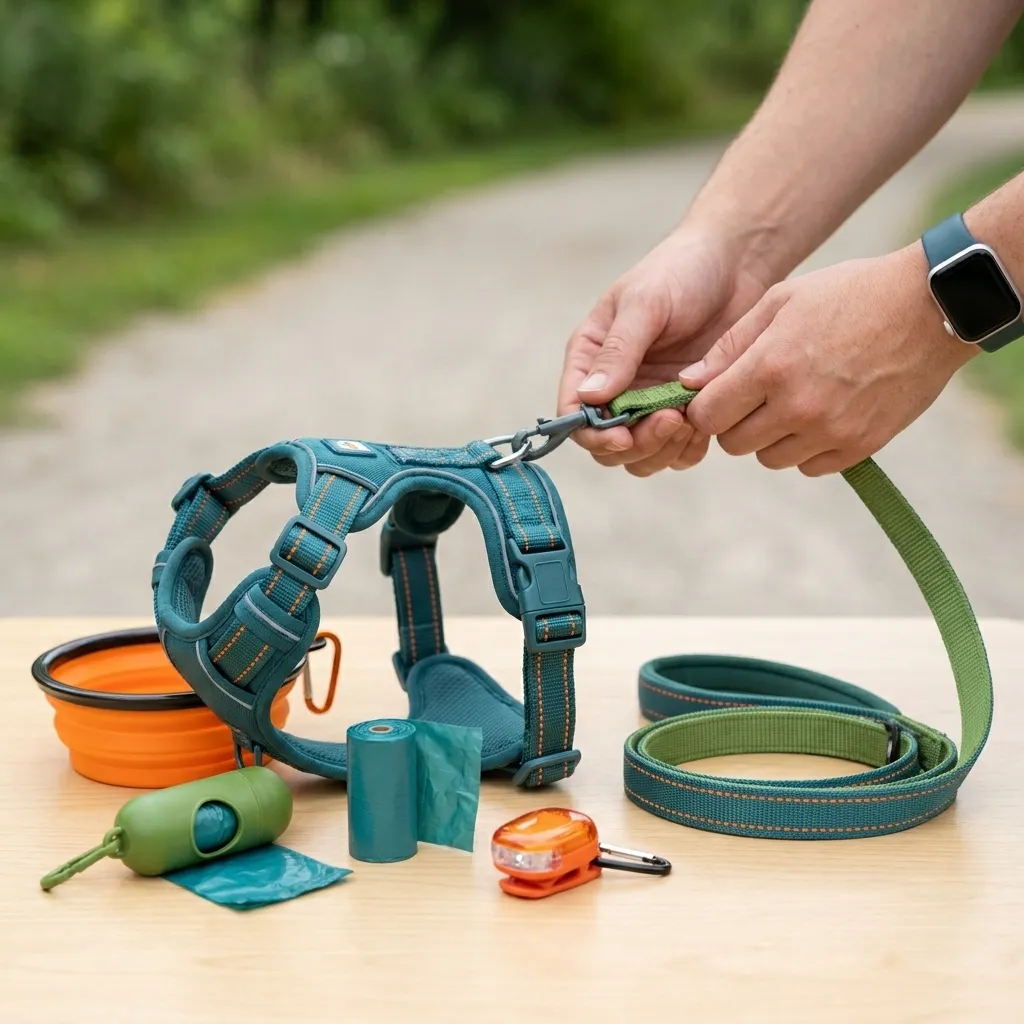
For dogs who are enthusiastic pullers, a front-clip harness is often a game-changer. The leash attaches to a ring located on the front of the dog’s chest. When your dog pulls, the harness gently redirects their momentum back towards you, making pulling less effective and more manageable. This method helps to teach your dog to walk politely on a leash without causing discomfort to their throat or neck. Many owners find this to be an invaluable component of effective safe dog walking gear.
Back-Clip Harness
A back-clip harness is a comfortable option for dogs who don’t pull excessively, as well as for smaller breeds. The leash attaches to a ring on the dog’s back, distributing pressure across their chest and back rather than their neck. While comfortable, it offers less control over pulling compared to a front-clip harness. Therefore, it’s best suited for dogs who already have good leash manners.
3. Waste Bags: A Must-Have for Responsible Pet Ownership
Regardless of where you walk, carrying waste bags is an absolute necessity. Cleaning up after your dog is a fundamental part of responsible pet ownership and helps maintain clean public spaces. Always carry enough bags to clean up after your dog, and remember that many leashes come with convenient dispensers. This small item is a crucial part of your everyday safe dog walking gear, preventing fines and promoting good community relations.
4. Portable Water Bottle and Bowl: Hydration on the Go
Especially important for longer walks or warm weather, a portable water bottle and bowl are essential for keeping your dog hydrated. Dehydration can lead to serious health issues, including overheating. Providing fresh water regularly promotes your dog’s overall well-being and stamina during walks. There are many compact and easy-to-carry options available, making it simple to include this in your safe dog walking gear kit.
5. Reflective Gear and Lights: Enhancing Visibility
When walking your dog during dawn, dusk, or at night, visibility becomes a critical safety factor. Reflective gear for both you and your dog, along with lights, significantly increases your visibility to drivers and cyclists. Consider a reflective vest or collar for your dog, and perhaps a light-up leash or collar attachment. For yourself, a reflective jacket or armbands can make a big difference. This type of safety gear is paramount for ensuring you and your furry friend are seen, especially in areas with traffic.
6. First-Aid Kit: Prepared for Minor Mishaps
While we hope for incident-free walks, minor mishaps can occur. A small, portable first-aid kit designed for pets can be incredibly useful. It might include items like antiseptic wipes, gauze, adhesive tape, and tweezers for removing splinters or ticks. Knowing you’re prepared for small cuts or scrapes can give you peace of mind, making it a smart addition to your overall safe dog walking gear.
Choosing the Right Safe Dog Walking Gear for Your Dog
The best equipment for your dog will depend on several factors, including their breed, size, temperament, and even your local walking environment. It’s not a one-size-fits-all situation; rather, it’s about finding what works best to ensure comfort, control, and safety for both of you. For instance, a small terrier might thrive with a lightweight back-clip harness, while a strong Labrador might benefit more from a sturdy front-clip harness.
Consider your dog’s energy levels and how they react to different environments. If your dog is easily distracted, a leash that allows for quick and firm guidance might be more appropriate. On the other hand, a calm dog might enjoy the freedom a slightly longer standard leash provides in an open field. Always observe your dog’s behavior and comfort with new equipment. A well-fitting harness or collar should never chafe or restrict movement.
Tips for Safe and Enjoyable Walks
Beyond having the right safe dog walking gear, there are several practices that contribute to safer and more enjoyable walks. These tips help create a positive routine and reinforce good habits for both you and your dog.
- Start with Training: Basic leash training is fundamental. Teach your dog to walk politely by your side without pulling. Positive reinforcement methods work best.
- Regular Equipment Checks: Before every walk, quickly inspect leashes, collars, and harnesses for any signs of wear, fraying, or damage. Replace items as needed to prevent unexpected breakages.
- Stay Aware of Your Surroundings: Pay attention to other dogs, people, and potential hazards like broken glass or aggressive wildlife. Being present and observant is key to preventing incidents.
- Hydrate Regularly: Offer your dog water breaks, especially on longer walks or in warm weather. This helps prevent dehydration and keeps them energized.
- Respect Leash Laws: Always adhere to local leash laws. These rules are in place for the safety of all community members, including other pets and people.
- Consider the Weather: Extreme heat or cold can be dangerous for dogs. Adjust your walk times or duration accordingly, and consider paw protection in very hot or icy conditions.
- Keep ID Up-to-Date: Ensure your dog’s ID tag and microchip information are always current. This is your best chance of reunification if your dog ever gets lost.
Maintaining Your Safe Dog Walking Gear
Just like any other essential items, your dog walking equipment requires proper care and maintenance to ensure its longevity and effectiveness. Regularly cleaning and inspecting your gear can prevent issues and ensure it’s always ready for your next adventure.
- Clean Regularly: Leashes and harnesses can accumulate dirt, mud, and even bacteria. Most nylon and fabric items can be hand-washed with mild soap and water, or even machine-washed on a gentle cycle. Leather items may require specialized cleaners to prevent drying and cracking.
- Inspect for Wear and Tear: Pay close attention to stitching, buckles, D-rings, and other hardware. Frayed leashes, stretched collars, or rusty clasps can fail unexpectedly. Replace any damaged items immediately. This vigilance is a critical aspect of maintaining reliable safe dog walking gear.
- Store Properly: Keep your gear in a dry, accessible place, away from direct sunlight or extreme temperatures, which can degrade materials over time. Avoid leaving leashes and harnesses outside where they can be exposed to the elements.
Investing in quality safe dog walking gear ensures every outing is enjoyable and worry-free. Prioritize comfort, control, and safety to make every walk a positive experience for you and your best friend. By taking the time to select the right items and maintaining them properly, you’re not just buying products; you’re investing in countless happy, secure memories with your dog. This commitment to proper equipment and responsible practices truly enhances the bond you share with your pet.
FAQ: Frequently Asked Questions About Dog Walking Equipment
What is the most important item for safe dog walks?
While all components are important, a secure and well-fitting leash and collar or harness are arguably the most crucial. They provide the direct control needed to keep your dog safe and prevent escapes during walks.
How do I know if my dog’s harness fits correctly?
A properly fitting harness should allow you to comfortably slip two fingers between the harness and your dog’s body. It should be snug enough that your dog cannot back out of it, but not so tight that it restricts movement or causes chafing. Always check the fit around the chest, shoulders, and behind the front legs.
Are retractable leashes really unsafe?
Many experts advise against retractable leashes because they offer less control, can lead to sudden jerks and injuries for both dog and owner, and can encourage pulling behavior. For optimal safety and control, a fixed-length leash of 4-6 feet is generally recommended.
What should I do if my dog pulls excessively on walks?
If your dog pulls, consider using a front-clip harness, which helps redirect their momentum. Additionally, consistent positive reinforcement training, rewarding your dog for walking politely by your side, can be very effective. Professional dog trainers can also offer tailored guidance.
How often should I replace my dog’s walking supplies?
The lifespan of your dog’s walking supplies depends on their quality, frequency of use, and how well they are maintained. Inspect them regularly for wear and tear. As a general rule, replace leashes and harnesses when you notice fraying, stretched material, or damaged hardware. Collars might last longer but should also be checked periodically.
What other items can enhance my dog’s safety during walks?
Beyond the core walking essentials, consider reflective gear or LED lights for low-light conditions. A pet first-aid kit for minor injuries, and even a small whistle to get your dog’s attention, can also enhance safety. For dogs prone to wandering, a GPS tracker can provide an extra layer of peace of mind. Remember, the goal is to make every walk a secure and happy adventure!