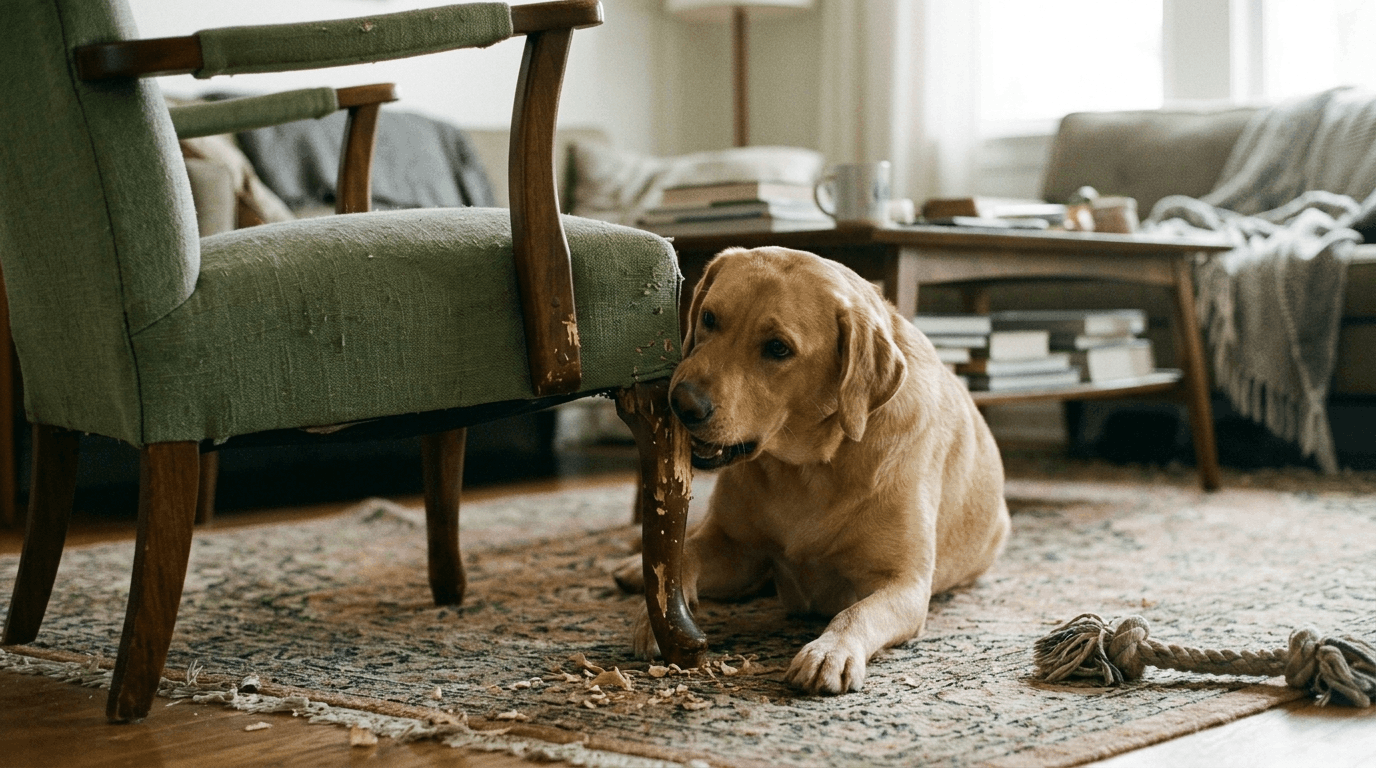
If your dog constantly targets your furniture, it can feel frustrating and even overwhelming. However, stop dog chewing furniture is not about punishment or control. Instead, it is about understanding why your dog is chewing and guiding that behavior in a healthier direction. Dogs chew for natural reasons, so the goal is to redirect, not eliminate, the instinct. With the right approach, you can protect your home while helping your dog develop better habits.
Chewing often happens when a dog has unmet needs. These can include boredom, stress, teething, or excess energy. Therefore, to stop dog chewing furniture effectively, you need to address the cause behind the behavior. Once those needs are met, the urge to chew inappropriate items begins to fade.
Understand The Root Cause Of Chewing Behavior
Before you can stop dog chewing furniture, it is important to identify why your dog is doing it. Puppies often chew because they are teething, which helps relieve discomfort. Adult dogs, on the other hand, may chew due to boredom or anxiety.
For example, a dog left alone without stimulation may chew to release energy or cope with stress. In addition, dogs that lack structure may turn to chewing simply because they do not know what else to do. Observing when and where chewing occurs can provide useful clues.
If chewing happens mostly when you are away, it may indicate separation anxiety. If it happens during quiet periods, boredom is often the cause. By understanding the reason, you can choose the most effective way to stop dog chewing furniture naturally.
Provide Better Chewing Alternatives Immediately
One of the simplest ways to stop dog chewing furniture is to offer appropriate alternatives. Dogs need to chew, so giving them safe options helps redirect that behavior in a positive way.
Choose durable chew toys that match your dog’s size and strength. Rotate these toys regularly to keep them interesting. When your dog uses the correct item, reward it with praise or a treat. This reinforces the behavior you want.
At the same time, keep these alternatives easily accessible. If your dog cannot find something suitable, it will return to furniture. Therefore, consistency in providing options is essential.
Over time, your dog learns what is acceptable to chew, which helps stop dog chewing furniture without force or stress.
Use Natural Deterrents To Protect Furniture
Natural deterrents can be a helpful tool when you want to stop dog chewing furniture without harsh methods. Dogs often dislike certain scents or tastes, which can discourage them from chewing specific items.
For example, applying pet-safe bitter sprays or natural solutions like diluted vinegar can make furniture less appealing. However, deterrents should be used alongside training, not as a standalone solution.
When your dog avoids a treated item, redirect it to a chew toy immediately. This teaches your dog what to do instead of just what to avoid. Consistent use of this method supports long-term behavior change.
By combining deterrents with positive reinforcement, you create a balanced approach that helps stop dog chewing furniture effectively.
Increase Physical Activity To Reduce Chewing
Dogs with excess energy are more likely to engage in destructive behavior. Therefore, increasing physical activity is one of the most effective ways to stop dog chewing furniture naturally.
Daily walks, play sessions, and interactive games help release energy and reduce boredom. Even short bursts of activity can make a difference, especially for busy owners.
In addition, combining exercise with training adds mental stimulation. This keeps your dog engaged and less likely to seek out furniture as an outlet.
By meeting your dog’s physical needs, you reduce the desire to chew inappropriate items and create a more balanced routine.
Add Mental Stimulation To Prevent Boredom
Mental stimulation is just as important as physical exercise. Dogs that are mentally engaged tend to feel calmer and more satisfied. Therefore, adding enrichment activities can help stop dog chewing furniture.
Puzzle toys, treat-dispensing devices, and short training sessions are excellent options. These activities challenge your dog and provide a productive outlet for energy.
Even a few minutes of focused interaction can make a difference. Teaching simple commands or reinforcing existing ones keeps your dog’s mind active.
By incorporating mental stimulation into your routine, you reduce boredom and support better behavior naturally.
Supervise And Redirect Early
Supervision is essential when trying to stop dog chewing furniture quickly. When you are present, you can catch unwanted behavior early and redirect it immediately.
If your dog begins to chew furniture, calmly interrupt and guide it toward an appropriate toy. Avoid reacting with anger, as this can create fear or confusion. Instead, focus on clear and consistent guidance.
When you cannot supervise, limit access to certain areas. Using gates or designated spaces prevents mistakes while your dog is still learning.
By combining supervision with redirection, you create a learning environment that supports positive habits.
Create A Calm And Structured Environment
Dogs thrive in environments that feel stable and predictable. Therefore, creating a calm routine can help stop dog chewing furniture naturally.
Establish consistent feeding, walking, and play times. This structure reduces anxiety and provides a sense of security. In addition, ensure your dog has a comfortable space to relax.
If your dog chews when stressed, consider calming techniques such as background noise or interactive toys. These small changes can create a more relaxed atmosphere.
By maintaining structure, you reduce the likelihood of destructive behavior and support emotional balance.
Avoid Reinforcing Unwanted Behavior
Sometimes, owners unintentionally reinforce chewing behavior. For example, giving attention immediately after a dog chews furniture can encourage repetition. Therefore, it is important to respond carefully.
Focus on rewarding good behavior instead. When your dog chooses a toy over furniture, acknowledge it immediately. This reinforces the correct choice.
In addition, avoid giving items that resemble household objects as toys. This can confuse your dog and lead to unwanted behavior.
By being consistent and intentional, you create clear expectations that help stop dog chewing furniture more effectively.
Be Patient And Consistent With Training
Changing behavior takes time, especially if habits are already established. However, patience and consistency are key to success. Each small improvement helps your dog move in the right direction.
Celebrate progress, such as reduced chewing or choosing the correct item. These moments show that your approach is working. Over time, these small changes become lasting habits.
If setbacks occur, stay calm and adjust your approach. Dogs learn through repetition, so consistency is what creates results.
By staying patient, you give your dog the opportunity to develop better behavior naturally.
Conclusion
Learning how to stop dog chewing furniture naturally is about understanding your dog’s needs and guiding behavior with consistency. Instead of relying on punishment, focus on redirection, enrichment, and structure. By providing proper outlets, increasing activity, and maintaining a calm environment, you create a system that supports positive habits.
Over time, your dog learns what is acceptable and becomes more balanced and confident. Your home stays protected, and your relationship with your dog improves. With the right approach, you can stop dog chewing furniture and create a routine that works for both you and your dog.
FAQ
- Why does my dog chew furniture even with toys available?
Dogs may still chew furniture if they are bored, stressed, or not interested in the available toys. - Are natural deterrents safe for dogs?
Yes, as long as you use pet-safe products or properly diluted natural solutions. - How long does it take to fix chewing behavior?
Most dogs show improvement within a few weeks with consistent training and proper guidance. - Should I punish my dog for chewing furniture?
No, punishment can create fear. Focus on redirection and positive reinforcement instead. - What is the best way to prevent chewing when I am not home?
Limit access to certain areas and provide safe chew toys to reduce the risk of damage.