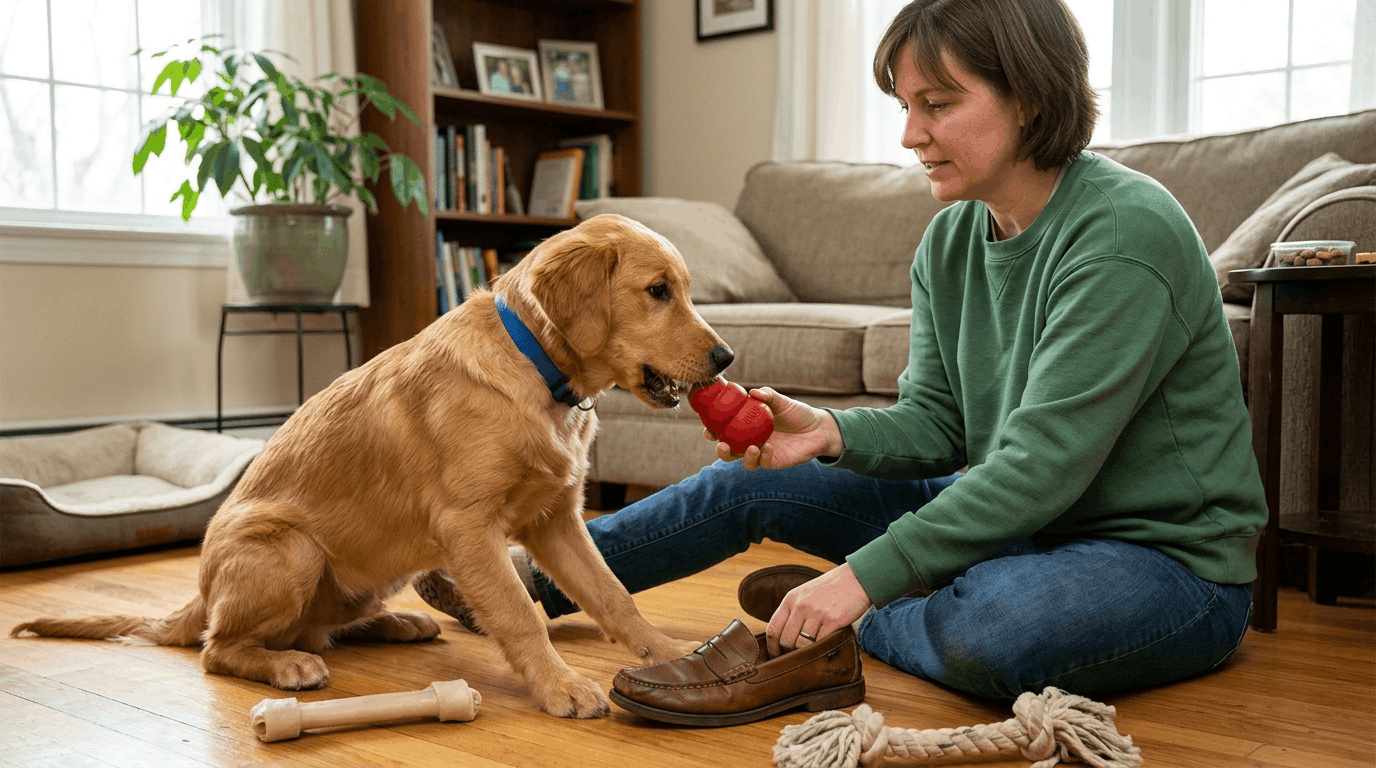
If your dog is constantly chewing furniture, shoes, or anything it can find, you are not alone. Stop destructive dog chewing is one of the most common challenges dog owners face, especially during early stages or times of stress. While it may feel frustrating, chewing is a natural behavior for dogs. The key is not to eliminate it but to redirect it in a way that works for both you and your dog.
Dogs chew for many reasons, including boredom, teething, anxiety, or excess energy. When those needs are not met, they turn to whatever is available. Therefore, to stop destructive dog chewing effectively, you need to understand the cause and respond with a clear and consistent approach. Once you do that, progress becomes much faster and more manageable.
Understand Why Your Dog Is Chewing
Before you can stop destructive dog chewing, it is important to identify what is driving the behavior. Puppies often chew because they are teething, while adult dogs may chew due to boredom or stress. In some cases, lack of mental stimulation can also trigger this behavior.
For example, a dog left alone for long periods without activity may chew to release energy. Similarly, a dog experiencing anxiety may chew as a way to cope. Recognizing these patterns helps you address the root cause instead of just reacting to the damage.
In addition, observe when chewing happens most often. If it occurs during specific times, such as when you leave the house, it may indicate separation anxiety. By identifying triggers, you can take targeted steps to stop destructive dog chewing more effectively.
Provide Better Chewing Alternatives
One of the simplest ways to stop destructive dog chewing is to give your dog appropriate outlets. Dogs need to chew, so removing the behavior entirely is not realistic. Instead, provide safe and engaging chew toys that satisfy this natural instinct.
Choose durable toys that match your dog’s size and chewing strength. Rotate them regularly to keep things interesting. When your dog chooses the correct item, reward it with praise or treats. This reinforces the behavior you want to see.
In addition, make sure these alternatives are always accessible. If your dog cannot find a suitable item, it will return to destructive habits. By consistently offering better options, you guide your dog toward positive chewing behavior.
Over time, your dog learns what is acceptable, which helps stop destructive dog chewing naturally.
Use Supervision To Prevent Mistakes
Supervision is a powerful tool when trying to stop destructive dog chewing quickly. When you are able to monitor your dog, you can redirect behavior immediately before it becomes a habit.
If your dog begins to chew something inappropriate, calmly interrupt and guide it toward a proper chew toy. Avoid yelling or reacting harshly, as this can create confusion or fear. Instead, focus on clear and consistent redirection.
When you cannot supervise, consider limiting access to certain areas. Using baby gates or crate training can help prevent damage while your dog learns better habits. This controlled environment reduces opportunities for mistakes.
By combining supervision with redirection, you create a learning process that supports long-term success.
Increase Physical And Mental Activity
A tired dog is far less likely to engage in destructive behavior. Therefore, increasing activity is one of the most effective ways to stop destructive dog chewing. Both physical exercise and mental stimulation play important roles.
Daily walks, play sessions, and interactive games help release excess energy. At the same time, mental challenges such as puzzle toys or training exercises keep your dog engaged. This combination reduces boredom and prevents unwanted behavior.
Even short sessions can make a difference. For busy schedules, break activity into smaller periods throughout the day. Consistency matters more than duration.
By meeting your dog’s energy needs, you reduce the urge to chew destructively and support a more balanced routine.
Create A Calm And Structured Environment
Dogs respond well to structure. When their environment feels predictable, they are less likely to develop unwanted behaviors. Therefore, creating a calm routine can help stop destructive dog chewing.
Establish consistent feeding, walking, and play times. This routine helps your dog understand what to expect and reduces anxiety. In addition, provide a designated space where your dog can relax.
If your dog tends to chew when stressed, consider calming techniques such as soft music or interactive toys. These small adjustments can create a more relaxed atmosphere.
By maintaining structure, you give your dog a sense of security, which reduces the need for destructive outlets.
Use Deterrents Carefully And Effectively
In some cases, deterrents can help protect items while your dog is learning. Products with bitter taste can discourage chewing on furniture or household items. However, they should be used as a temporary solution rather than a primary method.
Deterrents work best when combined with redirection. If your dog avoids a treated item, immediately guide it to an appropriate alternative. This ensures that your dog learns what to chew instead of simply avoiding certain objects.
Consistency is important. Apply deterrents regularly and monitor your dog’s response. Over time, as your dog develops better habits, you can reduce reliance on these products.
Used correctly, deterrents can support your efforts to stop destructive dog chewing more efficiently.
Avoid Common Training Mistakes
While trying to stop destructive dog chewing, certain mistakes can slow progress. One common issue is reacting after the fact. Dogs do not connect past actions with delayed consequences, so punishment later is ineffective.
Another mistake is inconsistency. If some items are allowed and others are not, your dog may become confused. Therefore, set clear boundaries and enforce them consistently.
In addition, avoid giving items that resemble household objects as toys. For example, old shoes can confuse your dog and lead to unwanted behavior.
By avoiding these mistakes, you create a clearer learning process that supports faster results.
Stay Patient And Focus On Progress
Training takes time, especially when habits have already formed. However, patience is essential if you want to stop destructive dog chewing successfully. Each small improvement is a step in the right direction.
Celebrate progress, such as choosing a toy instead of furniture. These moments show that your dog is learning. Over time, consistent reinforcement turns these small changes into lasting habits.
If setbacks occur, remain calm and adjust your approach. Dogs learn through repetition, so consistency is what creates results. By staying patient, you allow your dog to develop better behavior naturally.
Conclusion
Learning how to stop destructive dog chewing fast at home is about understanding your dog’s needs and guiding behavior in the right direction. Instead of reacting with frustration, focus on prevention, redirection, and consistent routines. By providing proper outlets, increasing activity, and maintaining structure, you create an environment where positive habits can grow.
Over time, your dog learns what is acceptable and becomes more balanced and confident. While the process requires effort, the results are worth it. Your home stays protected, your dog feels fulfilled, and your daily routine becomes more enjoyable. With the right approach, you can stop destructive dog chewing and build better habits that last.
FAQ
- Why does my dog chew everything at home?
Dogs chew due to boredom, teething, stress, or excess energy that needs to be released. - How quickly can chewing behavior improve?
With consistent training and proper outlets, many dogs show improvement within a few weeks. - Are chew toys enough to fix the problem?
Chew toys help, but they must be combined with training, supervision, and routine. - Should I punish my dog for chewing furniture?
No, punishment after the fact is ineffective. Focus on redirection and positive reinforcement instead. - What is the best way to prevent chewing when I am away?
Limit access to certain areas and provide safe chew options to reduce the risk of damage.