Disclaimer: This article is general information for dog owners, not veterinary or behavioral advice. Every dog is different, so check with your vet or a qualified trainer about your own dog.
Holiday gatherings can be a lot for a dog to take in: the doorbell ringing, unfamiliar people, children running around, new smells from the kitchen and a break from the usual routine. Planning ahead for dogs and holiday guests helps your dog cope with the excitement and keeps visitors, especially young ones, safe and comfortable too.
This guide covers how to prepare before guests arrive, set up a quiet retreat, manage greetings, keep holiday food out of reach, supervise children and spot signs that your dog needs a break.
Prepare in the week before guests arrive
A calm holiday starts well before the first knock on the door. Work through this checklist in advance.
- Keep the routine: Try to stick to your dog’s usual mealtimes, walks and bedtime as much as possible.
- Practice door manners: Rehearse calm greetings with family members, rewarding your dog for sitting or going to their bed when the bell rings.
- Check ID: Make sure your dog’s collar tag and microchip details are current. Doors open often during gatherings.
- Plan exercise: Schedule a longer walk or play session on the day so your dog is relaxed before guests arrive.
- Tell your guests: Let visitors know you have a dog, especially anyone with allergies or a fear of dogs, and share any house rules.
Set up a quiet retreat for your dog
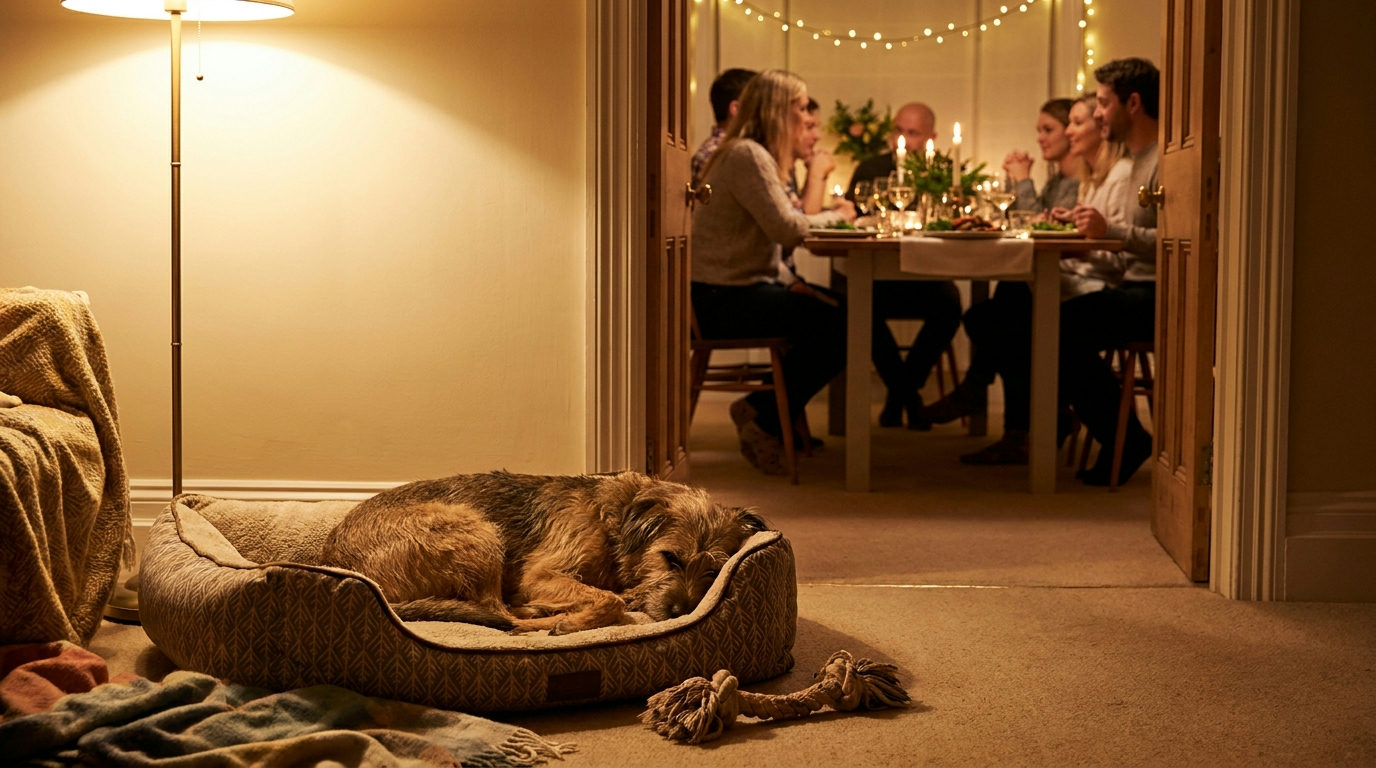
Every dog should have somewhere to go when it all becomes too much. A good retreat is somewhere guests do not wander into.
- Choose a quiet room away from the main gathering, such as a bedroom or study.
- Add your dog’s bed or crate, fresh water and a favorite chew. Our guide to durable dog beds has ideas.
- Offer a long-lasting chew or a stuffed food toy to help your dog settle.
- Play soft music or white noise to mask voices and kitchen noise.
- Ask guests, particularly children, to leave your dog alone when they are in their space.
Crate-trained dogs often find their crate a familiar, comforting spot. See our gentle crate training guide if you are still building that habit.
Dogs and holiday guests: managing greetings
The first few minutes after guests arrive are often the most exciting for your dog. A simple plan keeps them calm.
- Put your dog behind a baby gate, in their retreat or on a leash before opening the door.
- Let guests come in, take off coats and settle before your dog joins them.
- Ask guests to ignore your dog at first, avoiding eye contact, leaning over or reaching out.
- Let your dog approach at their own pace. If they want to sniff and walk away, that is fine.
- Reward calm behavior with treats and quiet praise.
- If your dog jumps up, calmly guide them away and reward four paws on the floor.
Learning to read your dog’s body language helps you decide when your dog is enjoying the company and when they need space.
Keep holiday food out of reach
Holiday meals bring a lot of rich food into the house, and many people foods are not suitable for dogs. The simplest rule is that people food stays off-limits, rather than trying to decide what might be safe.
- Keep dishes, platters and leftovers well back from table and counter edges.
- Ask guests politely not to feed your dog, however much they plead with their eyes.
- Secure trash cans with lids, or move them behind closed doors, especially after carving meat.
- Clear plates and glasses quickly, including drinks left on low tables.
- Store chocolate, sweets, nuts, raisins and other treats in closed cupboards.
- Keep bags and coats off the floor, as they may contain gum, medication or snacks.
Give your dog their own special treat instead. Our guide to healthy dog treats can help you pick something suitable.
Children and dogs
Visiting children may not know how to behave around dogs, and even friendly dogs can find them overwhelming. Supervision is essential.
- Never leave young children and dogs together unsupervised, even for a moment.
- Teach children to let the dog come to them, and to stroke gently on the side or chest rather than the head.
- Explain that hugging, kissing, chasing and pulling ears or tails can upset dogs.
- Do not let children disturb your dog while eating, sleeping or in their retreat.
- Give children a simple job, like tossing a treat on the floor, to build positive moments safely.
Watch for signs your dog needs a break
Stress can build gradually during a long gathering. Look out for:
- Lip licking, yawning or turning the head away.
- Tucked tail, lowered ears or crouching.
- Hiding, pacing or trying to leave the room.
- Panting or drooling when they are not hot.
- Growling, stiffening or freezing.
If you see these signs, calmly guide your dog to their retreat with a chew. A growl is a warning, not bad behavior, so never punish it. Instead, give your dog space. Our article on signs of anxiety in dogs has more detail.
Overnight guests and house sitters
When dogs and holiday guests share a home for several days, a little extra planning helps everyone settle.
- Show guests where your dog’s food, leash and waste bags are kept.
- Ask them to keep bedroom doors closed and suitcases zipped.
- Remind everyone to check where the dog is before opening outside doors.
- Keep your dog’s sleeping area in its usual place if possible.
- Make time each day for your dog’s normal walk and some one-to-one attention.
Puppies, seniors and nervous dogs
Some dogs need extra care during busy gatherings.
- Puppies may become overtired and nippy with lots of attention. Give them regular naps in a quiet spot and keep greetings short. Our new puppy essentials checklist covers the basics to have ready.
- Senior dogs may find noise and activity tiring, or struggle on slippery floors when guests are moving around. A comfortable bed in a quiet room can help them rest.
- Nervous or rescue dogs may be happiest staying in their retreat for most of the gathering. That is a perfectly good choice, not a failure.
After the guests leave
Once everyone has gone, take a few minutes to help your dog reset.
- Do a quick sweep of floors, low tables and the yard for dropped food, wrappers and bones.
- Check that trash is sealed and leftovers are stored safely.
- Take your dog for a calm, familiar walk.
- Return to normal meal and sleep times as soon as you can.
- Give your dog a quiet evening with their favorite chew.
Make a note of what went well and what was hard for your dog, so the next gathering is even easier.
When to call your vet
Contact your vet or an emergency clinic promptly if you think your dog has eaten holiday food, bones, chocolate, sweets, decorations, medication or anything unusual, even if they seem fine. Also call if you notice:
- Vomiting, diarrhea or drooling.
- A swollen or painful belly, or restlessness.
- Weakness, wobbling or unusual sleepiness.
- Stress that continues after guests have gone.
Check your vet’s holiday opening hours ahead of time and save the number of the nearest emergency clinic.
Questions to ask your vet
- Which holiday foods should I be most careful about for my dog?
- What should I do first if my dog eats something they should not?
- What are your opening hours over the holidays, and where should I go after hours?
- My dog gets very anxious with visitors. What options could help?
- Can you recommend a trainer to help with greeting manners?
Enjoy the season together
With a quiet retreat, a greeting plan, food kept out of reach and close supervision around children, dogs and holiday guests can share the season happily. Keep your dog’s routine as steady as you can, watch for signs they need a break and give them plenty of chances to rest. A calm, comfortable dog makes for a more relaxed holiday for everyone in the house. If your dog struggled this year, a few short practice sessions with friendly visitors before the next gathering can make a real difference.
Further reading
- American Kennel Club: How to help your dog deal with visitors during the holidays
- ASPCA: Hosting holiday guests
- AVMA: Winter holiday pet safety