Disclaimer: This article is general information for dog owners, not veterinary advice. Every dog is different, so check with your vet about your own dog’s health needs before a stay away from home.
Whether you are traveling for the holidays or heading away for work, leaving your dog with someone else takes planning. A clear dog boarding checklist helps you choose the right place, prepare your dog for the change and pack everything they need, so you can relax knowing they are in good hands.
This guide covers boarding versus sitter options, questions to ask, what to look for on a visit, health paperwork, a packing list, trial stays and what to do when you pick your dog up.
Boarding facility, sitter or friend?
There is no single right choice. Think about your dog’s personality, age and health, and how long you will be away.
- Boarding facility: Staff are on site, there is often a set routine and some places offer play groups. Busy, noisy settings may not suit every dog.
- In-home pet sitter: Your dog stays in familiar surroundings with their own routine. Check how often the sitter will visit or whether they stay overnight.
- Home boarding: Your dog stays in the sitter’s home. This can feel calmer than a kennel, but ask about other pets in the household.
- Friend or family member: A familiar person can be reassuring, as long as they are comfortable with your dog’s needs.
Questions to ask before you book
Use this part of your dog boarding checklist when you first contact a facility or sitter. Clear answers are a good sign.
- Is the business licensed or accredited where that applies in your area?
- What vaccinations and parasite prevention do you require?
- How many staff are on site, and is someone present overnight?
- How are dogs grouped for play, and is solo time available?
- Where do dogs sleep, and how are kennels or rooms cleaned?
- How often do dogs go outside, and for how long?
- Can you follow my dog’s feeding routine and give any medication my vet has prescribed?
- Which vet do you use in an emergency, and how will you contact me?
- Do you send updates or photos during the stay?
- What happens if my dog is stressed or does not settle?
What to look for on a visit
Always visit in person before booking. Bring your list of questions and take notes. Trust your instincts, and do not book anywhere that will not let you see where your dog will stay.
- Clean, well-ventilated areas without strong odors.
- Secure fencing, gates and double doors at entrances.
- Comfortable bedding, fresh water and space to stand, turn and lie down.
- Calm, attentive staff who interact kindly with the dogs.
- Dogs in play groups who seem relaxed and well supervised.
- Safe outdoor or exercise areas, and shelter from heat and cold.
- Clear records for each dog, including feeding and medication notes.
Red flags to walk away from
If something feels wrong, keep looking. Consider other options if you notice:
- Staff who will not show you where dogs sleep or exercise.
- Dirty kennels, overflowing waste or a lack of fresh water.
- Large play groups with little or no supervision.
- No clear plan for emergencies or vet care.
- Vague answers about vaccination requirements or staffing.
- Dogs who look very stressed, with no one responding to them.
Puppies, seniors and anxious dogs
Some dogs need a little more thought when choosing care.
- Puppies may not have finished their vaccinations, which can limit boarding options. Ask your vet when your puppy can safely stay away from home.
- Senior dogs often do best with a calm, quiet setting, soft bedding and a sitter or facility comfortable with slower routines and medication.
- Anxious dogs may settle better with an in-home sitter, a familiar person or a smaller home-boarding setup. Our article on signs of anxiety in dogs can help you judge how your dog is coping.
- Dogs with health conditions may need care from someone with relevant experience. Some vet clinics offer boarding for this reason.
Health records and vet checks
Most boarding facilities ask for proof that your dog is up to date on certain vaccinations and parasite prevention. Requirements vary, so check with the facility early and ask your vet which ones your dog needs and how far in advance.
- Book a vet check well ahead of your trip if your dog needs vaccinations or a health review.
- Request copies of vaccination records to give to the facility or sitter.
- Ask your vet for written instructions for any medication, including how and when to give it.
- Make sure your dog’s microchip details and ID tag are current.
- Share your vet’s contact details and authorize emergency care if the facility asks.
Our article on regular vet checkups explains why staying on top of routine care helps.
Dog boarding checklist: what to pack
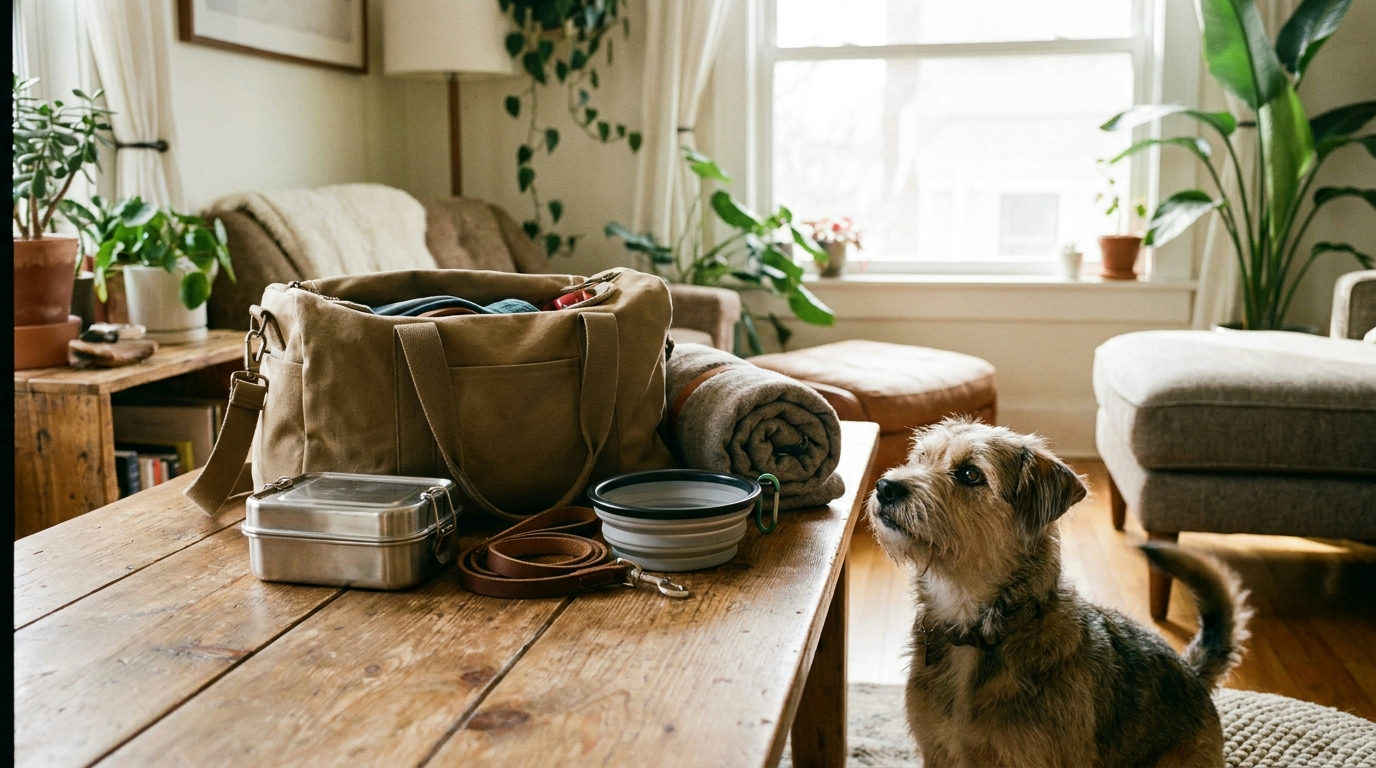
Pack a labeled bag with everything your dog will need, plus a little extra in case of delays.
- Food: Your dog’s usual food, portioned into labeled bags if helpful. Sudden diet changes can upset some dogs’ stomachs.
- Medication: In original packaging, with your vet’s written directions.
- Bowls: If the facility allows it, your dog’s own bowls. See our guide to choosing dog food bowls.
- Leash and collar: A well-fitted collar with ID and a spare leash. Our guide to choosing a dog leash and collar can help.
- Comfort item: A worn T-shirt or small blanket that smells of home.
- Toys or chews: If permitted, one or two durable favorites.
- Written notes: Feeding times, habits, fears, cues your dog knows and your contact details.
- Emergency contacts: Yours, a local backup person and your vet.
Prepare your dog for the stay
A little preparation can make the change easier, especially for dogs who have not stayed away before.
- Book a trial stay: A day visit or one night helps your dog get to know the place and staff before a longer stay.
- Practice short separations: If your dog is not used to time apart, build up gradually at home. Our guide to preventing separation anxiety has tips.
- Keep drop-off calm: Long, emotional goodbyes can make some dogs more anxious. Keep it brief and upbeat.
- Arrive on time: Allow time to hand over notes, food and medication without rushing.
- Exercise first: A walk before drop-off can help your dog settle.
Pick-up day and settling back in
Many dogs come home tired, excited or thirsty after a stay. This is common, and most dogs are back to their usual selves within a day or two. A gentle return helps them settle.
- Ask staff how your dog ate, slept and behaved during the stay.
- Collect all medication, food and belongings.
- Offer water calmly, and keep the first meal at home small and familiar.
- Give your dog a quiet day to rest and readjust.
- Check your dog over for scratches, sore spots or anything unusual.
When to call your vet
Contact your vet if you notice any of the following before or after a stay:
- Coughing, sneezing or nasal discharge.
- Vomiting, diarrhea or loss of appetite that lasts more than a short time.
- Lethargy or unusual tiredness that does not improve with rest.
- Limping, wounds or sore spots.
- Signs of significant stress, such as hiding, trembling or not settling.
Questions to ask your vet
- Which vaccinations and parasite prevention should my dog have before boarding?
- How far ahead of the stay should any vaccinations be given?
- Is my dog healthy enough for boarding, or would a sitter be better?
- How should medication be given while I am away?
- What signs should I watch for after my dog comes home?
Plan ahead and travel with peace of mind
A thorough dog boarding checklist takes the guesswork out of leaving your dog. Choose the right type of care, ask plenty of questions, visit in person, get health paperwork sorted early and pack everything your dog needs. With a trial stay and a calm handover, many dogs settle well, and you can enjoy your time away knowing they are looked after. Book early for holiday periods, when good facilities and sitters fill up quickly, and keep a copy of your checklist so the next trip is even easier to plan.
Further reading
- American Kennel Club: What to know when boarding your dog
- VCA Animal Hospitals: Questions to ask a boarding facility
- VCA Animal Hospitals: Boarding your dog