Bringing a new puppy home is an incredibly exciting time, filled with playful moments and endless cuddles. However, amidst all the joy, there’s a crucial milestone that every new pet parent needs to navigate: the first vet visit puppy. This initial check-up is more than just a routine appointment; it sets the foundation for your furry friend’s long-term health and helps them develop a positive relationship with veterinary care. For many, the idea of this first visit can feel a bit overwhelming. Rest assured, with a little preparation and understanding, you can help make it a calm and reassuring experience for both you and your newest family member.
This comprehensive guide will walk you through everything you need to know about preparing for your puppy’s initial veterinary appointment. We’ll cover what to bring, what questions to ask, and how to make the entire experience as stress-free as possible. We’ll also touch on why early veterinary care, including vaccinations and parasite prevention, matters. By following these practical tips, you can help your puppy start their life on the right paw.
Disclosure: Doggy Stuff Shop is reader-supported. When you buy through links in our guides, we may earn an affiliate commission at no extra cost to you. This is general information, not veterinary advice; always follow your own veterinarian’s guidance for your puppy’s specific needs.
Why is the First Vet Visit So Important?
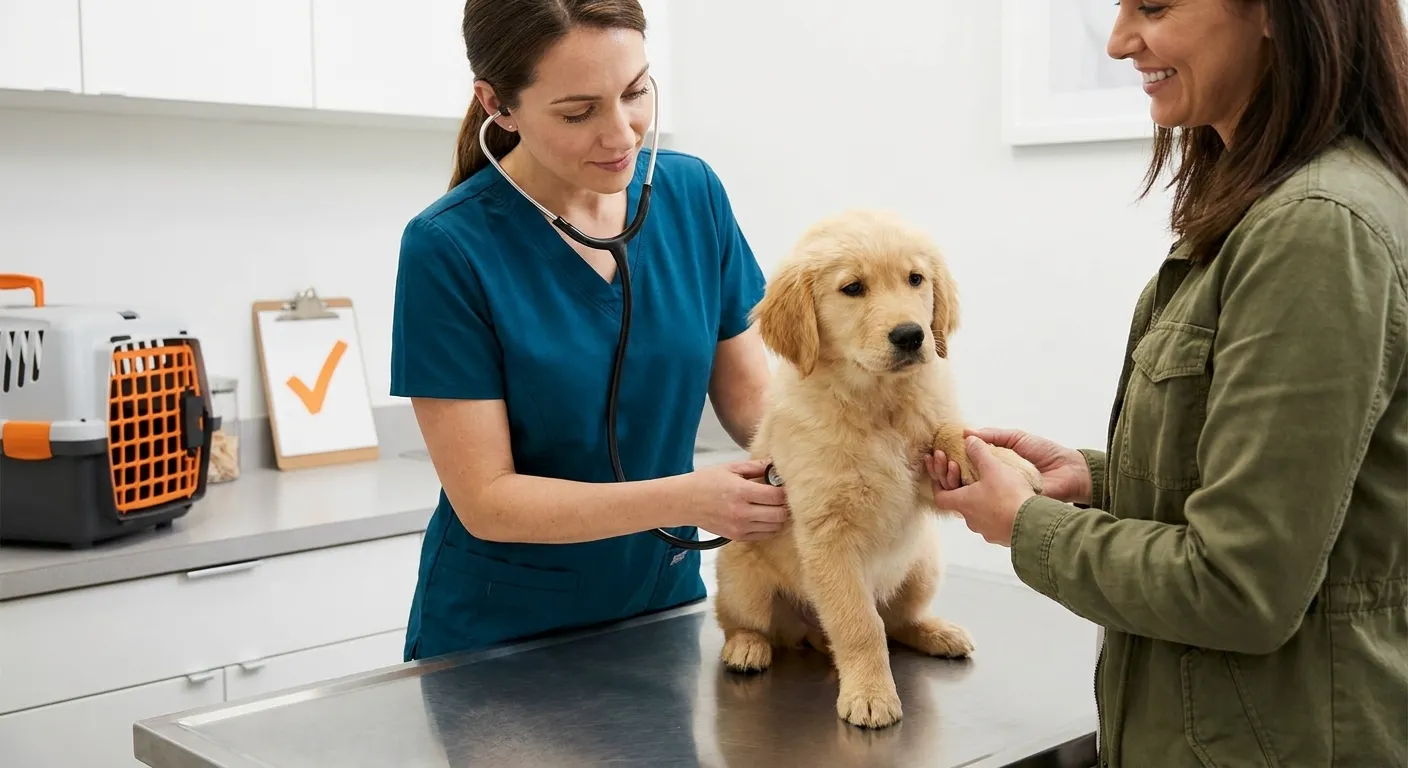
The first trip to the vet is fundamental for several reasons. Primarily, it allows your veterinarian to conduct a thorough physical examination of your puppy. This helps detect any congenital issues or early signs of illness that might not be immediately obvious. Moreover, it’s the perfect opportunity to establish a baseline for your puppy’s health. Your vet will check their heart, lungs, eyes, ears, teeth, and overall body condition. This initial assessment is crucial for tracking their growth and development over time.
Secondly, this appointment is where your puppy will likely receive their initial vaccinations. The American Animal Hospital Association (AAHA) offers a helpful consumer overview of which vaccines are considered core for puppies, the diseases they help protect against, and why early timing matters, which is worth a read alongside whatever specific schedule your own vet recommends. Deworming and flea/tick prevention will also typically be discussed. Parasites can pose health risks to young puppies, so this is a good question for your vet to walk you through early on. Your vet will also likely collect a stool sample to check for internal parasites, which are quite common in puppies.
Beyond the medical aspects, the initial vet visit serves a significant purpose in socializing your puppy to the clinic environment. Positive early experiences can help prevent fear and anxiety at future visits. This helps your puppy associate the vet’s office with pleasant interactions, rather than stress. Therefore, making this first encounter a good one is incredibly beneficial for their lifelong well-being.
Preparing for Your Puppy’s First Vet Visit: A Step-by-Step Guide
Proper preparation is key to a smooth and successful first vet visit. Here’s a detailed guide to help you get ready:
Gather Essential Documents and Information
- Vaccination and Deworming Records: If you acquired your puppy from a breeder, shelter, or rescue organization, they should provide you with a health record. This document details any vaccinations, deworming treatments, or other medical care your puppy has already received. Bringing these records helps your vet build a complete picture of your puppy’s medical history so they can plan future care accordingly.
- Stool Sample: It’s helpful to collect a fresh stool sample, ideally within 12 hours of your appointment, in a clean, sealable container. This sample will be tested for intestinal parasites, which are common in young puppies and worth catching early.
- List of Questions: As a new puppy owner, you likely have many questions. Jot them down before your appointment. This could include inquiries about nutrition, house training, socialization, behavior, exercise needs, or any specific concerns you have about your puppy’s health. Your vet is a valuable resource, so make the most of their expertise.
- Information about Your Puppy’s Diet: Be ready to tell your vet what brand of food your puppy is currently eating, how much, and how often. This information helps them assess your puppy’s nutritional needs and recommend appropriate feeding guidelines. For more on this, check out our guide: Decipher Dog Food Labels: Your Savvy Guide to Smart & Healthy Nutrition Choices.
Pack a “Go-Bag” for the Visit
- High-Value Treats: Bring plenty of small, soft, and extra-tasty treats. These will be invaluable for distracting your puppy, rewarding calm behavior, and creating positive associations with the vet’s office. Think cheese, cooked chicken, or special puppy treats they don’t usually get.
- Comfort Item: A favorite toy, a familiar blanket, or a towel with your scent can provide a sense of security for your puppy in a new and potentially overwhelming environment.
- Proper Restraint: For smaller puppies, a secure, comfortable carrier is a good idea; check the sizing chart first so your puppy has room to stand and turn around. For larger puppies, a sturdy leash and collar are necessary. Make sure your puppy is comfortable with their leash and collar beforehand, both for safety in the car and in the waiting room.
- Cleaning Supplies: Accidents happen, especially with young puppies who might be nervous. Carry a few paper towels and a small plastic bag for any potential messes.
Practice at Home
Before the actual first vet visit puppy, you can do a lot to prepare your little one at home. Regularly handle your puppy’s paws, ears, and mouth. Gently touch their ears, lift their lips to look at their teeth, and touch their paws as if clipping nails. Pair these actions with praise and treats. This desensitization can make the physical examination at the vet less stressful. You can also practice short car rides to get them used to traveling. Make these experiences positive with treats and calm reassurance.
What to Expect During the Vet Visit
When you arrive for your puppy’s first veterinary appointment, the staff will likely greet you warmly. You might spend a short time in the waiting room, so be prepared with treats and keep your puppy close and calm. It’s a good idea to keep your puppy separated from other animals, especially if they haven’t completed their vaccination series. Once you’re called into the exam room, here’s generally what will happen:
The Physical Examination
Your veterinarian will perform a comprehensive head-to-tail examination. This includes:
- Weight Check: Your puppy will be weighed to monitor their growth.
- Temperature: A rectal thermometer will be used to check their body temperature.
- Eyes and Ears: The vet will check for signs of infection, discharge, or abnormalities.
- Mouth and Teeth: They will examine gums and teeth for overall dental health and development. Early attention to dog dental health is always a good habit to build.
- Heart and Lungs: A stethoscope will be used to listen for any murmurs, arrhythmias, or respiratory issues.
- Abdomen: The vet will gently palpate your puppy’s belly to check for any tenderness or abnormalities in organs.
- Coat and Skin: They will look for parasites, skin irritations, or unusual lumps.
- Musculoskeletal System: Your puppy’s legs and joints will be checked for proper development and mobility.
Vaccinations and Parasite Prevention
Based on your puppy’s age, health status, and local risks, your vet will recommend a vaccination schedule. Puppies typically receive a series of core vaccinations over several weeks, per the AAHA vaccination guidance above. Your vet will also discuss deworming and may suggest flea and tick prevention options. This is a good question for your vet, since the right plan depends on where you live and your puppy’s specific risks.
Microchipping
Many vets offer microchipping during the first visit. A microchip is a tiny, rice-sized transponder implanted under your puppy’s skin, usually between the shoulder blades, carrying a unique ID number that can be scanned if your puppy is ever lost. According to the American Veterinary Medical Association, microchipping is a brief procedure similar to a routine injection, and many pets tolerate it with little discomfort. Ask your vet about timing and any aftercare if you have questions.
Discussion and Advice
This is your opportunity to ask all those questions you prepared! Your vet can offer guidance on a range of topics, including:
- Nutrition: Recommendations for appropriate puppy food, feeding schedules, and portion sizes.
- Socialization: Guidance on how to safely and effectively socialize your puppy. Our article on How to Socialize Your Puppy Safely and Effectively offers more insights.
- Training: Tips for basic obedience and house training.
- Exercise Needs: Appropriate activity levels for your puppy’s breed and age.
- Spaying/Neutering: Timing can vary by breed and size, so this is a good question for your vet to weigh in on for your specific puppy.
- Pet Insurance: Whether pet insurance makes sense for your family and budget.
- Emergency Preparedness: Your vet might even discuss what to do in an emergency and the value of having a First Aid Kit for Dogs on hand.
Your veterinarian is your partner in your puppy’s health. Don’t hesitate to voice any concerns or ask for clarification on any topic. That’s what they’re there for.
Making the Vet Visit a Positive Experience for Your Puppy
Creating positive associations with veterinary visits from a young age is incredibly important. Here are some strategies:
- Stay Calm: Puppies are highly attuned to your emotions. If you are anxious, your puppy will sense it. Try to remain calm and positive throughout the visit.
- Lots of Praise and Treats: Continuously reward your puppy for calm behavior with praise and high-value treats. Every positive interaction, whether it’s a gentle touch from the vet or sitting quietly in the waiting room, deserves a reward.
- Short, Positive Interactions: If your vet has time, a quick belly rub, a cheerful tone of voice, and one more treat right before you head out can help your puppy end the appointment on a high note. That last happy moment goes a long way toward making the next visit easier.
- Pick a Calm Time: Whenever your schedule allows, book appointments for times when your puppy is naturally more settled, such as after a nap or a bathroom break, rather than right after a long car ride or a big meal.
After the Vet Visit: What Comes Next
Your puppy’s first vet visit is just the beginning of their healthcare journey, not the end of it. Most puppies need a series of follow-up appointments over the next couple of months to finish their core vaccination series. Your vet will map out the exact schedule based on your puppy’s age, breed, and local disease risks, so be sure to book that next appointment before you leave the clinic.
Ask your vet what to expect after shots for your specific puppy, since responses can vary. If you notice ongoing vomiting, diarrhea, unusual swelling, or lethargy that doesn’t improve within a day, call your vet’s office. They would much rather answer a question that turns out to be nothing than have you worry on your own.
In the days following the visit, keep building on the positive experience. Give your puppy extra praise and a favorite treat when you say the word “vet,” and if your clinic allows it, consider the occasional quick, no-appointment stop just to say hello and collect a treat from the front desk staff. These small efforts reinforce that the vet’s office is a place of good things, not just needles and exams.
Final Thoughts
The first vet visit puppy appointment can feel like a big milestone, but with a little preparation, it doesn’t have to be stressful for you or your new best friend. Gather the right documents, pack a go-bag of treats and comfort items, practice gentle handling at home, and keep your own energy calm and upbeat. Your veterinarian is your partner in raising a healthy, happy dog, so don’t be shy about asking questions, both at this visit and every one after it. This is general information, not veterinary advice, so always check specifics with your own vet.
Looking for the right gear to make vet trips and everyday puppy life easier? Here’s the short list worth checking: comfortable carriers, durable leashes and collars, and puppy-approved treats from Doggy Stuff Shop’s selection. Measure first, check the sizing chart, and read the return terms before you buy, just like you would with any new gear.