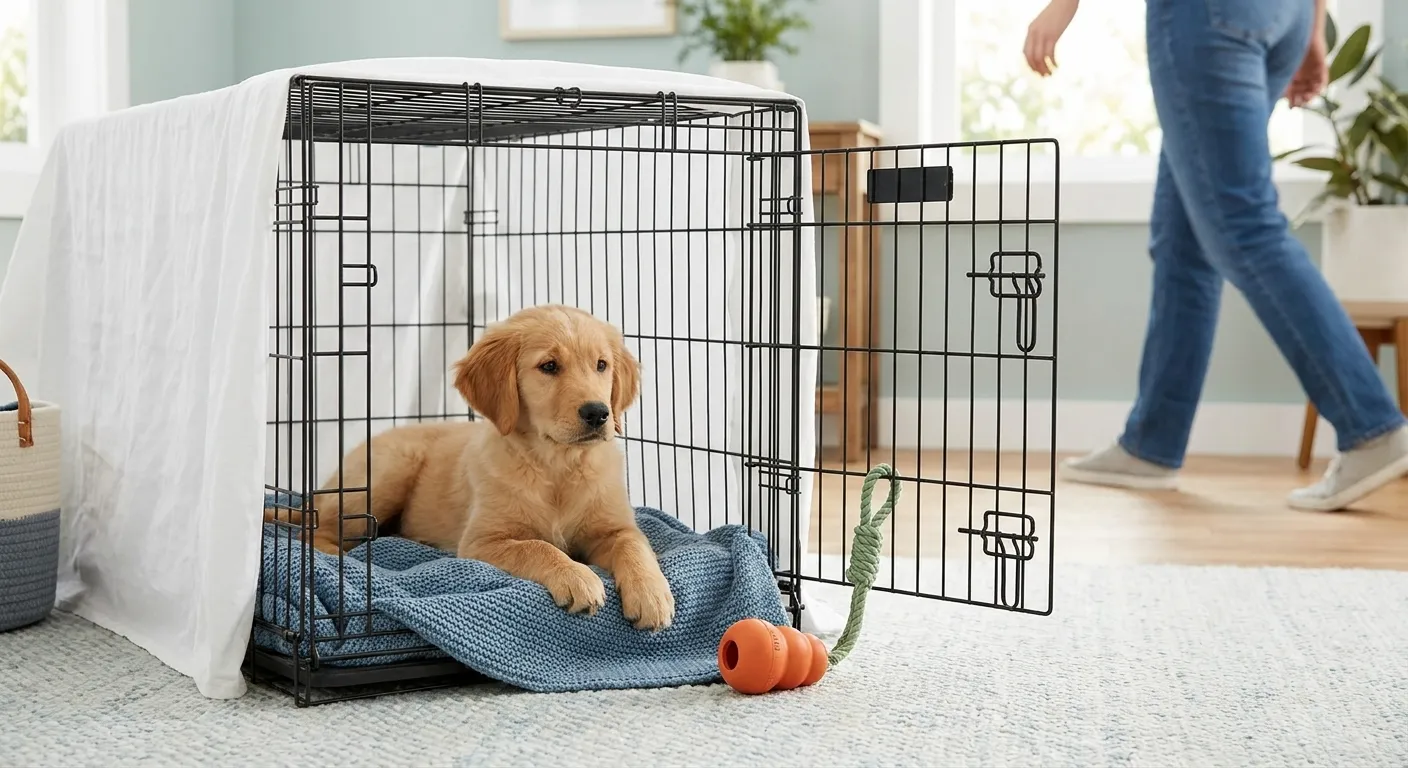
Bringing a new puppy like Max into your life creates an incredible bond. They quickly become a cherished family member. The thought of leaving them alone can bring on a wave of worry, especially for new dog parents like Sarah. You want to make all the “right” choices. Ensuring your puppy feels safe and secure, even when you’re not around, is high on that list. Understanding how to tackle and actively help in preventing dog separation anxiety early on is one of the most proactive steps you can take for a happy, well-adjusted pup. At Doggy Stuff Shop, we believe in empowering you with clear, helpful advice to build your confidence as a dog owner.
Understanding Puppy Separation Anxiety
Separation anxiety is more than just a puppy missing you; it’s a genuine distress response when left alone. Symptoms can range from excessive barking, howling, destructive chewing, and house-soiling to more subtle signs like pacing or drooling. This concern highlights the significant humanization of pets, where their emotional well-being is as important as their physical health. Preventing this anxiety early is far easier than treating it later. Consequently, you are setting your puppy up for a lifetime of confidence and comfort, even during your absences.
The Root Causes of Canine Distress
Several factors can contribute to a puppy developing distress when left alone. Sometimes, it stems from a sudden change in routine, such as moving to a new home or a shift in your work schedule. Other times, puppies from shelters might have a history of abandonment, making them more prone to anxiety. Furthermore, some breeds are simply more predisposed to forming strong attachments and thus, experiencing more profound distress when separated. Understanding these potential triggers can help you tailor your approach to preventing this canine anxiety.
Recognizing the Signs Early On
Being observant is key. Look for early indicators beyond the obvious. For example, does your puppy start to follow you everywhere as you prepare to leave? Do they whine or pace when you pick up your keys? These subtle cues are important. Addressing them promptly can make a significant difference in preventing dog separation anxiety from becoming a deeply ingrained behavior. Early intervention truly matters.
Building Independence: Early Training Techniques for Preventing Dog Separation Anxiety
The key to preventing separation anxiety lies in teaching your puppy that being alone is not scary, but rather a normal, even relaxing, part of their day. Consistency and patience are your best friends here. Moreover, a structured approach helps your puppy understand expectations.
Crate Training as a Safe Haven
Introduce a durable, appropriately sized crate as your puppy’s personal den. This isn’t a punishment; instead, it’s a safe, cozy space where they can feel secure. Make it inviting with soft bedding and an engaging chew toy. Positive association with the crate helps them view it as a sanctuary, rather than a place of isolation. Always ensure the crate is a positive experience. Never use it for time-outs or punishment.
Gradual Departures
Start small. Leave your puppy alone for just a few minutes, then return before they show signs of distress. Slowly increase the duration over days and weeks. This teaches them that you always come back. Begin by just stepping out of sight in another room, then out the front door, gradually extending the time. For instance, start with 30 seconds, then a minute, then five minutes. This method is crucial for teaching them confidence.
The ‘Ignore’ Game: Low-Key Goodbyes and Greetings
Make your departures and arrivals low-key. Avoid overly emotional goodbyes or excited greetings. This teaches your puppy that your coming and going isn’t a big event, helping to reduce their anxiety levels. In fact, a calm demeanor from you reinforces a calm response from them. Similarly, when you return, wait a few minutes before acknowledging them. This prevents associating your arrival with overwhelming excitement.
Independent Play Encourages Self-Sufficiency
Encourage your puppy to play by themselves with durable puzzle feeders or robust chew toys. This builds their confidence in entertaining themselves and reduces reliance on your constant presence. Offer these engaging toys when you need to step away for a short period. Consequently, they learn to self-soothe and occupy themselves, which is a vital skill for preventing dog separation anxiety.
Establishing a Predictable Routine
Dogs thrive on routine. A predictable schedule for feeding, potty breaks, playtime, and rest helps your puppy feel secure and understand what to expect throughout the day. This structure can significantly reduce uncertainty, which is a common trigger for distress. For example, consistent meal times and walks create a rhythm your puppy can depend on. Similarly, scheduled quiet times teach them to relax when you are busy.
Exercise and Mental Stimulation
A tired puppy is a happy puppy. Ensure your puppy gets plenty of physical exercise and mental stimulation before you leave them alone. A brisk walk, a game of fetch, or a training session can help them burn off excess energy and be more inclined to rest while you’re gone. Furthermore, mental exercises like training or using interactive toys can be just as tiring as physical activity. This proactive approach supports preventing dog separation anxiety.
Consider giving them a long-lasting chew or a food puzzle as you leave. This provides a positive distraction and associates your departure with something enjoyable. Always choose appropriate toys that are safe for your puppy to have unsupervised.
Tools and Products to Support Independence
While training is fundamental, certain products can offer valuable support in preventing dog separation anxiety:
- Durable Chew Toys: High-quality, long-lasting chew toys can keep your puppy occupied and provide a healthy outlet for their chewing instincts when you’re not around.
- Puzzle Feeders: These toys dispense treats as your puppy interacts with them, offering mental stimulation and a rewarding challenge. They are excellent for keeping your puppy engaged.
- Comfort Items: A blanket or an item of your clothing with your scent can provide comfort and security to your puppy, making them feel less alone.
- Calming Aids: For some puppies, natural calming aids like pheromone diffusers or calming treats can help reduce anxiety. Always consult your vet before introducing any supplements.
- Pet Cameras: A pet camera allows you to monitor your puppy and ensure they are safe and calm. Some even allow for two-way communication, letting you speak to your pup.
These tools, when used in conjunction with consistent training, can be incredibly effective in preventing dog separation anxiety.
Addressing Setbacks and Seeking Professional Help
It’s important to remember that every puppy is different. Some may grasp independence more quickly than others. Setbacks can happen, and it’s crucial not to get discouraged. If your puppy continues to show severe signs of distress despite your best efforts, it might be time to seek professional help. A certified professional dog trainer or a veterinary behaviorist can provide tailored strategies and support. They can assess your puppy’s specific situation and offer guidance to ensure successful prevention of dog separation anxiety.
When to Call a Professional
If your puppy is consistently exhibiting destructive behavior, self-harm (like excessive licking), or severe house-soiling when left alone, these are clear indicators that professional intervention is needed. These experts can rule out underlying medical conditions and develop a comprehensive behavior modification plan. For instance, they might suggest specific counter-conditioning exercises. Likewise, they could recommend medication in severe cases to help manage anxiety while training is underway.
For more insights into dog behavior and training, you might find resources from the ASPCA or the American Kennel Club (AKC) helpful. These reputable organizations offer extensive information on various aspects of dog care and behavior.
Creating a Positive Environment for Your Puppy
Beyond specific training techniques, fostering an overall positive and secure environment is vital. A puppy who feels safe and loved is more likely to handle alone time with confidence. This includes providing a comfortable bed, fresh water, and a quiet space where they can retreat when needed. Moreover, consistent positive reinforcement for calm behavior, even when you are present, strengthens their sense of security. Always reward quiet, independent play.
Enrichment Activities
Enrichment is about providing stimulating activities that cater to your dog’s natural instincts. This can include sniffing games, exploring new environments on walks, or engaging with different textures and sounds. A rich environment helps to prevent boredom, which can often exacerbate anxiety. For example, hiding treats around the house encourages their natural foraging instincts. Similarly, rotating toys keeps them interested and engaged.
Remember, the goal is to create a well-rounded life for your puppy where being alone is just one small, manageable part of their day. By consistently applying these methods, you are effectively preventing dog separation anxiety. This will lead to a more balanced and happy canine companion.
Long-Term Benefits of Early Intervention
Investing time and effort into preventing dog separation anxiety early on pays dividends throughout your dog’s life. A dog that is comfortable being alone is less stressed, enjoys a better quality of life, and is easier to manage. This early training also strengthens the bond between you and your puppy, built on trust and understanding. You’ll find greater freedom in your own life, knowing your furry friend is content and safe when you’re not home. Ultimately, this proactive approach contributes to a harmonious household for years to come. This is especially true for families who often have to leave their dogs alone for work or errands. The peace of mind for both pet and owner is invaluable.
Furthermore, early intervention helps prevent the development of destructive behaviors that can strain the owner-pet relationship. Imagine coming home to a calm house rather than one filled with chewed furniture or accidents. This positive outcome is a direct result of diligently preventing dog separation anxiety. Moreover, your dog will be more resilient to changes in routine or environment, making future transitions much smoother. Therefore, the effort put in during puppyhood creates a solid foundation for a lifetime of confidence.
At Doggy Stuff Shop, we are committed to providing you with the best tools and advice to support your puppy’s development. We understand the challenges and joys of puppy ownership. We want to help you navigate them successfully. By focusing on these practical steps, you’re not just training a puppy; you’re nurturing a confident, independent, and happy companion. This dedication to their well-being ensures a strong and loving bond for many years. Remember, consistency and positive reinforcement are your greatest allies in this journey. We are here to help you every step of the way.
Conclusion
Preventing dog separation anxiety in your puppy is a journey that requires patience, consistency, and understanding. By implementing early training techniques like crate training, gradual departures, and fostering independent play, you empower your puppy to feel secure even when you’re not around. Utilizing supportive products and establishing a predictable routine further reinforces their confidence. Remember, a well-exercised and mentally stimulated puppy is more likely to rest calmly. If challenges arise, don’t hesitate to seek professional guidance. Through these thoughtful steps, you are building a foundation for a lifetime of happiness, creating a well-adjusted dog who is truly alone, but never lonely. This proactive approach ensures a peaceful home and a strong bond with your confident canine companion.
FAQ Section
What are the first signs of a puppy feeling anxious when left alone?
Early signs can be subtle. Look for excessive whining or pacing when you prepare to leave, following you constantly, or showing mild distress as you step out of sight. More noticeable signs include barking, howling, or destructive chewing shortly after you depart.
How long should I leave my puppy alone initially?
Start with very short durations, perhaps just a minute or two. The goal is to return before your puppy shows any signs of distress. Gradually increase this time by small increments over days and weeks, building their tolerance and confidence slowly.
Can crate training help with canine separation issues?
Yes, absolutely! A crate can become a safe, comfortable den for your puppy. When introduced positively, it provides a secure space where they can feel safe and relaxed, reducing their feelings of vulnerability when you are absent.
Are there any specific toys that help with puppy solitude distress?
Long-lasting chew toys and puzzle feeders are excellent. They provide mental stimulation and a positive distraction, keeping your puppy occupied and associating your absence with something enjoyable. Always choose toys appropriate for their size and chewing habits.
When should I seek professional help for my puppy’s distress when alone?
If your puppy exhibits severe symptoms like persistent destructive behavior, self-harm, excessive drooling, or consistent house-soiling despite your efforts, it’s time to consult a certified professional dog trainer or a veterinary behaviorist for tailored guidance and support.