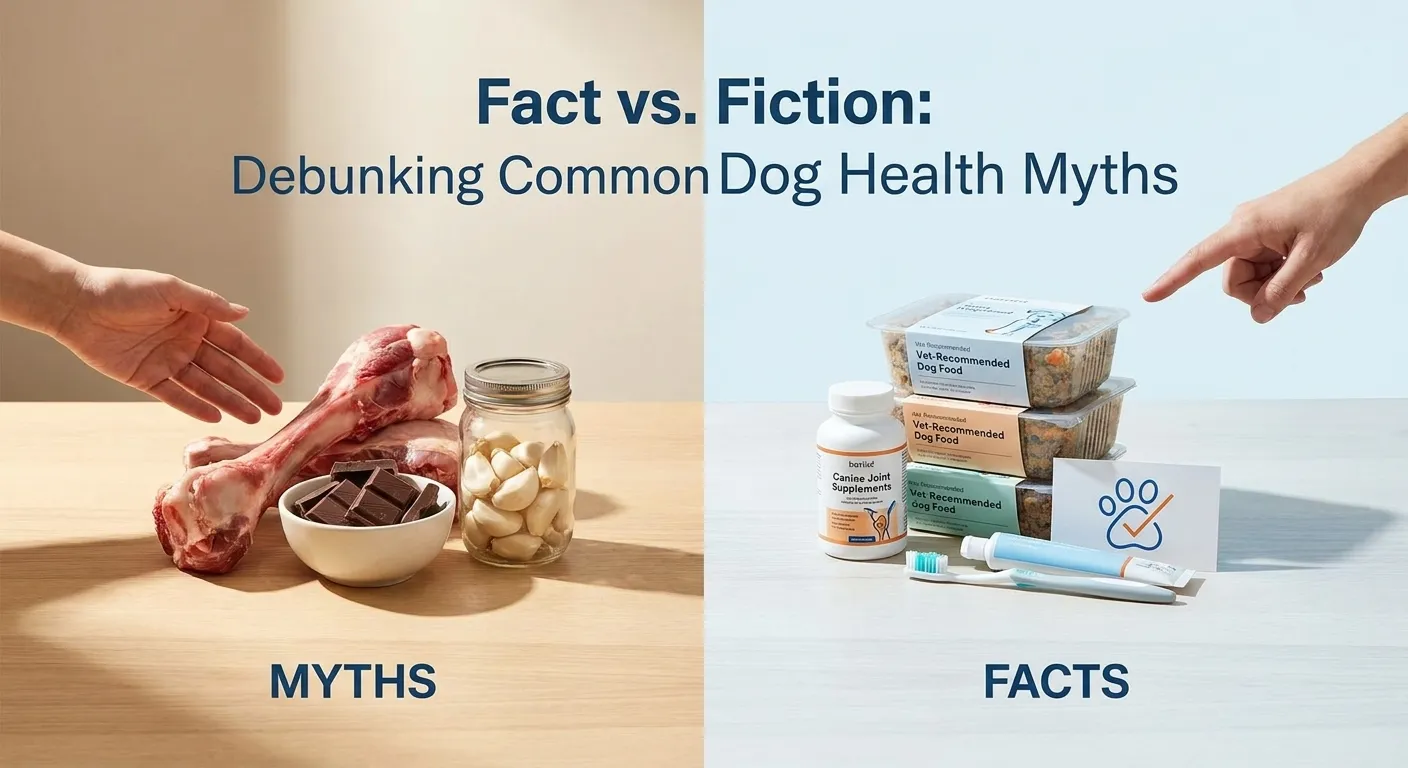
As loving dog owners, we all want the best for our pets. However, sometimes outdated advice or old wives’ tales can lead us astray. It’s time to separate fact from fiction and debunk some common dog health myths that still circulate. Understanding the truth behind these beliefs empowers you to make informed decisions for your dog’s well-being. Furthermore, it helps you rely on accurate information from trusted sources like Doggy Stuff Shop.
Debunking Common Dog Health Myths: What You Need to Know
Providing the best care for our canine companions means being well-informed. Let’s explore some widely held beliefs about dogs and uncover the scientific truths. This will help you navigate your pet’s health with confidence.
Myth 1: A Dog’s Mouth is Cleaner Than a Human’s.
Fact: This is a pervasive myth! While dogs don’t get the same cavities as humans, their mouths are teeming with bacteria. Many of these bacteria can be harmful to humans, and vice versa. For example, dogs can carry bacteria like E. coli and Salmonella. Always wash your hands thoroughly after playing with your dog. Moreover, never let them lick open wounds. Regular dental care for your dog is also crucial to prevent periodontal disease. You can find helpful resources on canine dental hygiene from the American Veterinary Medical Association (AVMA) at AVMA Pet Dental Care.
Myth 2: Dogs Only Eat Grass When They’re Sick.
Fact: While some dogs might eat grass when their stomach is upset (and then vomit), many dogs eat grass simply because they enjoy it. It can be a source of fiber in their diet. Alternatively, it might just be a natural behavior. If your dog eats grass frequently and seems distressed afterward, or consistently vomits, it’s worth a vet visit. Otherwise, a little grass eating is usually nothing to worry about. Pay attention to their overall behavior and appetite.
Myth 3: You Can’t Teach an Old Dog New Tricks.
Fact: Absolutely false! While puppies might learn faster due to their developing brains, older dogs are perfectly capable of learning new commands, routines, and even complex tricks. They often have better focus and patience than their younger counterparts. Training an older dog can provide valuable mental stimulation. In addition, it strengthens your bond. It’s truly never too late to teach a dog new skills or improve their manners. Consider exploring different types of puzzle toys or interactive toys to keep their minds sharp at any age.
Myth 4: Dogs Age Seven Human Years for Every One Dog Year.
Fact: This is a common simplification, but it’s not entirely accurate. The aging process in dogs is much more complex. It varies significantly based on breed and size. For instance, smaller dogs tend to live longer than larger breeds, but they often mature more quickly in their early years. A large dog might age faster than a small dog after their initial growth period. Consult your veterinarian for accurate age conversions and specific health considerations for your dog’s breed. This helps in understanding their life stage better.
Myth 5: All Dogs Need to Eat Grain-Free Food.
Fact: The trend of grain-free dog food has gained popularity. However, it’s not necessary or even beneficial for all dogs. In fact, some studies have suggested a potential link between grain-free diets and certain heart conditions in dogs, specifically dilated cardiomyopathy (DCM). Unless your dog has a diagnosed grain allergy, grains can be a healthy source of nutrients and fiber. Always discuss dietary changes with your vet. They can help you determine the best food for your dog’s specific needs and health status. You can learn more about pet food safety from the U.S. Food and Drug Administration (FDA) at FDA: Diet-Associated DCM in Dogs.
Myth 6: A Warm, Dry Nose Means Your Dog is Sick.
Fact: This is one of the most widespread dog health myths. A dog’s nose temperature and moisture can fluctuate throughout the day. It doesn’t reliably indicate their health. A dog can have a warm, dry nose for many reasons, such as just waking up from a nap or being in a dry environment. Conversely, a sick dog might still have a cold, wet nose. The best indicators of your dog’s health are their overall behavior, energy levels, appetite, and thirst. If you notice a change in these, that’s when you should be concerned.
Myth 7: Dogs See Only in Black and White.
Fact: This is a popular misconception. Dogs do not see the world in black and white. They actually see in a more limited color spectrum than humans. Their vision is similar to that of a color-blind person. Specifically, they can see shades of yellow, blue, and gray. They struggle to distinguish between red and green. Therefore, choosing brightly colored chew toys or laser pointers that fall within their visible spectrum can make playtime more engaging for them.
Myth 8: Tug-of-War Makes Dogs Aggressive.
Fact: Playing tug-of-war with your dog, when done correctly, does not make them aggressive. On the contrary, it can be a fantastic way to bond with your dog and teach them impulse control. The key is to establish rules. For example, your dog should only grab the toy when you give a command. They should also release it when you say ‘drop it’. This game provides great exercise and mental stimulation. It can even help redirect potential nipping behavior into an appropriate outlet.
Myth 9: Dogs Naturally Know How to Swim.
Fact: While many dogs enjoy water and can swim, it’s not an innate ability for all breeds. Some breeds, like Labradors and Golden Retrievers, are natural swimmers. However, others, such as Bulldogs or Pugs, with their short snouts and heavy builds, may struggle in water and can even drown. Always supervise your dog around water. Introduce them to swimming safely and gradually. For breeds that aren’t strong swimmers, consider using a doggy life vest for safety. This is similar to how safety vests are crucial for visibility during walks.
Myth 10: Table Scraps Are Harmless Treats for Dogs.
Fact: This is a dangerous myth that can lead to serious health issues. While a tiny piece of plain, cooked meat might not cause immediate harm, many human foods are toxic to dogs. Onions, garlic, chocolate, grapes, raisins, avocado, and xylitol (a common artificial sweetener) are just a few examples. Even non-toxic table scraps can lead to obesity, pancreatitis, or an upset stomach. It’s always best to stick to high-quality dog treats. Moreover, keep human food out of their reach to prevent accidental ingestion. This is a vital part of protecting your pet’s health.
Myth 11: A Dog Who Wags Their Tail is Always Friendly.
Fact: Tail wagging is a complex form of communication. It doesn’t always signify happiness or friendliness. The speed, height, and direction of the wag, along with other body language cues, are all important. A fast, high wag can indicate excitement. However, a stiff, high wag can signal agitation or dominance. A low, tucked tail usually means fear or submission. Always observe your dog’s entire body language, including their ears, eyes, and posture, to understand their mood. Never approach an unfamiliar dog based solely on a wagging tail. This helps prevent misunderstandings and ensures safety for everyone.
Myth 12: Only Male Dogs ‘Mark’ Their Territory.
Fact: This is another common misconception. Both male and female dogs, neutered or spayed, can and do mark their territory. While intact males might do it more frequently or noticeably, females also use urine to communicate and establish their presence. Marking can be influenced by hormones, but it’s also a behavioral trait linked to communication within their environment. Understanding this behavior can help you manage it, especially in multi-dog households or when introducing new pets.
Myth 13: You Don’t Need to Vaccinate Indoor Dogs.
Fact: This is a dangerous and entirely false belief. Even indoor dogs are susceptible to various diseases. They can be exposed to pathogens carried on your shoes, clothes, or even through open windows. Furthermore, if your