Disclaimer: This article is general information for dog owners, not veterinary advice. Every dog ages differently, so check with your vet about your own dog’s needs.
As dogs get older, the home they have always known can start to feel a little harder to manage. Slippery floors, steep stairs, a bed that is too thin or a sudden change in routine can all affect how relaxed an older dog feels. The good news is that small, practical adjustments can make a real difference to senior dog comfort at home, often without spending much at all.
This guide walks through bedding, flooring, getting around, daily routines, gentle enrichment and the changes worth mentioning to your vet.
Signs your dog may need extra comfort
Dogs rarely complain, so the clues are often subtle. Watch for these everyday changes and mention them at your next vet visit.
- Hesitating before jumping onto the sofa, bed or into the car.
- Taking longer to stand up after resting.
- Slipping on hard floors or avoiding certain rooms.
- Sleeping more, or restlessness at night.
- Less interest in walks, toys or play.
- Seeking warm spots or getting cold more easily.
Regular checkups become even more useful as dogs age. Our article on regular vet checkups explains why.
Senior dog comfort at home starts with a good bed
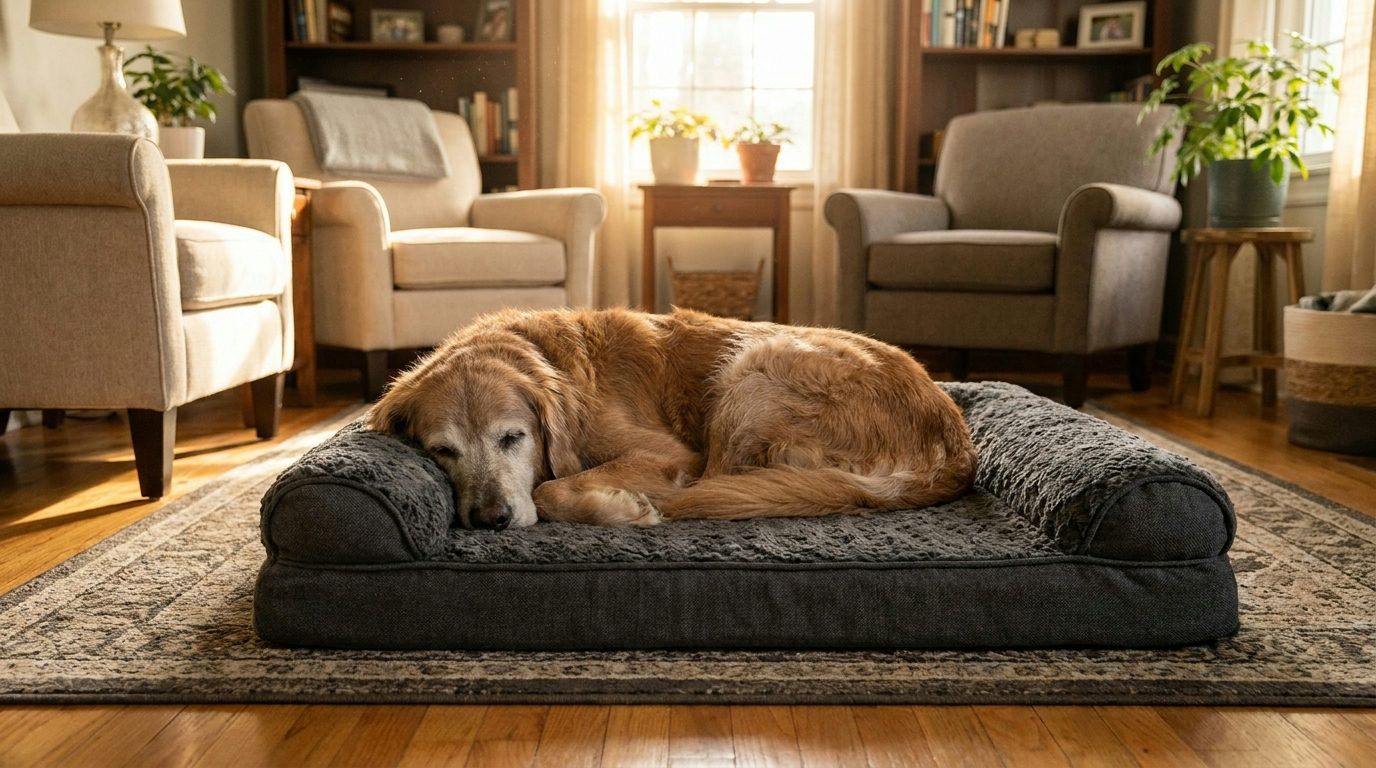
Older dogs often spend more time resting, so their bed matters more than ever.
- Supportive filling: Many owners choose thick foam or orthopedic-style beds that do not flatten out.
- Low entry: A bed with a low front edge is easier to step into.
- Washable cover: Removable, machine-washable covers make cleaning simple.
- Warm, draft-free spot: Place beds away from doors, vents and cold floors.
- More than one bed: A second bed in the room where the family gathers lets your dog stay close without climbing furniture.
Our guide to durable dog beds covers materials and sizes to consider.
Make floors and furniture easier
Smooth floors that were fine for a young dog can feel like an ice rink for an older one. Walk through your home at your dog’s eye level to spot problem areas. These changes can help your dog feel steadier.
- Lay non-slip rugs or runners along your dog’s usual paths, such as from bed to water bowl to the back door.
- Keep nails trimmed and fur between paw pads tidy for better grip.
- Use ramps or pet steps for sofas, beds or the car, and introduce them slowly with treats.
- Block off steep stairs with a baby gate if your dog struggles, and help them on stairs they need to use.
- Keep the layout of furniture consistent, especially if your dog’s eyesight is changing.
For a wider look at home safety, see our dog-proofing your home guide.
Food, water and bathroom breaks
Small changes to everyday routines can make mealtimes and toilet trips more comfortable.
- Raised bowls: Some older dogs find slightly raised bowls more comfortable. Ask your vet whether this suits your dog.
- Non-slip mats: Place a mat under bowls so they do not slide away.
- Water stations: Add an extra water bowl in another room if your home is large or has stairs.
- More frequent breaks: Many senior dogs appreciate more chances to go outside, including a last trip before bed.
- Diet changes: Talk to your vet before changing food, as needs can shift with age and health.
Our guide to choosing dog food bowls looks at heights and materials.
Keep a steady, gentle routine
Many older dogs find comfort in predictability. A familiar rhythm to the day can help them settle.
- Keep mealtimes, walks and bedtime at similar times each day.
- Swap one long walk for two or three shorter, gentler ones if your dog tires easily.
- Choose flat, soft routes such as grass paths rather than steep or rocky trails.
- Allow plenty of time to sniff. Slow, sniffy walks can be satisfying for older dogs.
- Warm up with a short, easy stroll before anything more active.
If your dog seems sore after a walk, make the next one shorter and mention it to your vet.
Gentle enrichment for older minds
Mental activity matters at every age. Gentle games can help keep senior dogs engaged without overdoing it physically.
- Scatter a few treats in a snuffle mat or on a towel for a slow sniffing game.
- Try easy puzzle feeders that do not need much pawing or pushing.
- Practice simple, familiar cues, rewarding generously.
- Teach a new, low-effort trick, such as a chin rest or touching your hand with their nose.
- Spend quiet time together with gentle grooming or massage, if your dog enjoys it.
For more ideas, see our article on budget-friendly indoor dog activities.
Comfort in cooler weather
Older dogs may feel the cold and damp more as the seasons change. A few simple habits can help.
- Keep beds away from drafts and cold floors, and offer an extra blanket.
- Dry your dog thoroughly after wet walks, including paws and belly.
- Consider a light coat on chilly days for thin-coated or lean seniors.
- Plan short, frequent outings in the warmest part of the day.
- Check that your dog can reach a warm resting spot easily, without climbing.
Easier grooming and hygiene
Grooming can become more important as dogs age, but it may also become less comfortable. Adjust your approach so it stays a pleasant routine.
- Use a soft brush and keep sessions short, especially if your dog is stiff.
- Let your dog lie down while you groom rather than standing for long periods.
- Check ears, eyes, teeth and nails regularly, as small problems can be easier to spot during grooming.
- Gently clean around the back end if your dog finds it harder to keep tidy.
- Ask a groomer about senior-friendly appointments if trips to the salon are stressful.
Our guide to grooming tools for home care covers gentle options.
Nighttime comfort
Some older dogs become restless at night or need to go out more often. A calm evening routine can help everyone sleep better.
- Offer a gentle walk and a final toilet trip shortly before bed.
- Use a night light so your dog can find their way if their eyesight is changing.
- Keep the bed in a quiet spot where your dog can still sense the family nearby.
- Play soft background sound if household noises seem to disturb your dog.
- Mention any new nighttime restlessness to your vet, as it can have several causes.
Keep your senior dog connected
Comfort is not only physical. Many older dogs still want to be part of family life, even if they cannot keep up as they once did. Bring them along for short, easy outings, invite calm visitors they already know and keep their favorite toys within reach. A few minutes of one-to-one attention each day, whether a slow walk, a gentle game or simply sitting together, can help your dog feel secure and included.
When to call your vet
Some changes in older dogs are worth checking promptly rather than putting down to age. Contact your vet if you notice:
- Limping, stiffness or reluctance to move that is new or getting worse.
- Changes in appetite, thirst or weight.
- More frequent accidents in the house.
- Confusion, getting stuck in corners or changes in sleep patterns.
- Coughing, heavy breathing or tiring very quickly.
- New lumps, bumps or changes in skin and coat.
- Signs of pain, such as restlessness, panting at rest or not wanting to be touched.
Questions to ask your vet
- How often should my senior dog have a checkup?
- Would a ramp, raised bowls or a different bed help my dog?
- What kind and amount of exercise suits my dog now?
- Are there signs of discomfort I might be missing?
- Should my dog’s diet change as they get older?
Small changes, big comfort
Senior dog comfort at home is often about many small adjustments rather than one big fix: a softer bed, a rug on a slippery floor, a ramp to the sofa, a slower walk and a steady routine. Keep watching how your dog moves and behaves, and share any changes with your vet. With a little thought, your home can stay a safe, cozy place for your dog throughout their golden years. Revisit your setup every few months, as needs often change gradually.
Further reading
- American Kennel Club: Making your home more accessible for a senior dog
- VCA Animal Hospitals: Senior dog care
- AVMA: Caring for senior cats and dogs