Disclaimer: This article is general information for dog owners, not veterinary advice. Every dog is different, so check with your vet or groomer about your own dog’s skin and coat.
Bathing your dog at home can be a pleasant, even bonding, part of regular care, or it can end with a soaked bathroom and a dog hiding under the bed. The difference usually comes down to preparation and pace. With the right setup, a calm step-by-step routine and plenty of rewards, many dogs learn to tolerate bath time and some even enjoy it.
This guide covers what to gather before you start, how to introduce the bath to a nervous dog, a simple washing routine, drying tips and the skin and coat changes worth mentioning to your vet.
How often should you bathe your dog?
There is no single schedule that suits every dog. Coat type, skin, lifestyle and any health conditions all play a part, and bathing too often may dry out some dogs’ skin. Rather than following a fixed rule, use these everyday signs as a guide and ask your vet or groomer what suits your dog.
- Your dog has rolled in something, played in mud or swum in a lake or pond.
- There is a noticeable smell that brushing alone does not fix.
- The coat feels greasy, gritty or dull.
- Your vet has recommended a specific bathing routine or product.
Between baths, regular brushing helps remove loose hair and dirt. Our overview of the benefits of dog grooming explains why it matters.
Gather your bathing kit first
Nothing derails bath time faster than leaving a wet dog in the tub to fetch a towel. Set everything out within reach before your dog comes in.
- Dog shampoo: Use a shampoo made for dogs. Human shampoos are formulated for human skin. If your dog has sensitive skin or a skin condition, ask your vet which product to use.
- Towels: Have at least two large, absorbent towels ready.
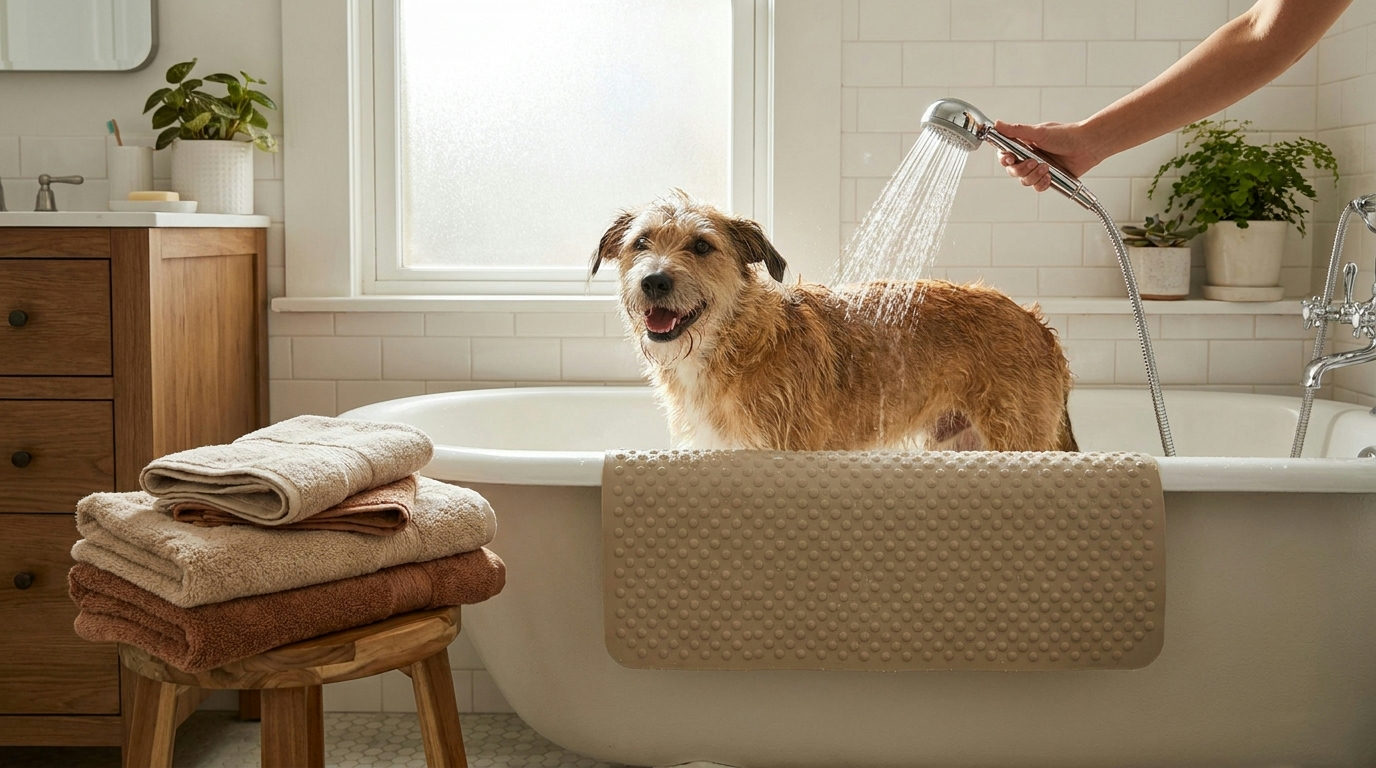
- A non-slip mat: Place it in the tub or shower so your dog feels steady.
- A handheld sprayer or jug: Either works for wetting and rinsing.
- A brush or comb: For brushing out tangles before the bath.
- Cotton balls or a soft cloth: For gently wiping around the face.
- Treats or a lick mat: A smear of dog-safe spread on a lick mat stuck to the tub wall can keep many dogs busy.
Our guide to grooming tools for beginners has more ideas for building a home kit.
Before bathing your dog at home
A few minutes of preparation makes the bath itself quicker and more comfortable.
- Brush thoroughly: Remove loose hair and work out mats. Water can tighten mats, making them harder to remove later.
- Take a short walk: A relaxed dog who has already been to the toilet is easier to bathe.
- Check the water temperature: Aim for lukewarm, comfortable on the inside of your wrist, not hot.
- Close the door: A closed bathroom stops a soapy escape through the house.
- Protect the ears: Ask your vet whether cotton balls placed gently at the ear opening are a good idea for your dog.
Introducing a nervous dog to the bath
If your dog is worried about water or the tub, slow down and build confidence first. This may take a few short sessions over several days.
- Let your dog explore the empty tub or shower with treats scattered on the non-slip mat.
- Lift or guide your dog in and out a few times without any water, rewarding each time.
- Run a little water at the far end while your dog eats treats, then turn it off.
- Wet just the paws, then the legs, rewarding calm behavior.
- Keep early sessions short and end before your dog becomes stressed.
Signs like lip licking, yawning, tucking the tail or trying to climb out mean you should take a step back. Our article on reading dog body language can help you spot these early.
Step-by-step bath routine
Once your dog is comfortable in the tub, this routine keeps things predictable.
- Wet the coat: Start at the shoulders and work back toward the tail, then down the legs. Keep water away from the eyes, ears and nose.
- Apply shampoo: Use a small amount and work it into the coat down to the skin, following the product directions.
- Wash gently: Massage with your fingertips, paying attention to the paws, underside and behind the legs.
- Clean the face separately: Use a damp cloth rather than pouring water over the head.
- Rinse thoroughly: Rinse until the water runs clear and the coat no longer feels slippery. Leftover shampoo may irritate the skin.
- Check once more: Run your hands over your dog to make sure no soap remains, especially in thick or double coats.
- Reward: Offer a treat and praise before you start drying.
Drying your dog properly
Drying is just as important as washing, especially for dogs with thick coats or skin folds.
- Let your dog shake inside the tub before you open the curtain or door.
- Press and squeeze water out with a towel rather than rubbing hard, which can tangle long coats.
- Dry skin folds, between the toes and under the ears carefully.
- If you use a hair dryer, choose a cool or low setting, keep it moving and hold it well away from the skin. Introduce the noise slowly.
- Keep your dog indoors and warm until fully dry, particularly in cooler weather.
- Brush the coat once dry to prevent new tangles.
A cozy spot to finish drying helps. See our guide to durable dog beds for ideas.
Bathing your dog at home in cooler months
Autumn and winter bring muddy paws and wet coats, but also chilly rooms and slower drying. A few adjustments help keep your dog comfortable.
- Warm the bathroom first by closing the door and running warm water for a few minutes.
- Choose a time of day when your dog can stay inside afterwards, rather than just before a walk.
- Consider spot-cleaning muddy legs and paws with a damp cloth instead of a full bath.
- Allow extra drying time for thick or double coats, which can stay damp close to the skin.
- Offer a warm blanket in a draft-free spot while your dog finishes drying.
Puppies and senior dogs
Very young and older dogs often need a gentler approach. For puppies, keep the first baths short and focus on making the experience positive, as habits formed now can last for years. Our new puppy essentials checklist covers what to have ready. Senior dogs may find it harder to stand for long or step into a tub, so a non-slip mat, a lower basin or support from a second person can help. Ask your vet if your dog has joint, skin or health concerns that might change how you bathe them.
Common bath-time mistakes to avoid
- Using water that is too hot or too cold.
- Getting shampoo in the eyes or water deep in the ears.
- Skipping the pre-bath brush, so mats tighten.
- Rushing the rinse and leaving soap behind.
- Scolding a nervous dog, which can make the next bath harder.
- Letting a damp dog out into the cold.
When to call your vet
Bath time is a good chance to check your dog’s skin and coat. Contact your vet if you notice:
- Red, flaky, scabby or broken skin.
- Lumps, bumps or swellings you have not seen before.
- Patches of hair loss.
- Persistent scratching, licking or chewing, even after a bath.
- An unpleasant smell from the ears or skin that returns quickly.
- Fleas, ticks or other parasites.
- Redness, swelling or discharge from the eyes after a bath.
Questions to ask your vet
- How often would you suggest bathing my dog, given their coat and skin?
- Which type of shampoo would suit my dog?
- Should I protect my dog’s ears during baths, and how?
- Is there anything about my dog’s skin that I should keep an eye on?
- My dog is very frightened of baths. What could help?
Make bath time a good memory
Bathing your dog at home does not have to be a battle. Prepare everything in advance, go at your dog’s pace, rinse well, dry thoroughly and reward often. Over time, many dogs come to accept the routine, and you will both spend less time mopping the floor afterwards. If anything you find during bath time worries you, your vet is the best person to ask.
Further reading
- American Kennel Club: How to bathe your dog
- VCA Animal Hospitals: Grooming and coat care for your dog
- ASPCA: Dog grooming tips