Bringing a new dog into your home, whether a rambunctious puppy or a curious adult, is an exciting time! However, before they arrive, it’s vital to ensure your living space is safe and secure. Just like baby-proofing for a toddler, Dog Proofing Your Home is a crucial step to prevent accidents, protect your belongings, and give you peace of mind. Dogs explore with their mouths and paws, and what might seem harmless to us can pose a serious hazard to them. For new dog parents like Sarah, this guide will walk you through making your home a safe haven for your furry friend.
Understanding Your Dog’s Perspective
To effectively create a safe environment, it’s helpful to understand how a dog perceives their surroundings. Their world is often explored through scent and taste. Moreover, puppies, in particular, are driven by an instinct to chew during teething and exploration. Adult dogs can also be curious or prone to anxiety-related destructive behaviors. Therefore, anything within reach is a potential chew toy or snack. This includes items you might not consider dangerous, such as remote controls, eyeglasses, or even small decorative objects. Thinking like your dog will help you spot potential dangers before they do.
Identifying Common Household Hazards
The first step in Dog Proofing Your Home is to look at your environment from a dog’s perspective. Get down on their level and scan for anything that could be chewed, swallowed, or cause injury. Common hazards include electrical cords, toxic plants (like lilies, sago palms, and aloe vera), household cleaning products, medications (human and pet), small choking hazards (coins, batteries, small toys), and even certain human foods (chocolate, grapes, onions, xylitol-containing products). Remember, if it’s within reach, a curious dog might investigate it. Paying attention to these often-overlooked dangers can prevent emergency vet visits and keep your pup safe and sound.
Toxic Plants to Watch Out For
Many common houseplants and garden plants can be highly toxic to dogs. For example, sago palms can cause severe liver failure, and even small ingestions of lilies can be fatal to cats, though they also pose a risk to dogs. Other plants like azaleas, rhododendrons, tulips, and daffodils are also dangerous. It’s important to research any plants you have in or around your home. If you’re unsure, it’s best to remove them or place them completely out of reach. A comprehensive list of toxic and non-toxic plants can be found on the ASPCA website.
Dangerous Human Foods
While sharing food with your dog might seem like a kind gesture, many human foods are toxic. Chocolate, especially dark chocolate, contains theobromine, which dogs cannot metabolize quickly. Grapes and raisins can cause kidney failure, even in small amounts. Onions and garlic can lead to red blood cell damage. Xylitol, a common artificial sweetener found in sugar-free gum, candies, and even some peanut butters, is extremely toxic and can cause a rapid drop in blood sugar and liver failure. Always keep human foods secured and never leave them unattended where your dog can reach them.
Practical Steps for a Safe Environment
Once you’ve identified potential hazards, it’s time to take action. Here’s a practical checklist for making your home safe for dogs:
- Secure Cords: Bundle and cover electrical cords or use cord protectors to prevent chewing and electrocution. Consider unplugging unused electronics.
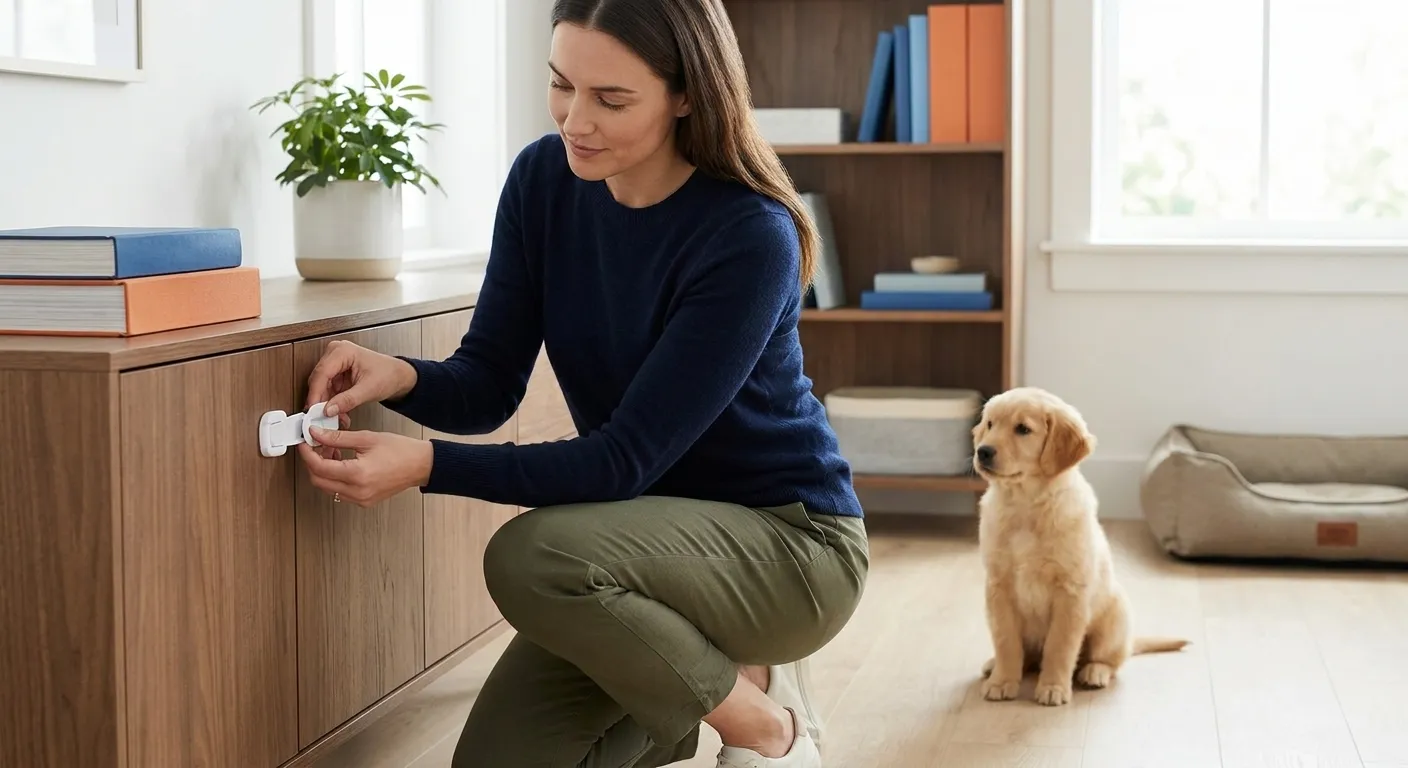
- Elevate or Remove Toxic Items: Place all medications, cleaning supplies, and toxic plants well out of paw’s reach. Consider hanging plants or using high shelves. Store all chemicals in locked cabinets.
- Secure Trash Cans: Use lidded, dog-proof trash cans to prevent your dog from scavenging harmful items. Dogs are surprisingly resourceful when it comes to getting into the garbage.
- Block Off Restricted Areas: Use baby gates to block access to rooms where you can’t supervise or areas that are particularly hazardous (e.g., laundry room, garage). This is especially helpful during the initial adjustment period.
- Store Food Safely: Keep human food, especially those toxic to dogs, in secure cupboards or containers. Don’t leave snacks on coffee tables or countertops. Remember to secure pantry doors.
- Check for Small Items: Regularly scan floors for small objects like coins, dropped pills, or children’s toys that could be ingested. Small items can easily become choking hazards.
- Provide Safe Dog Toys: Offer plenty of appropriate chew toys to redirect their chewing instincts away from your furniture or shoes. This is crucial for puppies and active chewers.
Taking these proactive steps will create a secure and enjoyable environment for your dog, allowing them to explore and play safely. A little preparation goes a long way in ensuring your new companion thrives in their new home.
Outdoor Areas and Yard Security
Dog Proofing Your Home isn’t just about the indoors; your outdoor spaces also need attention. A secure yard is paramount for your dog’s safety. First and foremost, check your fencing. Look for any gaps, loose boards, or areas where your dog could dig under or jump over. Reinforce weak spots and ensure gates are securely latched. Furthermore, consider the plants in your garden. Just as indoors, many outdoor plants can be toxic. Remove or fence off dangerous plants like oleander, foxglove, and certain types of mushrooms that might sprout in your lawn. Store garden chemicals, fertilizers, and pesticides in locked sheds or garages, completely out of reach. Also, keep tools and equipment stored safely to prevent accidental injuries. A secure yard provides your dog with a safe space to play and explore, giving you peace of mind.
Ongoing Vigilance and Training
Even after thorough home preparation, ongoing vigilance is key. Dogs are constantly learning and testing boundaries. Regularly check your home for new potential hazards, especially as your dog grows and their abilities change. A puppy who couldn’t reach a countertop might suddenly be able to as an adolescent. Training also plays a vital role in keeping your dog safe. Teach commands like